





With the warm weather and light breezes of April, you can bet Anna Maria Island anglers are heading out on the water to see what awaits at the end of their line.
Inshore fishing is shaping up to be better than normal as we leave cold fronts behind and settle into a consistent weather pattern. Species such as snook, redfish and trout are lurking in their favorite springtime haunts, waiting to gorge themselves on the influx of bait, which is expected in the weeks to come.
Spotted seatrout are especially prolific on most grass flats where clean, clear water exists. In depths of 2-8 feet, spotted seatrout can be found with peak feeding times occurring during the swift stages of the tide.
The same applies for snook.
Mangrove edges alongside lush grass flats where a good water flow exists provide excellent ambush points for linesiders and create opportunities for the angler, whose timing and spot selection are integral.
As for redfish, a variety of terrain can be host to these “bulldogs” of the shallows. Whether it be mangrove edges where oyster bars exist, shallow sand bars dropping into deeper grass flats or sandy beaches where structure exists, there’s a possibility you’ll find reds. Add good tidal flow and luck and you have the perfect recipe for a blackened redfish dinner.
Don’t forget about other coastal species, such as ladyfish, jack crevalle and Spanish mackerel. All of these are worthy of bending a rod as they display acrobatic jumps, drag-screaming runs and a fight to the end.
Speaking of macks, don’t forget their larger cousins, the king mackerel, should be arriving as water temps in the Gulf creep into the low- to mid-70s.
Nearshore action as a whole should start livening up with the anticipated moderate temperatures, bringing species including bonito, sharks, kingfish and Spanish mackerel to the nearshore reefs and wrecks. Also, throughout your travels in the nearshore waters in the Gulf, keep an eye out for cobia meandering along the surface, moving from one area of structure to the next.
Yes, if you’re tired of the wind, cold water and rough seas, April brings relief and builds confidence as the fishing will only get better.
On my Just Reel charters, spotted seatrout are dominating the bite. Fish of all sizes are being caught in a variety of areas as long as a few important characteristics exist — clean and clear water, good tidal flow and plenty of seagrass. Many slot-size fish measuring 15-19 inches are being caught, with some just under and some just over the slot. Live shiners as bait work well, although soft plastics on a jig head also are proving effective.
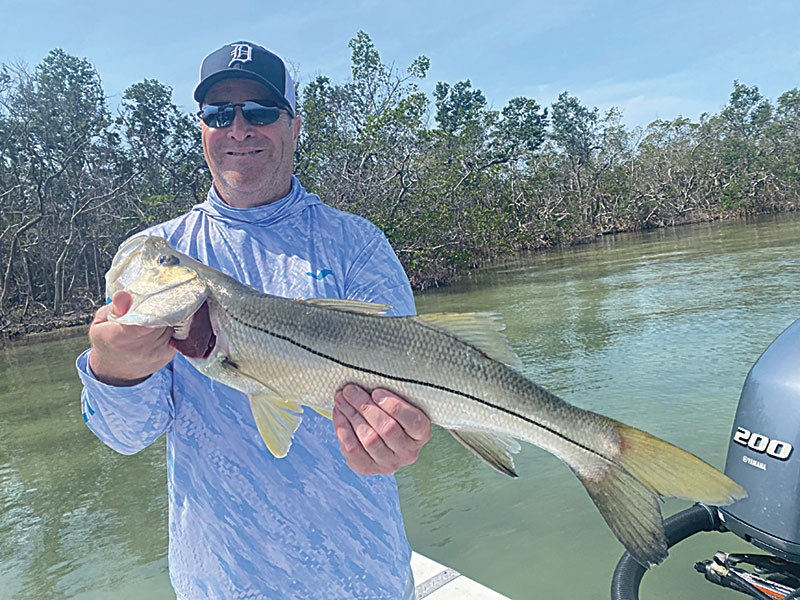
Snook fishing during the higher stages of the tide is going well for my clients with a lot of fish measuring 20-25 inches and slot fish — between 28-33 inches — mixed in every so often.
Redfish also are around, especially when casting baits around rocks and docks.
Finally, Spanish mackerel, ladyfish and jack cravelle are filling the gaps for my clients when we pull up and work the deeper grass flats.
Capt. David White says he’s catching plenty of snook while fishing the flats of Tampa Bay, where lengthy rallies of snook are occurring during higher stages of the tide and the use of live shiners as bait.
Spanish mackerel and spotted seatrout are being found on deeper grass flats and these fish also are after the live shiners.
Casting jigs along the beaches and over select grass flats is leading to pompano action, reports White.
Send high-resolution photos and fishing reports to fish@islander.org.