






Fishing is really heating up around Anna Maria Island as inshore and offshore are producing great catches and measurable experiences.
Just in time for a three-day holiday, fishing offshore in the Gulf of Mexico for red grouper is as good as it gets, with limits being caught on most excursions in 100 feet or more of water.
Live bait such as pinfish and shiners works well but don’t rule out frozen sardines in case the grouper get finicky.
Mangrove snapper, however, are cooperating and feeding on the live shiners as bait.
Migratory species such as cobia, kingfish, amberjack and blackfin tuna are a good bet when you’re out around the wrecks. Freelined baits or slow-trolled baits are leading to some powerful strikes from the aggressive fish. Medium-heavy to heavy spinning gear will be put to the test, especially on the blackfins. So be ready for a battle.
Moving into shallow areas in 40-50 feet of water is yielding action on migratory species. Spanish mackerel are frequent catches, which attract large toothy predators such as blacktips and spinner sharks to the boat.
And off the beaches, anglers are targeting tarpon as they move along the shoreline and into the passes. Early morning just before sunrise and late evening after sunset are ideal times to target the silver kings. Live and dead baits are producing action.
Finally, flats fishing in Tampa Bay south to Sarasota Bay is productive for redfish, trout and catch-and-release snook. For all three species, swift moving tides are key to getting a good bite.
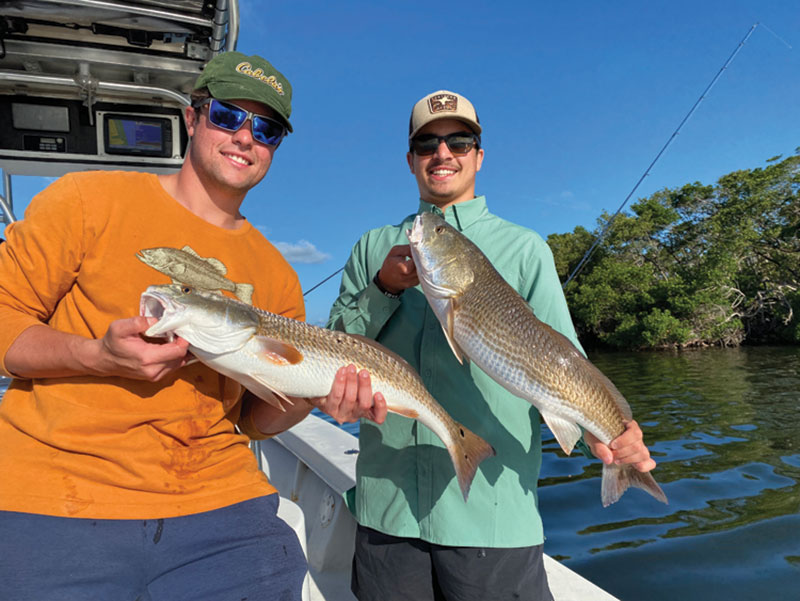
On my Just Reel charters, I’m finding plenty of action inshore. Redfish are being found around mangrove shorelines. Casting live shiners against the mangrove roots lures the reds out of their hiding places and to the hook. Chunks of fresh-cut threadfin herring or fresh chunks of blue crab are attracting attention from the reds. Average sizes are 22-30 inches.
Spotted seatrout also are being found in the backcountry, with numerous areas holding trout, including deep grass flats, shallow flats and along the beaches of the Gulf. All three areas are reliant on good tides to reach their full potential.
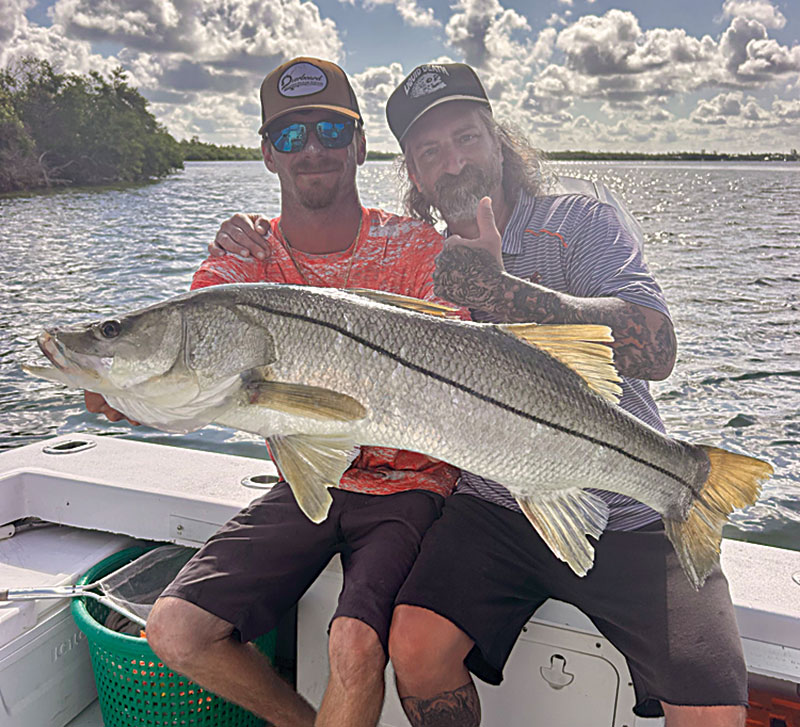
Lastly, catch-and-release snook fishing is getting better and better as we settle into May. Snook of all sizes are being caught during the highest stages of the tides.
Capt. Johnny Mattay is seeing excellent action while bottom fishing around hard-bottom areas in the Gulf of Mexico. Mangrove snapper are frequently being caught. In fact, limits are being reached most days.
The same applies for red grouper, which are biting like crazy, resulting in plenty of fish for the box.
Cobia and amberjack are being found around wrecks as are blackfin tuna. These species are being caught by free-lining baits, which adds excitement to the bite.
Moving inshore, Mattay says tarpon fishing is shaping up nicely. Live baits such as crabs, threadfin herring and shiners are working well.
On the flats, spotted seatrout, redfish and catch-and-release snook are being caught during swift, incoming tides.
Capt. David White says he’s finding action on tarpon along the Gulf beaches in the early morning and evening tides and most catches are 80-120 pounds.
Fishing inshore is going well for White. He says spotted seatrout and Spanish mackerel are being found over deep grass flats and readily taking live free-lined shiners as bait. Trout of all sizes are being caught while the macks are averaging 18-22 inches in length.
In the shallows, casting shiners around mangroves and oyster bars is yielding action for White’s anglers on redfish and catch-and-release snook. Slot-size and over slot reds are frequent, especially during the higher stages of the tides.