








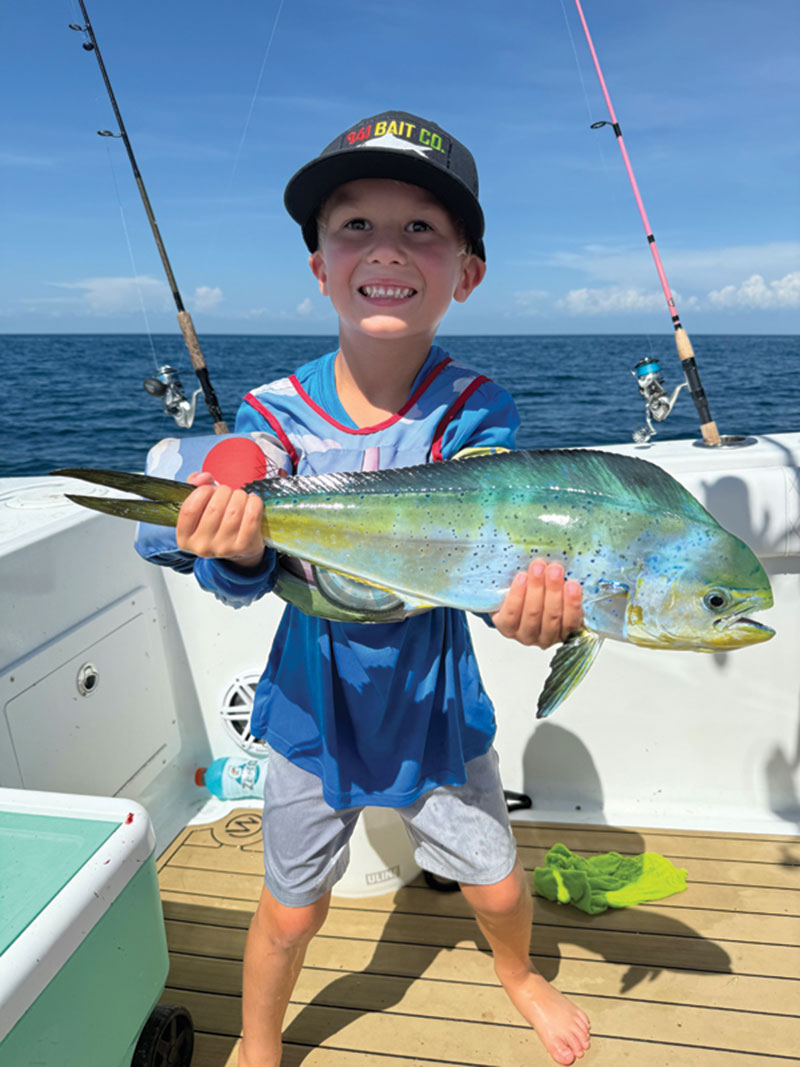
After some needed rainfall — and then some — Anna Maria Island anglers are ready to get back on the water to fish.
The next full moon occurs June 14 and should result in some well-anticipated banner days for tarpon fishing.
Dramatic outgoing tides occurring in the evenings should be flushing plenty of crabs to the passes of Longboat Key, Bean Point and Egmont Key, which will trigger a fishing frenzy for the silver kings.
These tides are some of the most popular to fish for tarpon, so be prepared for crowds. Bring plenty of patience, as well as stamina, as this is your best chance to get hooked up — possibly multiple times — during a tarpon-fishing excursion.
Once hooked up with a large tarpon, there are many obstacles to overcome before the fish is brought boatside. Maneuvering around the other boats in close proximity is probably the most difficult.
If you’re able to accomplish that, don’t forget about the bull sharks and hammerhead sharks on the lookout for an easy meal.
And you’ll soon learn if you are strong enough to fight the fish for as long as it takes to get it to the boat. I’ve seen anglers take up to two hours to land a tarpon and, by the time they were done, they didn’t want to catch another. So make sure you’re mentally and physically prepared for the battle of your fishing life.
And don’t forget to pack plenty of drinks on the boat as you’ll want to stay hydrated before, during and especially after the ordeal. There’s nothing worse than having your arms cramp up halfway through the fight and passing the rod over to someone else because you just can’t hold on for another second. These fish fight hard and they fight to the end, so plan accordingly.
When you do get that majestic fish boatside, it’s time to get some trophy pictures or maybe even some video to remember the amazing feat.
Once the fight is over, you’ll feel an overwhelming sense of pride, as the adrenaline is still pumping hard through your veins. Cherish the moment because when it’s gone, the fatigue will set in, making you apprehensive of casting another bait into the water to start the process over again.
But you’ll do it, because you’re hooked.
On my Just Reel charters, I’m finding the backwater action to be quite good. Spotted seatrout are being found on just about every grass flat where clean, clear water and good tidal flow exists. All sizes of the bucktoothed fish are being caught, with many slot-size fish in the mix, which is making it easy to attain a limit of trout for anglers looking to take home a fish dinner.
Targeting catch-and-release snook is going well, although finding concentrated numbers of fish has become cumbersome as many are migrating to the beaches to spawn.
This scenario requires moving to new spots more frequently to keep the bite going instead of sitting in one area and hooking up multiple times.
I’m also starting to see some frequency in the mangrove snapper bite, as many catches are occurring on deeper flats where I’m targeting trout. Most snapper are 12-14 inches.
There also is a surplus of migratory fish — ladyfish, jacks and sharks — in Tampa Bay, which is filling the gaps between snook and trout.
Capt. David White reports spending all his time on the water targeting tarpon. He’s employing a variety of baits to target the larger fish, depending on the time of day and the location.
White says the early morning action around the passes yields the best opportunity on live crabs as bait. Casting crabs to rolling fish on the surface is resulting in quite a few hookups.
As the sun rises and visibility is good, White patrols the beaches of Anna Maria Island, Egmont and Longboat keys where schools of tarpon are migrating the shoreline. In these scenarios, live threadfin herring work well to attract a strike.
In some instances, the use of a cork to keep the bait in the strike zone works, while in other cases simply freelining the bait will suffice.
Finally, on the evening outgoing tides, White is using live crabs to work the passes.
The silver kings are averaging 80-120 pounds.
Capt. Johnny Mattay reports despite many days of rain and windy conditions, he’s managing to take advantage of the windows of opportunity to get out and do some fishing.
Fishing offshore is yielding limits of American red snapper, as well as red grouper and various smaller snapper, such as mangrove and yellowtail.
Nearshore fishing around reefs and wrecks is producing action on mangrove snapper, which are Mattay’s main target in the shallower waters.
Moving inshore, redfish and catch-and-release snook are frequently being hooked during the higher stages of the tide.
Finally targeting tarpon is going well for Mattay’s anglers, although numerous days of wind and rain made it challenging to locate schools of fish. When Mattay does find them, he’s hooking up his clients by baiting with live crabs and threadfin herring.
Send photos to fish@islander.org.