




Despite water temperatures in the upper 80s, inshore fishing around Anna Maria Island is quite good.
Mangrove snapper are in their early stages of gathering around structure in the inshore waters, with numbers increasing every few days.
I’m seeing quite a few mangoes — mangrove snapper — on the flats while targeting redfish and catch-and-release snook, as well as some small schools on nearshore and inshore structure.
Smaller-size shiners work best, as they can easily be eaten by the 14-15 inch snappers.
Targeting catch-and-release snook is going well in numerous areas around the island. Sight-casting to snook along the Gulf beaches is most entertaining, especially with the water clarity we are experiencing. Both artificial and live baits work to catch these fish.
Fishing the backcountry for snook is providing action in spite of water temps on the flats nearing 90 degrees. You’ll want to get on this bite early in the day.
Midday action is slightly slower, as the fish are trying to hide in the shade of the mangroves, making them less motivated to come out to chase a bait.
Redfish are present in the backcountry waters alongside snook. When targeting reds you want to get on the water early. If it’s later in the day, use cut baits cast right into the roots of the mangroves. Patience is a virtue here.
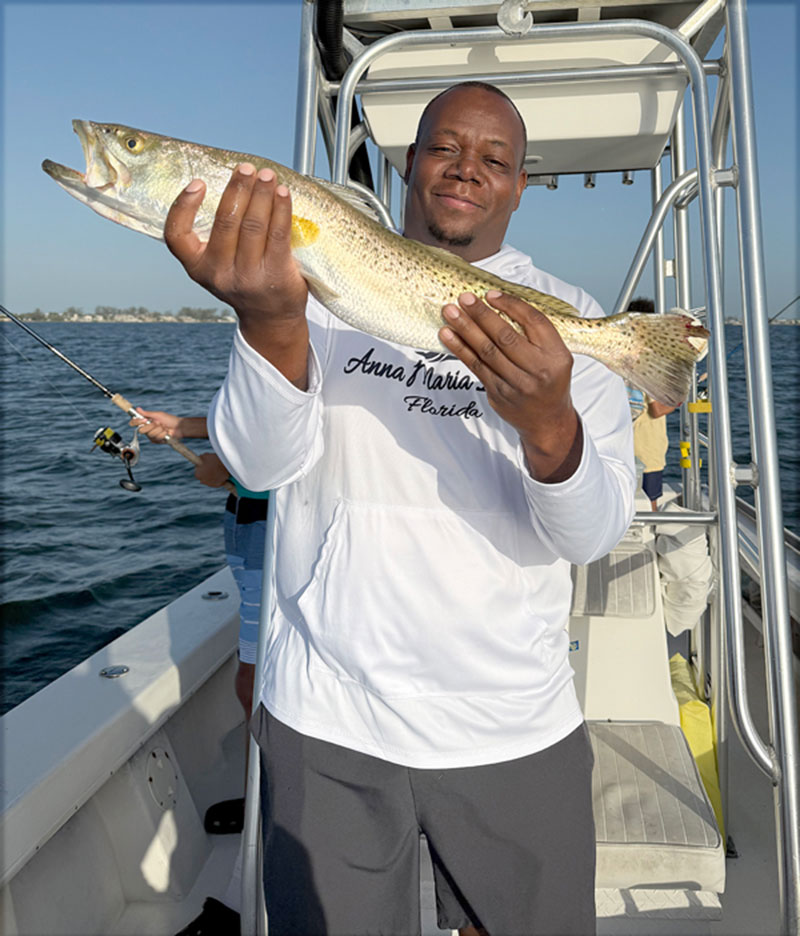
Spotted seatrout are holding strong in the backcountry and the deeper areas in the bays. Grass flats in 4-10 feet of water hold a variety of sizes of trout, depending on the patch of grass you’re working.
One patch may be 13- to 14-inch trout and the next could all be 16-18 inches. You’ll pick up on the trend quickly, so be willing to change spots depending on what size fish you want to catch.
Moving offshore, American red snapper are the crowdpleaser for another week. Limits of the big snapper are being caught on most excursions to depths of 120 feet or more. Red grouper also are lurking in these areas and are being caught when the red snapper take their break.
Pelagics such as cobia, blackfin tuna, amberjack and mahi are being caught with some regularity around offshore wrecks and weed lines, which is providing great action on heavy spinning tackle. Free-lined baits such as shiners or threadfin herring work best.
On my Just Reel charters, I’m seeing good action while working the inshore and nearshore waters surrounding Anna Maria Island.
Catch-and-release snook fishing is productive during early morning tides, with catches measuring 20-30 inches. Free-lined shiners yield the best action, although I’ve seen several snook caught on cut-bait by anglers targeting redfish.
As for the reds, I’m not seeing large schools, but rather smaller groups inhabiting select mangrove shorelines.
Live shiners, as well as cut baits like pinfish or ballyhoo, are being eaten by the reds. Spotted seatrout are a mainstay, with all sizes being caught, depending on the day and location.
Deep grass flats are yielding many smaller fish, while larger examples seem to frequent shallow flats.
Mangrove snapper are being caught on some of the flats, especially when targeting reds and snook. These fish range 12-14 inches and are a nice addition to the fish box if clients wish to bring home dinner.
Moving into the Gulf of Mexico, nearshore structure is providing a variety of action, including mangrove snapper, Spanish mackerel, cobia and an occasional spotted seatrout. Juvenile red grouper are present in these areas and finding their way to the baits that aren’t eaten by something bigger.
Capt. Johnny Mattay says fishing offshore of Anna Maria Island is great. American red snapper are being caught frequently, providing limits of fish for the box.
Mattay is putting clients on snapper using a variety of techniques, depending on the strength of the offshore currents. During slower currents, chumming the red snapper to the surface and free-lining baits is proving effective. Cut sardines on a small jig head or a hook is resulting in some drag-screaming action on heavy spinning gear.
On days when the currents are swift, Mattay says the use of a bottom rig is required. Both live and dead baits are working to get this bite to the boat.
Red grouper and mangrove snapper are being caught while offshore on the same methods as the American red snapper.
Mahi are an added treat when fishing beyond 20 miles offshore and Mattay is seeing them daily in these ranges, especially where weed lines exist.
Finally, the offshore bite is offering a variety of other species, including blackfin tuna, cobia and amberjack.
Moving inshore Mattay is seeing clients hook up with catch-and-release snook. Fishing the beaches as well as a mangrove shoreline in the backwaters is yielding good numbers of fish. Spotted seatrout also are being caught in the backwater and the deep grass flats are proving good for Mattay.
He reports mangrove snapper are being caught around the bay and nearshore structure.
Capt. David White is finding plenty of spotted seatrout for his clients while working the inshore waters surrounding Anna Maria Island.
Free-lining live shiners over deep grass flats yields many trout in all size ranges, says White. The same applies while fishing nearshore structure in the Gulf.
He says the addition of some weight to a free-lined shiner, causing it to sink to the bottom, is triggering the beach trout to bite.
Spanish mackerel also are present in these areas. By chumming and free-lining shiners behind the boat, White is leading his clients to some excellent action on light spinning tackle.
Finally, catch-and-release snook fishing is going well with fish of all sizes being caught. Sight-casting to the beach linesiders is proving to be good on White’s charters.
Targeting snook in the backcountry around mangrove shorelines is equally good with live shiners as bait.
Send high-resolution photos and fishing reports to fish@islander.org.
Hurricane recovery grants offered to captains, guides
Suncoast Waterkeeper and Tampa Bay Waterkeeper are offering emergency grants to recreational fishing professionals still recovering from the 2024 hurricane season.
The funding will come from the International Game Fish Association’s Worldwide Anglers Relief Fund and eligible captains and guides can receive up to $1,000 to cover lost income and recovery expenses.
Charter captains and recreational fishing guides must have been impacted by hurricanes Helene or Milton and operate in the Suncoast or Tampa Bay region.
Applicants need to provide a U.S. Coast Guard captain’s license, proof of insurance, a completed W-9 form and documentation of trip cancellations or revenue loss.
The application window will close Aug. 2, with recipients announced Aug. 15.
To apply, go online to https://bit.ly/WARF_grant.
For more information, go online to suncoastwaterkeeper.org or tampabaywaterkeeper.org.
Suncoast Waterkeeper can be reached at 239-222-2443.
— Lisa Neff