





The water surrounding Anna Maria Island is experiencing an infestation of mass proportions as endless numbers of mangrove snapper inhabit every structure they can find.
Whether at rock piles, reefs, ledges, bridges, piers or docks, the popular fish are lurking in the shadows, waiting for a tasty morsel to drift by.
Known by many anglers for their ferocity, as well as their sweet, mild flavor when battered and fried, the inshore snappers are high on the list of targeted species by land anglers and those on boats and bridges.
Although your average inshore snapper will be 12-16 inches, larger examples exist. In fact, the record mangrove snapper is 17 pounds. If you catch mangrove snapper, you know that the larger fish can be quite a tackle-buster.
Methods for targeting mangoes range from bottom fishing to free lining, depending on your location and the current.
During slower tides, snapper are accessible to chum as they will rise from the bottom to just below the water’s surface, frolicking as they feed in the chum slick. These occasions bear opportunities to free-line baits to the fish. Live shrimp or small shiners or pinfish are ideal, although small cut-baits also work.
In instances where the tides are strong, employing a bottom rig consisting of an egg sinker and a circle hook can get the job done.
When strong currents exist, the snapper tend to take shelter around or in structure on the bottom. So using a bottom rig to place the bait within easy reach of the fish is advantageous.
Keep in mind that mangrove snapper have keen eyesight and tend to be spooky. So stealth in rigging is advised. Fluorocarbon leaders of 15-20 pound test are adequate when free-lining baits in the chum slick.
When bottom fishing, you can get away with a heavier leader — in the 30-pound range.
As far as tackle goes, a medium spinning outfit will supply the angler with enough power to handle a larger snapper but is light enough to make catching the smaller ones fun.
Don’t forget, mangrove snapper must be a minimum of 10 inches to be legal and a limit of five fish per angler per day is the law.
As far as preparation, the fish are versatile and their sweet meat pairs well with a variety of ingredients. The most popular preparation — fried snapper — is always a crowd-pleaser. Blackened, grilled and sautéed snapper preparations are equally good. And, for those in the know, there’s nothing better than a nice bowl of snapper ceviche on a hot day.
On my Just Reel charters, I’m seeing limits of mangrove snapper being caught daily. Depending on tides and locations, I’m setting up clients to either freeline baits or bottom fish.
Most catches are 12-15 inches with some lucky anglers hooking up examples in the 18-inch range.
Meanwhile, spotted seatrout are inhabiting most of the grass flats to the east, north and south of Anna Maria Island, and providing plenty of action on free-lined shiners as bait.
When targeting the trout on deeper grass flats, I’m seeing bluefish, Spanish mackerel and ladyfish coming to the party, which provides some variety to the bite as well as some thrills, as all of these species are quite voracious both off and on the hook.
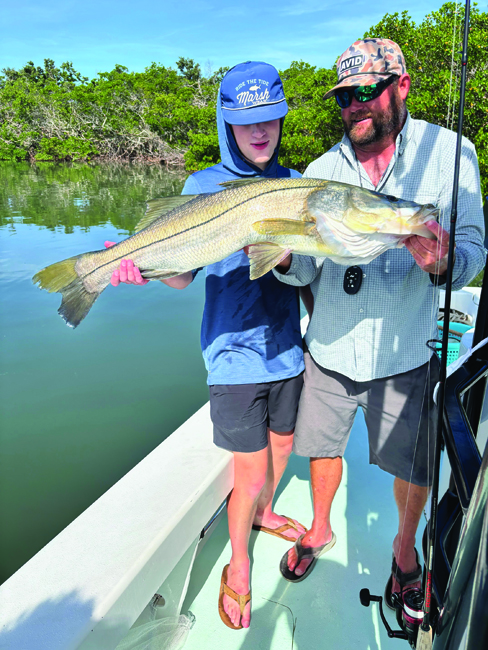
Catch-and-release snook fishing is moderate. I think water temps in the low 90s are resulting in sluggish snook. The best action is occurring first thing in the morning.
Redfish are being caught in the same areas as the snook, but the bite is random.
Capt. David White says he’s finding plenty of inshore action while working the waters of Tampa Bay south to Sarasota Bay. Mangrove snapper are abundant in many areas where structure such as rock piles, reefs or docks exists. Even deeper grass flats are producing snapper for his clients.
While over the deeper grass flats, White is finding good numbers of spotted seatrout with a mix of ladyfish and Spanish mackerel.
White says catch-and-release fishing for snook is yielding action fishing along the Gulf beaches as well as mangrove shorelines where good tidal flow exists.
Also, juvenile tarpon are available to anglers seeking a test of their skills on medium spinning gear.
Lastly, targeting sharks along the Gulf beaches and in Tampa Bay is proving to be good with fresh-cut pieces of Spanish mackerel or ladyfish as bait.
Capt. Johnny Mattay of Anna Maria Charters says the inshore/nearshore bite around Anna Maria Island is quite good and there are many species to target.
He’s taking anglers to spotted seatrout by free-lining live shiners over deep grass flats, as well as structure in depths of up to 20 feet of water. These deeper areas are working best during the hottest parts of the day, says Mattay. As a bonus, Mattay is happy to say that his anglers are hooking into macks and mangoes in the same areas as the trout.
When targeting mangrove snapper, Mattay is taking clients to nearshore ledges in the Gulf as well as structure — rock piles and docks in Tampa Bay.
On the flats, Mattay is finding redfish along mangrove edges and oyster bars during the highest stages of the tide. Targeting catch-and-release snook around inlet creeks and on the beaches is rounding out the inshore bite, although several large examples have been caught around the artificial reefs in the Gulf of Mexico.
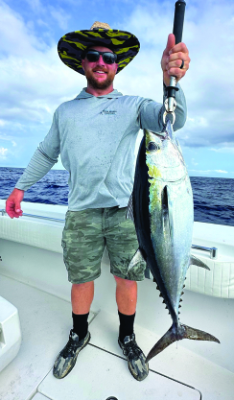
Speaking of the Gulf, offshore fishing also is going well for Mattay. American red snapper are still going strong, as well as red grouper. He’s using dead baits on a bottom rig in depths of 100 feet or more. Targeting pelagics — blackfin tuna and bonito — is also an option. And, Mattay says, employing the use of artificials, such as lipped plugs trolled behind the boat, is leading to some drag-screaming action on his charters.
Send high-resolution photos and fishing reports to fish@islander.org.