





As water temperatures slowly drop around Anna Maria Island, the fishing really heats up.
Water temps approaching 90 degrees — like we experienced this past summer — are now behind us. Although we’re still seeing temps in the 80s, a slight drop can make a huge difference.
Our present water temperatures are more tolerable for humans and the fish we target, which is resulting in some great action on the flats and in the Gulf of Mexico.
The most apparent is the arrival of a variety of migratory species. Along the beaches, jack crevalle, ladyfish, blue runners and Spanish mackerel can be seen crashing bait schools within 50 yards of shore, putting on spectacular shows as they feast from below and the shore birds attack from above.
Larger migratory fish like cobia and kingfish are being found in slightly deeper water in the Gulf at the artificial reefs and wrecks as they bounce from one structure to the next in search of bait schools.
You might encounter bonito and large Spanish mackerel in these areas. And, of course, with all this commotion going on, you can bet there are plenty of sharks on the prowl. Blacktip, spinner and sandbar sharks are the most frequent sightings, although hammerhead and lemon sharks cruising the near shore are not a surprising occurrence.
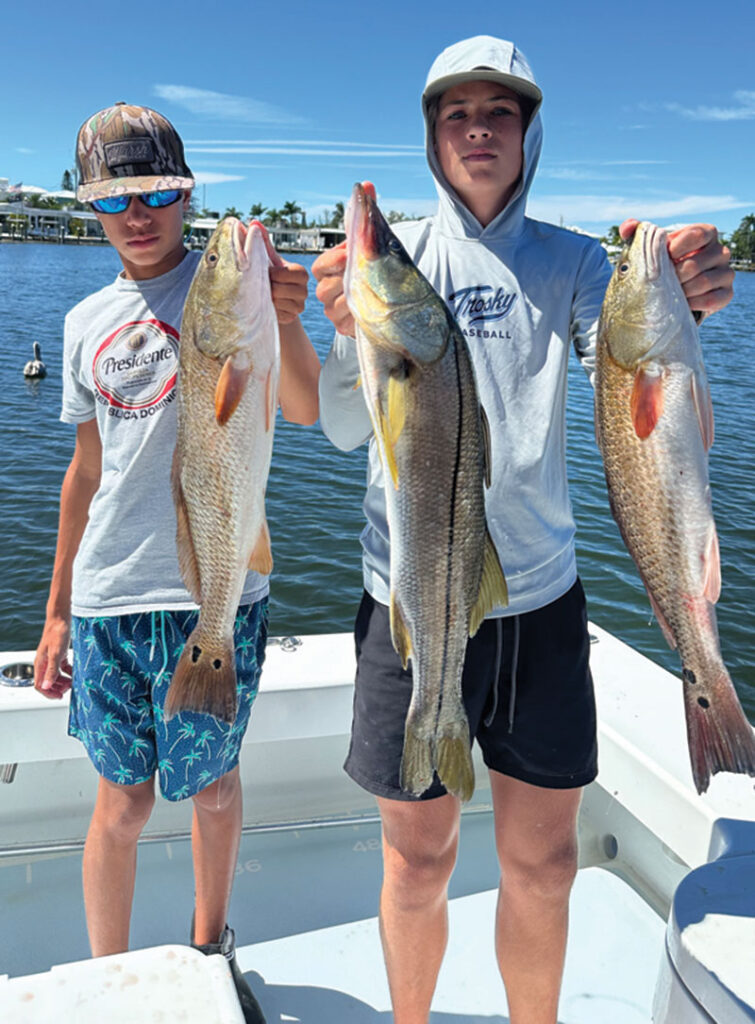
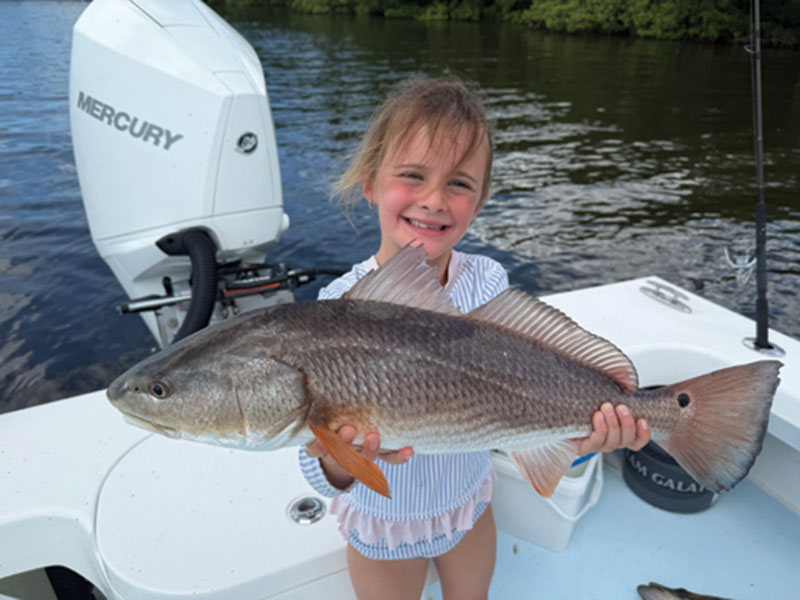
Moving inshore, redfish are being found around a variety of places, including mangrove shorelines, oyster bars, docks and in the passes. Live shiners as bait work in most of the locations, although, as you may know, redfish aren’t opposed to eating a dead bait either. Try fresh-cut pieces of ladyfish or finger mullet and hang onto your rod.
Snook fishing is on the upswing as the linesiders are starting to make their way from the beaches and back into the flats. Finding them in the passes will yield good action and a chance to sight cast to larger fish if the water is clear.
Lastly, spotted seatrout are active on most grass flats in 4-8 feet of water. Free-lined baits work best.
Capt. David White is finding plenty of action for his charter-fishing clients while working the inshore waters of Tampa Bay and the nearshore waters of the Gulf of Mexico.
Early morning, outgoing tides yield quite a few snook when casting baits under the mangroves and around oyster bars. The same applies to redfish, which also seem to be feeding on the outgoing tides, according to White.
During the incoming tides, macks and mangrove snapper are being found around structure, both in the bays and in the Gulf.
Limits of mangrove snapper are still attainable and spotted seatrout are being caught regularly over deep grass flats.
Capt. Johnny Mattay of Anna Maria Charters is venturing offshore with clients on the calmer days to target red grouper and a variety of snappers.
In depths around 100 feet, Mattay has his anglers using live pinfish or shiners combined with a bottom rig to get a bite. Once the bait reaches the bottom, red grouper are quickly leaving their hiding places to take the bait and limits of red grouper are being caught.
Fishing over wrecks and reefs is yielding action on Mattay’s trips, especially on mangrove snapper. With the aid of chumming, the snapper are being caught by freelining live shiners on a jig head behind the boat. Yellowtail snapper also are in the mix.
Moving inshore, Mattay is finding plenty of action on snook while fishing mangrove edges and grass flats adjacent to channels. Redfish are being caught around docks and oyster bars as well as along the beaches.
Lastly, spotted seatrout and mackerel are being found around deep flats where bait schools are present.
Send high-resolution photos and fishing reports to fish@islander.org.