



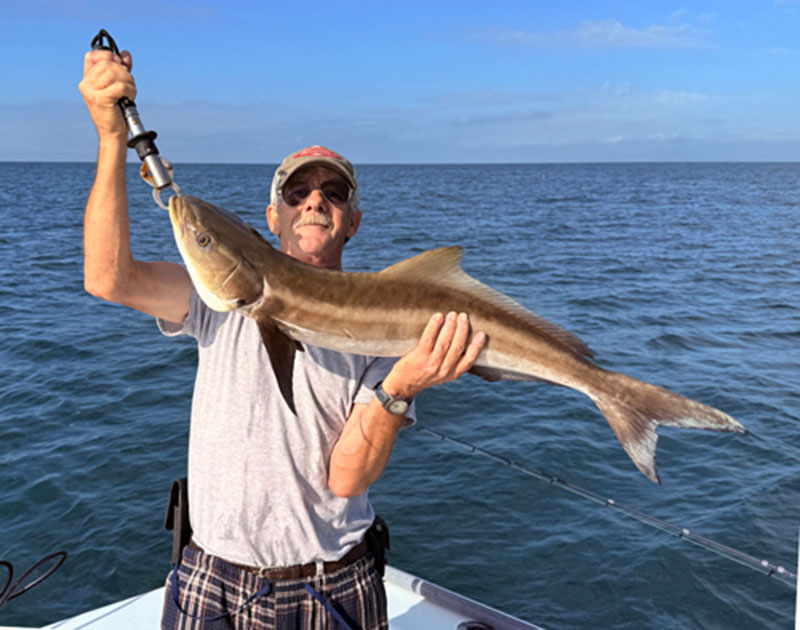
Early morning action in the Gulf of Mexico along the beaches remains a hot bite for another week around Anna Maria Island.
If you’re into hooking high-speed fish that fight to the end, these species are right up your fishing alley: Spanish mackerel, bonita, kingfish and jack crevalle. All are infesting the waters within a mile of shore, which can create a frenzy of action when bait schools enter the scene.
Blue runners and ladyfish are in the mix and can be found in the surf, creating opportunities for surf casters and those in smaller boats.
Sharks of several varieties also are in on this action, which means you’ll want to bring your heavy gear if you plan to test your strength. Most sharks are blacktips and spinners, although sandbar, lemon and hammerheads are known to drop in.
Fishing structure like reefs and wrecks yields cobia, which are always worthy adversaries of medium-heavy spinning gear. Don’t forget: the new minimum size for cobia is 36 inches to the fork.
Moving inshore, snook are lingering on the flats to feed as they sense cooler weather coming. Packing on an extra layer of fat is on their agenda. So they should bite ferociously during the ideal stages of the tide.
Spotted seatrout have become slightly more elusive, although deeper grass flats are producing a decent bite. You might find many trout hookups are just under the 15-inch minimum-size limit. So determination is key if you desire a limit of trout to take home for dinner.
Redfish are lurking on the flats. However, some of the recent schools seem to be disbursing over vast areas, making them more challenging to target.
On my own Just Reel charters, I’m starting most mornings along the Gulf beaches.
Fishing structure is yielding a variety of species, including Spanish mackerel, jack crevalle, ladyfish, blue runners and bonito. All are famous for high-speed action on medium-spinning gear. With fierce strikes and drag-screaming runs, these fish are crowd-pleasers for those who want action.
Cobia are on the prowl around these areas and are being hooked on larger baits, such as pinfish or large shiners.
Blacktip sharks are another species I’m frequently seeing. Most catches are 4-6 feet.
Moving inshore, snook fishing remains consistent during the higher tides. Spotted seatrout are following suit and are biting best during the last half of the incoming tide. As for redfish, those catches are occurring while targeting snook along the mangrove shorelines.
Capt. David White also is spending his mornings fishing along the Gulf beaches in depths of 20-40 feet. Targeting areas where structure such as reefs, wrecks or hard bottom is resulting in migratory species like kingfish, mackerel and bonito for White’s anglers. All three are being attracted by live shiners combined with a long shank hook free-lined behind the boat. As an added surprise, anglers are hooking into an occasional tarpon or shark.
Moving inshore, White’s charters are looking for snook and redfish during high tides around mangroves and oyster bars, as well as in the passes. Some large black drum are in the mix, too.
Capt. Johnny Mattay of Anna Maria Charters is putting clients on migratory fish while working within a few miles of shore in the Gulf of Mexico, where macks and kingfish are taking their bait, as well as the usual suspects — jack crevalle, bonito and blue runners.
While working structure like reefs and wrecks, Mattay is also is finding some keeper-size cobia for his charter clients.
Moving in on the flats, Mattay is finding plenty of snook and trout to keep his clients busy. Higher stages of the tide are producing the best action.
Send high-resolution photos and fishing reports to fish@islander.org.