





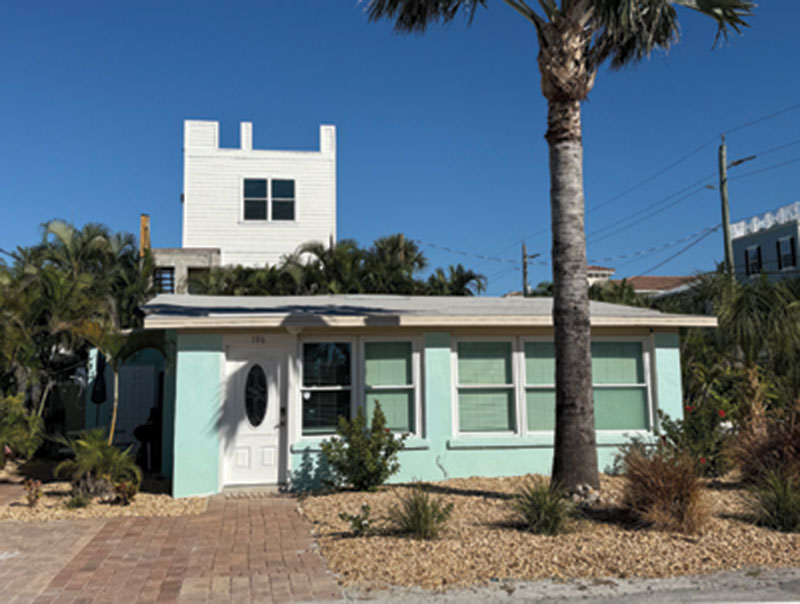
Bradenton Beach commissioners agreed Nov. 6 to revisit the wording of a proposed settlement of a land-use dispute involving a second structure at 106 23rd St. N.
During a meeting at city hall, land-use attorney Robert Lincoln said the addition — a 360-square-foot, multistory structure — was permitted in error last year.
He said the building exceeds the allowable size limit for an accessory structure and includes habitable space, which is not allowed under city code,
Former city building official Darin Cushing’s approval does not make the project legal, according to Lincoln.
“The building official erroneously signed off on a permit that, based on the way it’s come together, clearly violates the code,” Lincoln said. “But that error doesn’t create vested rights for the owner. If the city were sued, my call would be that the city would win.”
Even so, Lincoln said commissioners could choose to reach a settlement to avoid litigation.
Mayor John Chappie expressed concern with a draft settlement that he said lacked key safeguards: “There’s really no protection for the city. Why should we go against what our land development regulations say? And, if I were a neighbor, I’m not sure how I’d react.”
Chappie said the agreement’s “whereas” clauses should include specific dates to show how the permitting unfolded.
“It may seem trivial, but I think it’s important for clarification on when those meetings took place,” he said.
Newly hired city attorney Erica Augello advised commissioners to hold off on approving the draft.
“Understanding there is no litigation pending, I do have concerns with the settlement agreement as it stands,” she said. “You have a strong legal position, but litigation can still be costly. If you want to move forward, it needs to be renegotiated and brought back in a form that protects the city.”
Augello recommended striking or narrowing “non-conforming use” language, limiting occupancy in the second structure and ensuring the agreement ends if the property is sold or damaged.
Attorney Scott Rudacille, representing property owner Neal Morse, disagreed with the opinion that the project is illegal.
“A lot of codes say you can only have one principal building on a property. Bradenton Beach’s code doesn’t,” Rudacille said. “So, the question is whether this building is an accessory structure or simply a second principal use. The code doesn’t differentiate. At least three city officials, including the planner and building official, reviewed and signed off on the plans.”
The dispute dates to August, when Palmer issued a stop-work order because the project exceeded the 25% size-limit for accessory buildings and lacked elevation and survey documentation.
Commissioners on Aug. 6 lifted the stop-work order after the owner agreed to assume financial risk and work toward a settlement.
During the Nov. 6 meeting, commissioners made no vote but directed Augello to work with Rudacille on a revised agreement for review later this month, with the goal of finalizing a one-time resolution that sets no precedent for future projects.