





As the new year arrives, Anna Maria Island anglers brace for cooler temperatures and prepare to change fishing techniques.
The use of live shrimp as bait is more apparent because live shiners are harder to locate, plus many inshore species may prefer a shrimp over a shiner, as less energy is required when chasing the slower shrimp.
Species like sheepshead, pompano, black drum and redfish will be primary targets as water temps drop, which is a welcome development for many anglers as it’s nice to switch fishing techniques and target different species. This also gives some species — such as snook, which prefer warmer waters and are not as active during the cooler months — a break.
Fishing along the Gulf beaches with small jigs tipped with fresh-cut shrimp is a technique that works well in wintertime. Pompano are susceptible to this method, as well as black drum and sheepshead. Other species, like ladyfish, jack crevalle, blue runners and an occasional flounder, can be in the mix, which makes for a nice variety.
Fishing deeper waters around structure should turn on for sheepshead as they begin to forage heavily in preparation for their spawn in late February or early March.
Finally, nearshore fishing around structure for species like hogfish, Key West grunts and snappers should remain steady as the cooler water temps settle in. Just wait for the calm, cool winter mornings to venture out to depths of 40-60 feet to get in on the bite.
On my Just Reel charters, I’m fishing a variety of areas, ranging from the shallow flats of Sarasota Bay to the Gulf of Mexico and the artificial reefs.
On the flats, spotted seatrout and redfish are responding to offerings of live shrimp combined with small jigs. Casting and jigging through shallow sandy potholes during low tides can yield catches of both species.
Targeting redfish and sheepshead is good when fishing around docks and canals. Casting shrimp on a weighted rig can lead to quite a few hookups. On the deeper flats of Tampa Bay, Spanish mackerel and spotted seatrout are present and they’re being caught on live shiners. This bite can be consistent during morning outgoing tides, resulting in numerous catches of both species.
Fishing structure in the Gulf is yielding sheepshead, mangrove snapper, flounder and some Key West grunts.
Capt. Johnny Mattay is working charters offshore to start the new year. American red snapper are aggressively taking baits in depths of 120 feet as they compete with red grouper to get a meal.
Offshore wrecks and hard-bottom areas are holding plenty of king mackerel, which are being caught by free-lining live shiners behind the boat. In slightly shallower depths of 45-65 feet, Mattay is finding plenty of action for his clients on mangrove snapper, yellowtail snapper and hogfish. The other usual suspects — grunts and porgies — are in the mix.
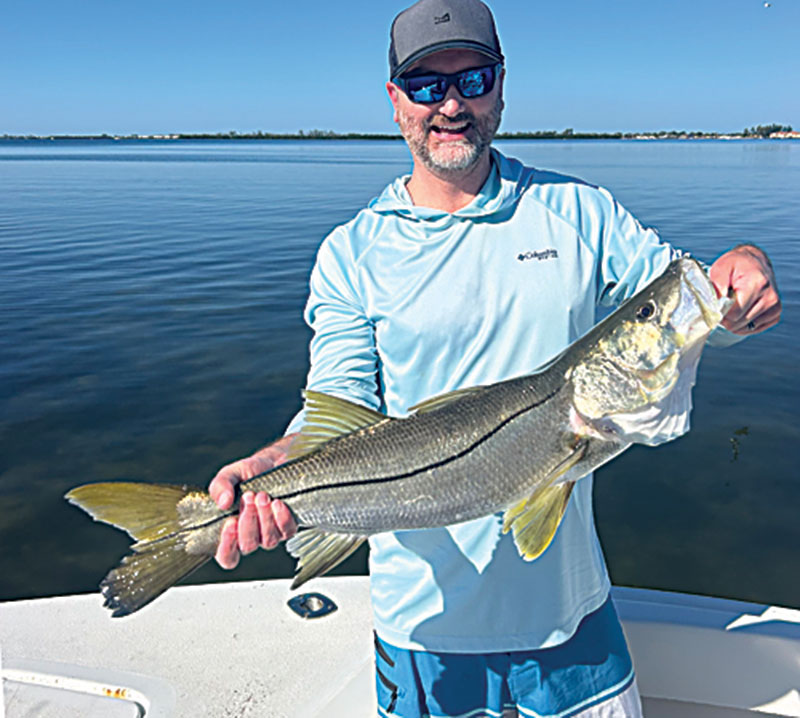
Moving inshore, Mattay is finding some catch-and-release action on snook with live shiners as bait. Spotted seatrout and redfish are available while working the inshore waters.
Mattay says Spanish mackerel are abundant on the deeper grass flats.
Capt. David White is finding action for his anglers by working the flats of Tampa Bay off Anna Maria Island, south to Sarasota Bay. Drifting and jigging over flats in depths of 4-6 feet is leading to a variety of species for the cooler, including pompano, ladyfish, jack crevalle and spotted seatrout.
On deeper flats, using shiners as bait, macks, spotted seatrout and bluefish are the norm.
Moving to the shallow flats adjacent to mangrove shorelines, White is producing action on some catch-and-release snook with a few redfish in the mix. Targeting redfish around rocks and docks is producing good action and casting live shrimp along the Gulf beaches is yielding black drum and a few sheepshead.
White produced a nice haul of hogfish for his clients, too.
Send high-resolution photos and fishing reports to fish@islander.org.