
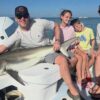






As we settle in for the last week of May, many Anna Maria anglers have one thing on their minds — tarpon fishing.
The epidemic is spreading rapidly as anglers flock to our island in search of an encounter with the silver king.
The addiction is real and the time and effort that feeds the addiction can be all-consuming.
Spending 10-hour days on the water is normal when guiding tarpon and that’s putting it lightly. Aside from tracking the fish and monitoring their patterns, there is also the upkeep of the tarpon tackle. Making sure your gear is operating properly to ensure that it will withstand the power of the awesome fish is critical and there is no room for failure when the hookup occurs. Nine-foot, extra-heavy spinning rods combined with the largest spinning reel available, packed with hundreds of yards of heavy braided lin,e followed by 8 feet of fluorocarbon leader and circle hooks that will fill the palm of your hand, complete the recipe on the terminal end.
And then there are hours spent catching bait, patrolling the passes on the strong outgoing afternoon tides to gather crabs, while throwing a 12-foot cast net to catch threadfin herring takes up the rest of the daylight hours between a short sleep and the early morning tarpon excursion.
Many anglers arrive on AMI with a charter booked to hunt the elusive tarpon along the beaches.
Many have never caught such a fish and after they’ve been behind the reel for an hour in the scorching Florida sun, they beg for help bringing the fish to the boat.
“Can you take the rod for a while?” they ask.
And then there’s the seasoned tarpon angler — a tarpon junkie — who knows what to expect, enabling them to whip the fish and bring it boatside in under 30 minutes.
They come back year after year knowing that they’re going to be submitted to sunburn, dehydration and physical exhaustion. These are tarpon addicts.
I can hear it in their voices when they call to book a tarpon trip. It’s the same with all of them. They know that they are setting themselves up for a strenuous experience, but the overall reward is too great to resist. No matter what the cost, they are all in.
Thousands of dollars are spent buying their absence from the family at beach rentals, dining and, of course, a golf cart rental. And then there’s the price of a fishing charter, where the outcome is unknown. They may not even get a bite, but that’s all part of the addiction.
Take pity on these poor souls, as they know what they do. Adrenaline and anxiety take over until they finally receive a fix.
Ahhh. There it is.
“Fish on,” they cry out.
The rod bent over double, drag screaming off the reel so fast it starts to get hot and a tarpon skyrockets on the horizon.
Organized chaos at its finest.
And then the symptoms subside and some resemblance to normalcy returns.
At least until the next tarpon season.
On my own Just Reel charters, I’m enjoying the calm, tranquil waters of the backcountry, targeting trout and snook. Having guided tarpon trips for 10 seasons, I’m now passing the torch onto more eager captains who can prescribe the right dosage to the tarpon addicts.
Spotted seatrout are cooperating nicely on my backwater trips, with limits of fish being attainable on most days.
Freelined live shiners cast over deep grass flats are yielding trout 14-22 inches.
Catch-and-release snook fishing is good, with many fish being found on the flats. Most catches are 20-30 inches, with some larger examples mixed in.
I am seeing random redfish mixed in with the snook, which adds variety and the potential of achieving an inshore slam.
Mangrove snappers are appearing on some of the nearshore structure, although I’m not seeing limits.
Capt. Johnny Mattay of Anna Maria Charters is in pursuit of tarpon with his clients as he patrols the Gulf beaches of Anna Maria Island and Longboat and Egmont keys.
He has anglers casting live threadfin herring or pass crabs with success, noting the early morning tides and late evening tides are peak times for a hookup.
Moving offshore, Mattay is excited to see the yellowtail snapper bite heating up. He’s chumming yellowtails, enticing them to rise from the bottom to the mid- to upper-water column, before his clients cast into the slick.
Red grouper are a good bet, as well as mangrove snapper and amberjack.
Mattay says the inshore bite is producing action on redfish, trout and catch-and-release snook, with early morning tides working best for quick action.
Send high-resolution photos and fishing reports to fish@islander.org.