




“It’s been bittersweet,” Suzi Fox, Anna Maria Island Turtle Watch and Shorebird Monitoring executive director said Sept. 12, summarizing the 2018 sea turtle nesting season.
High levels of red tide in the waters surrounding Anna Maria Island during August — and continuing this week offshore — likely were the cause for about 25 dead sub-adult and adult sea turtles in the region.
However, a lack of major storm events this summer means the rate of hatchlings emerging from nests on the beach is breaking records on Anna Maria Island.
Nesting season in Florida, which runs May-October, parallels hurricane season, which is May-November.
“This is the first season in longer than I can remember where we have had no big storms,” Fox said.
As of Sept. 16, AMITW reported 400 hatched nests on the island and 32,143 hatchlings — the most hatchlings to the Gulf of Mexico since turtle watch began keeping records.
Extended periods of higher-than-usual tides and standing water on the beach can flood nests, lessening the likelihood that hatchlings will mature and emerge from their clutch in the sand.
Subtropical Storm Alberto brought wind and rain to Anna Maria Island over Memorial Day weekend, May 26-28, but not enough to impact the hatch rate.
According to NASA estimates, Alberto dropped 2-4 inches of rain over the Tampa Bay area.
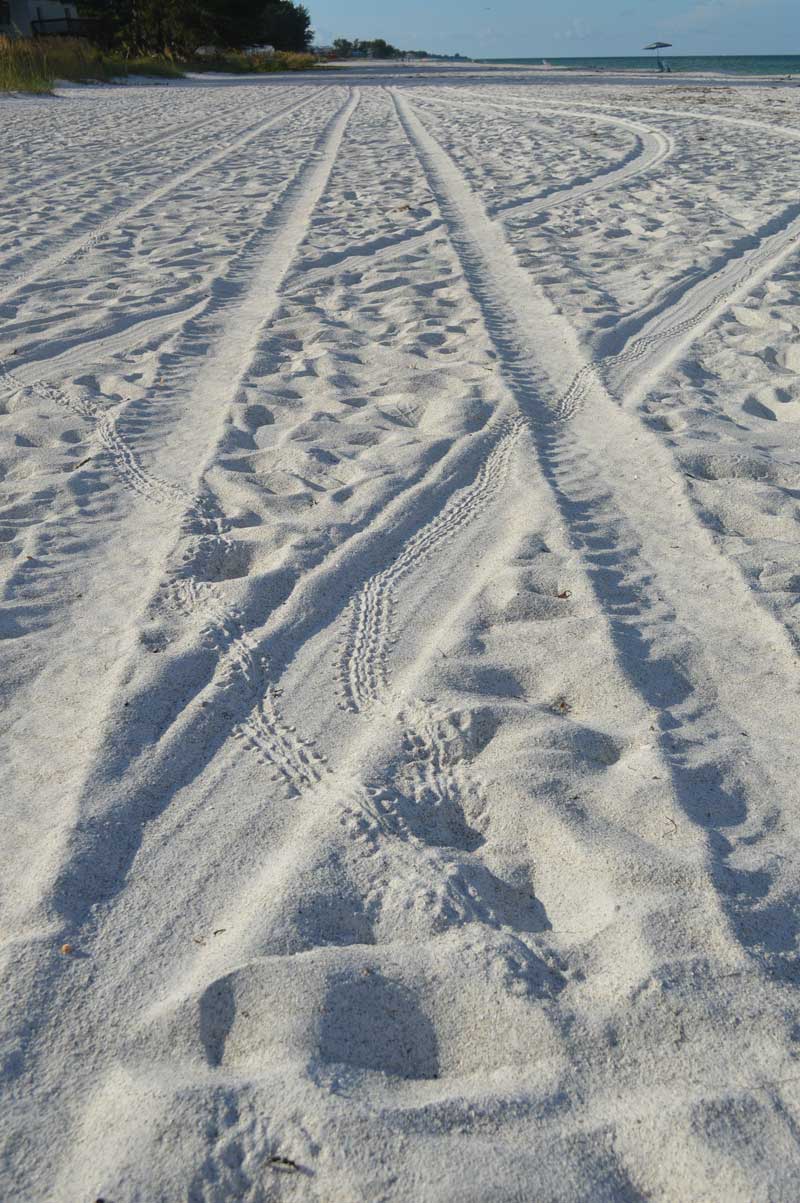
While there have been no major storm events this season, afternoon and evening storms that became routine around the beginning of September have made it difficult for turtle watch volunteers to see the tracks left by hatchlings as they trek overnight from nest to water.
“We knew they were disorienting because police officers found hatchlings in the road,” Fox said.
Ideally, hatchlings head to the Gulf upon emerging from the clutch, following the reflection of the moon and stars on the surface of the water.
However, lights visible from the beach can “disorient” them and lead them away from the water, towards land, bushes and roads, where they can become victims of predation, dehydration or roadkill.
Turtle watch volunteers study the tracks around hatched nests to determine if the turtles went to the water or elsewhere, but rain can obscure the tiny trails, making it harder to tell if they made their journey to the water.
As of Sept. 12, AMITW documented 40 hatchling disorientations compared to 55 in 2017.
During nesting season, local and state laws require exterior lights visible from the beach be low and shielded and fixtures must contain turtle-friendly bulbs. Interior lights, including televisions, must not be shielded by curtains or blinds after dark.
As season draws to a close, Fox said she hopes the disorientation numbers remain lower than the past.
“Together with code enforcement in the three island cities, we have been working with property owners and managers to keep lights in compliance,” Fox said. “People have been really responsive once they know there is a problem.”
As for the red tide, Fox said she has her “fingers-crossed,” hoping it steers clear of the island.
She said her last call reporting a deceased loggerhead was Sept. 7, compared to the calls she was getting almost daily in August.
“The beaches are looking pretty darn good,” Fox said Sept. 13. “Let’s hope they stay that way.”
For more information about AMITW, contact Fox at suzilfox@gmail.com or 941-778-5638.