





Springtime fishing around Anna Maria Island can be a windy affair.
Northern cold fronts are sweeping down to our area bringing windy days and slightly milder temperatures than we’re accustomed to in the South.
The milder temperatures — in the 60s overnight and ranging in the 70s to 80s in the day — are welcome but not the wind. At least, not from this fisher’s standpoint on the water.
But don’t be discouraged, as there are plenty of inshore fishable waters on even the windiest days.
Fishing close to mangrove shorelines in sheltered areas is working well. Luckily for us, snook and redfish call these areas home, making them targetable when the wind and chop kick up.
Getting to some of these areas in a boat might pose a challenge but, for those willing to brave rough water, the reward is plentiful.
Many snook are being found throughout the local waters. In fact, the numbers of snook measuring 20-24 inches is encouraging for the future of this fishery.
Redfish are being found in decent numbers, although not anywhere near the snook. Spotted seatrout, another popular backcountry fish, also are abundant. Fishing slightly deeper flats near the mangrove shoreline is providing excellent action on these fish. On some flats, the trout are being caught as fast as the bait goes in the water. And, on the deeper grass flats, other species, including Spanish mackerel, jack crevalle and ladyfish, are being caught alongside the trout. These fish add spice to the routine bite.
On calmer days, adventurous anglers are migrating offshore to target a variety of species. Although opportunities to fish offshore are limited by the wind, those determined to go are being rewarded with catches of permit, snappers, kingfish and amberjack.
On my Just Reel charters, I’m finding the flats fishing to be good. Snook fishing is as good as it gets, resulting in 20-30 catch-and-release size snook on a morning charter.
I’m also seeing some keeper-size fish being hooked and released. These larger, slot-sized fish, measuring 28-33 inches, are a thrill for anglers to catch on medium-light spinning gear.
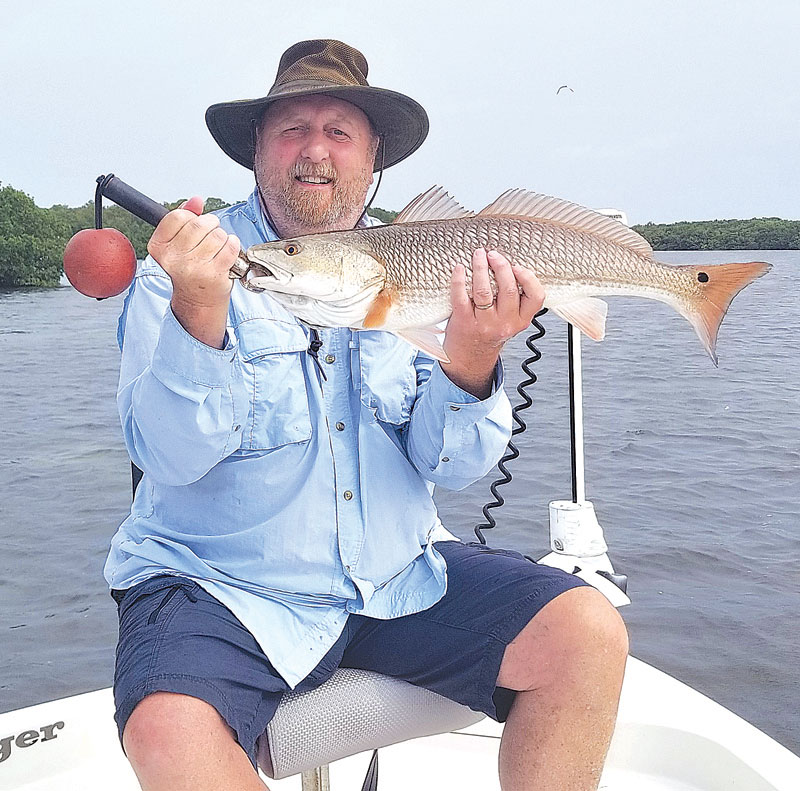
While targeting snook, I’m seeing redfish being caught, most in the upper-slot or over-slot range, measuring 25-35 inches.
Lastly, the spotted seatrout bite is fantastic. Limits of these fish are attainable, although catch-and-release is encouraged. The fish reproduce rapidly, so keeping a few for a meal also is an option.
While targeting trout, some large Spanish mackerel being caught, as well as jacks and ladyfish.
Capt. David White is working inshore throughout the waters of Tampa Bay. Fishing over structure in the bay — reefs and wrecks — is resulting in catches of numerous mackerel. Free-lining live shiners on a long shank hook is leading to multiple hookups on these voracious migratory predators. Most mackerel are on the larger side, measuring 20-26 inches. While targeting these macks, anglers are hooking into jack crevalle and ladyfish. On these shallow grass flats in Tampa Bay, White is finding plenty of snook, as well as redfish for his clients. Both are being caught around mangrove shorelines where good tidal flow exists.
Capt. Warren Girle is finding good action throughout the grass flats of Sarasota Bay, where spotted seatrout are being found in abundance on the deeper flats.
While targeting the trout, Girle is putting clients on ladyfish, jacks and macks.
On the shallower flats, Girle is finding success with catch-and-release snook and redfish. Both are responding to live shiners as bait. For the snook, mangrove shorelines are working best. As for the reds, Girle is locating schooling reds on the open flats.
On calmer days, fishing the Gulf of Mexico is feasible, and Girle is putting clients on kingfish action, with catches weighing up to 30 pounds.
Jim Malfese at the Rod & Reel Pier says pier fishers using live shrimp as bait are hooking a few sheepshead although most are on the small side. On days when bait schools are present around the pier, mackerel, jack crevalle and ladyfish are being targeted by anglers using small jigs or silver spoons.
The number of snook arriving at the pier is ever-increasing as the water temperatures rise. Snook 20-30 inches are being caught by anglers using live baits — shrimp, shiners and pinfish.
Capt. Jason Stock says permit is the highlight of offshore fishing for another week. Freelining live crabs over wrecks and reefs in the Gulf of Mexico is leading to permit ranging 10-20 pounds. Not only are these fish one of the fiercest adversaries for their size on spinning gear, but they are quite good to eat.
Stock also is turning his anglers onto mangrove and vermilion snapper. Both are frequently being caught while bottom fishing over structure.
Lastly, amberjack and kingfish are finding their way to Stock’s boat. Freelining live baits — shiners and threadfin herring — is working well to lure these large offshore predators to the hook.
Send high-resolution photos and fishing reports to fish@islander.org.
‘No swim’ advisory remains for causeway beach
A “no swim” advisory issued April 1 remained in effect April 11 for the Palma Sola South beach along State Road 64/Manatee Avenue.
Other beaches in Manatee County were not under an advisory, including Bayfront Park North in Anna Maria, Manatee Public Beach in Holmes Beach and Coquina and Cortez beaches in Bradenton Beach.
A “no swim” advisory indicates water contact may pose an increased risk of infectious diseases to humans, according to a news release from the Florida Department of Health in Manatee County.
Health department officials said test results from samples taken at Palma Sola South March 28 and again March 30 showed an elevated level of enterococci bacteria.
The advisory will be in effect until the water meets U.S. Environmental Protection Agency guidelines.
Water quality at some county beaches is monitored under the Healthy Beaches Monitoring Program.
Water samples are analyzed for enteric bacteria, which can cause human disease, infections or rashes.
For more information about the program, call the health department at 941-714-7593 or go online to www.floridahealth.gov and select “beach water quality” under the “Environmental Health” tab.
— Lisa Neff