







Fewer visitors, inflation, labor shortages and supply-chain bottlenecks — it sounds like a cruel summer ahead for islanders looking to turn a buck.
But entrepreneurs and managers in the rental, restaurant, retail, transportation and recreation sectors are expecting profits in the coming months and some are laying plans to expand their enterprises.
Wagner Realty property manager Lisa Varano said about 60% of the outfit’s 110 island rental properties were booked as of May 18, down from about 80% in 2021.
The drop was consistent with Vrbo data indicating bookings were down about 22% for the area.
Varano attributes the drop to late-pandemic competition from cruises and other destination locations and the rising prices of airfare and gas.
Rental rates on the island, which have increased sharply in recent years, could be motivating would-be visitors to vacation elsewhere, she said.
Island Real Estate broker/owner Larry Chatt concurs: “My gut says that the data is going to continue to show that we need to reduce rates to garner the same occupancy as we saw last summer.”
Chatt said about 80% of the 100 rental properties his company manages were booked as of May 17, about the same percentage as last year.
However, future Island Real Estate bookings are weaker than at the same time in 2021.
Chatt and Varano said they’ve noticed a trend — rental reservation lead times are shrinking, an indicator that supply is outpacing demand.
Summer renters — typically single families that book one-week stays — have traditionally been in a position to rent last-minute. But a surplus of open island properties and competitively priced rentals in more exotic locations, such as Bermuda, is increasing their advantage over AMI property owners, Chatt said.
Both rental managers have had conversations with property owners about reducing rates if booking trends continue and said they work to meet the needs of two groups of owners with differing philosophies. One group is willing to change prices rapidly to fill their rentals, while the other seeks value and consistency from fixed rates.
To combat labor shortages and inflation this summer, Chatt and Varano will rely on cross-trained employees and efficiency technology, such as e-signature software and digital identification systems that allow workers to sort thousands of pounds of laundered rental property linens more quickly.
Restaurants, bars
Slim’s Place owner Chris Smargisso said the Anna Maria sports bar and family restaurant experienced more of a drop in customer volume after the Easter holiday than last year, something he attributes to higher rental prices on the island.
If rates continue to rise, he fears renters will have less to spend at island eateries.
“Everybody comes in with a budget and they try not to exceed that budget,” Smargisso said May 18. “If the prices on the houses get too high, No. 1 we’re going to lose rentals and No. 2 we’re going to lose that extra money people have to spend in restaurants and bars.”
Despite a late-spring dip in tourism to Anna Maria Island, customer volume remains higher than pre-pandemic levels.
However, he said inflation is eating into his bottom line, leaving his business at 9701 Gulf Drive in Anna Maria “somewhere between” surviving and thriving.
“My gross numbers for this year’s season were better than last year but my net sales were a little bit lower due to inflation and the cost of everything going up,” he said.
The increased costs and unpredictable scarcity of meat, vegetables and paper goods, as well as demand for employees, led the restaurateur to raise menu prices about 7% and to increase staff wages after Easter.
With the cost of living on the island steadily increasing, business owners have little recourse but to raise wages to attract employees from the mainland.
“If you can work downtown or in Bradenton somewhere, why bother driving all the way out to the island?” Smargisso said. “So that forces everyone out here to pay a little more.”
Regarding summer revenue, Smargisso said all business owners can do is regularly review profit-and-loss statements and adjust accordingly.
In the long run, he believes customer volume will remain high, insulating entrepreneurs from the difficulties plaguing businesses in other parts of the country.
Paul Foster, owner of Ginny’s and Jane E’s Cafe and Gifts in Anna Maria, said his customer volume remains high, bolstered by the eatery’s growing reputation with people on the mainland.
The restaurateur’s formula for popularizing Ginny’s and Jane E’s — great food coupled with great staff, which he retains with competitive wages — has been so successful that he recently invested in a renovation project.
He expects a traditional flow for the summer season but predicts food and material prices will level off without falling to pre-pandemic levels.
Retail
In the retail sector, Adina Dicus, owner of Restless Natives boutique in Holmes Beach’s Island Shopping Center, said sales volume and profits are higher than last year at this time despite a dip in foot traffic.
Customers are buying more of Dicus’ locally crafted lamps, pottery and other home goods and not shying away from top-shelf items.
The business owner attributes the boost in sales to increasing homeownership on the mainland.
Dicus, the shop’s only employee, expects sales to remain strong all summer and said she plans to use profits to renovate her space later this year.
On Bridge Street in Bradenton Beach, Kelly Headley, owner of Cove Gallery and Boutique, told a similar story May 20 — business remains stronger than before the pandemic due to the uptick in people establishing permanent residences in Bradenton.
Transportation and recreation
On the transportation front, Robinhood Rentals AMI manager Mike DeLeo said business volume at the Anna Maria LSV, moped and scoot coupe rental outfit, 9802 Gulf Drive, was beginning to resemble pre-pandemic levels.
“It’s good, it’s healthy, it’s still growing but it’s nothing that would knock your socks off,” he said May 18.
This summer, he anticipates Florida residents taking weekend trips will represent a significant share of his business.
Soaring gas prices have hit the business hard, prompting owner Mark Toomey to make a second investment in electric vehicles.
Toomey added eight electric carts to a 72-vehicle Anna Maria fleet in the spring of 2021. He plans to purchase 12 more this summer.
Despite high gas prices, Robinhood won’t raise its rates.
“I don’t want to take that out on the customer,” DeLeo said. “It’s simpler for business and customer reviews just to keep the prices standard where they are.”
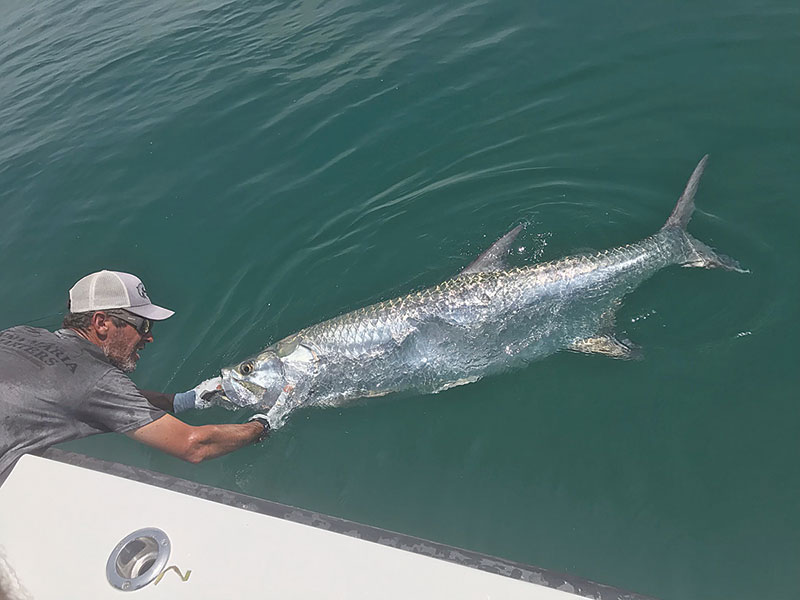
Capt. David White of Anna Maria Charters — offshore and inshore guided fishing trips — said he’s booked through July 10 following a lull in reservations after spring break.
Local repeat customers represent the lion’s share of his bookings in late spring and early summer, insulating his fishing business from fluctuating tourism.
Overall, White estimates customer volume is up 30% compared to pre-pandemic levels.
The seven-year guide said he’s had no choice but to raise rates to keep pace with rising fuel costs.
The company’s four boats are outfitted with fuel-efficient engines but White and colleague Capt. Johnny Mattay regularly chase fish far offshore.
In June, White will is looking to capitalize on the sportfishing lust for tarpon and the popularity of American red snapper with their customers.
Business will remain strong as long as red tide doesn’t materialize, White said May 19.