





It was a cloudy morning in November 1985 — I was 10 — and I sat in the living room getting ready to watch morning cartoons. I moved to the TV and turned to channel 44, hoping I wouldn’t have to go outside and adjust the antennae to get a good picture.
I had faked being sick that morning so I could get a day off from school and I found pleasure knowing that I had the house to myself. My mother was at work and so was my father.
I settled into the couch in my pajamas and commenced to watching Elmer Fudd chasing Bugs Bunny around when I heard the latch on the door to the patio open.
It was my dad.
He was home for some reason.
When he saw me on the couch, he asked, “Danny, why are you home from school?”
“I didn’t feel good, so mom let me stay home. Why are you home from work?” I asked.
“I got rained out. So I can’t paint today.”
My father owned his own painting business, Afterglow painting, and had been working on an exterior job.
Although it was raining, it was just intermittent showers — a few sprinkles here and there and no large storms. In other words, it was bad painting weather.
My father headed out to the garage and I could hear him moving stuff around. I got up to see what he was doing and saw he was readying his fishing tackle.
I stood at the door to the garage, watching as he gathered his rods and a 5-gallon bucket with the cast net in it, another 5-gallon bucket with his tackle, pliers, hooks, leader material, rags and the aerator.
“Are you feeling better already?” he asked.
I smiled and nodded yes.
“OK, get your rod and let’s go,” he said.
I ran to my room, got dressed, went back to the garage, grabbed my rod and ran outside.
My father was loading his tackle into his work vehicle, a light-blue 1974 LTD Ford station wagon. He was busy unloading the extension ladders from the roof and putting them on the side of the house. The back window of the wagon was down so I slid my rod into the back next to his rods among all of the painting tools.
It was a tight fit to get the rods on top of all the drop cloths, paint buckets, rollers, extension cords and brushes.
The smell of paint, mineral spirits and sweat emanated out of the car as I opened the front door and slid into the dark blue vinyl seat — usually scorching hot from the sun. Instead, it was cool on my legs.
My dad entered the old wagon, cranked her up and the big V-8 rumbled as he put the car in reverse and backed out of the driveway. He turned on the radio, which was tuned to 1040 WHBO — his favorite oldies channel.
Gene Chandler was singing the “Duke of Earle” as we cruised west down Cortez Road toward the island. I didn’t know where we were going fishing and I didn’t care, as it sure beat being in school.
At the end of Cortez Road, we turned south on Gulf Drive and arrived at the 3 piers in Bradenton Beach. The dirt parking lot was covered in coffee-cream-colored puddles as we splashed in and parked under the Australian pines.
Since it was cloudy with chances of rain coming in and out, the beach was empty and so was the pier we had chosen to fish. That day we would fish the southernmost pier. It was always best when we had the pier to ourselves and so far, it looked like we would.
We grabbed our gear and walked out over the white sugar sand to the base of the pier. I took the rods and the landing net while my dad carried the cast net and the bucket with all our terminal tackle.
The bait was thick around the pier as the large schools swirled up and down the sides in the clear Gulf water.
We set down our gear and my dad prepared to catch bait. The 5-gallon bucket with the cast net in it would act as our baitwell. We had a piece of rope attached to the handle that was long enough to drop the bucket over the side of the pier, fill it with water and haul it back up.
After placing the battery-powered aerator on the lip of the bucket, I turned it on and heard the gentle hum as the bubbles began to form in the water. While doing this, my dad loaded the cast net and tossed it in the water over a large school of bait. It landed in the water in a perfect circle, “a pancake,” and it sank to the bottom, engulfing the baitfish. He pulled the line tight to close the net and then hauled it on the pier to empty the bait where I stood waiting to gather it and put it in the bucket.
The snowy egrets, white egrets and a big blue heron gathered around as the small baits flipped on the cement slab of the pier. As the birds darted in and out snatching their breakfast I started putting baits in the bucket.
“Not too many,” my father warned. “They’ll all die if we overload the bucket.”
Out of the 40-50 baits we caught, I put about two dozen in the bucket. The rest we pushed back over the pier into the water and the birds quickly cleaned up any we missed.
Now it was time to fish.
It was a struggle to carry that 5-gallon bucket of water and bait the rest of the way to the end of the pier but through a lot of huffing and puffing I managed to make it.
“What are we fishing for today?” I asked, still breathing heavy from carrying the bucket.
“Well,” my father replied, “Let’s see if there’s any mackerel around.”
He was excited to target mackerel as he had been working on a new rig to catch the toothy fish.
Using a regular monofilament leader always left you at the mercy of getting their sharp teeth and trying to use a metal leader resulted in few to no bites, as it was just too visible, which deterred the mackerel.
The dilemma was finding a leader that was wire but not as visible as the leaders you could purchase at the local tackle shops.
And my dad figured it out. He found some very thin copper wire at a hardware store and made some short 3-inch leaders with a small black swivel on one end and a small hook on the other.
We tied a couple of these experimental leaders on our lines and cast out baits. Within a minute or so, my dad was hooked up. The drag screamed off his old Mitchell 302 saltwater spinning reel and the rod bent over double as he held it high to battle the fish.
As the fish neared the pier, we could see through our polarized sunglasses that it was a hefty-sized Spanish mackerel.
I reeled on my Mitchell 300 to retrieve my bait so I could grab the landing net to hoist the fish up on the pier. The net — a 4-foot landing net with a 10-foot wooden dowel attached as the handle to make it long enough to reach the water — was awkward in my hands but on the second try I managed to net the fish.
The rig worked.
The copper wire held up to the mack’s teeth and we landed the fish.
Upon removing the hook, my dad slit the throat of the mackerel to bleed it and laid it on the pier.
Over the next hour or so, we commenced to catching one mackerel after the other, feeling triumphant that not only were we catching fish but that my dad’s leader invention worked perfectly.
Having a half-dozen mackerel for dinner and releasing three times that many as to not waste them, we decided to head home in time to be there before my mother got home from work.
We packed the mackerel on ice in a cooler and loaded our gear in the wagon just as it was starting to rain.
Back home, I watched my father clean the fish on a board over the laundry tub in the garage. His wood-handled filet knife easily sliced the macks, cutting them into steaks.
We talked about how good the fish were
biting and how our mackerel rigs worked. It was a feeling of satisfaction, of having achieved something, especially on a day when we weren’t supposed to be fishing.
It was a feeling of spending time with my father that I would never forget.
In fact, I still use his rigs. And they still work. And more importantly, I have the memories of spending days on the water fishing my with dad — learning how to be a man and a good fisherman — memories that I can cherish forever.
Happy Father’s Day, dad. Thanks for rainy days and for taking me fishing.
And all of you grown-up kids out there, don’t forget to call dad on Father’s Day and thank him for simply being dad. And hopefully, dads, you can create memories with your kids that will last a lifetime. It was a feeling of spending time with my father that I would never forget.
In fact, I still use his rigs. And they still work. And more importantly, I have the memories of spending days on the water fishing my with dad — learning how to become a man and a good fisherman — memories that I can cherish forever. Happy Father’s Day. dad. Thanks for rainy days and for taking me fishing.
And all of you grown-up kids out there, don’t forget to call dad on this Father’s Day and thank him for simply being dad. And hopefully you can create memories with your own kids that will last a lifetime.
Checking in with captains: snook, snapper, tarpon and more
Capt. Johnny Mattay says he’s finding good action on catch-and-release snook while fishing the flats of Tampa Bay. Casting baits along shallow flats and mangrove shorelines is leading to multiple hookups on linesiders.
Fishing along the sandy beaches in the Gulf of Mexico and in the passes is providing good results. On deeper flats in 5-8 feet of water, Mattay is catching spotted seatrout. The trout, along with a mix of other species — Spanish mackerel and ladyfish — provide plenty of entertainment for Mattay and his clients. Plus, the trout and macks provide fish to take home for dinner.
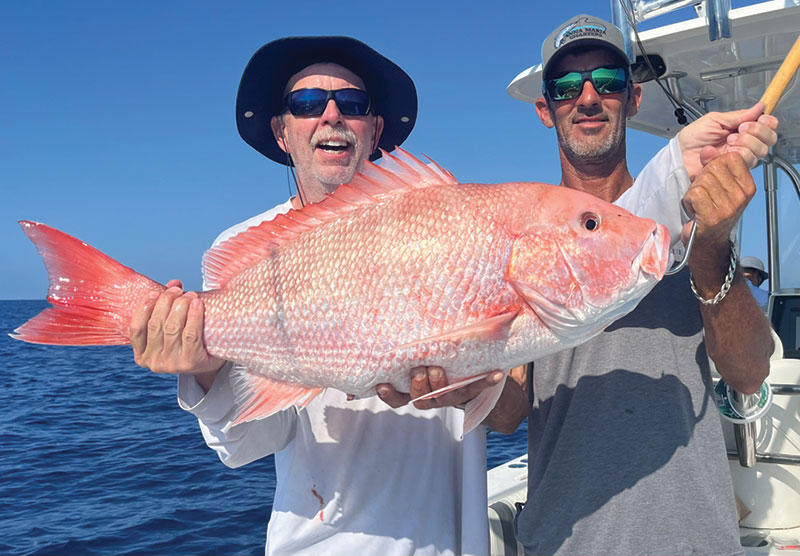
Moving offshore, Mattay is targeting American red snapper. Using live pinfish as bait combined with a bottom rig is leading to limits of the aggressive fish. Also, while offshore, Mattay is catching yellowtail and mangrove snapper as well as plenty of red grouper.
Capt. David White is spending most of his days tarpon fishing along the Gulf beaches and in the passes. Most catches are 80-150 pounds, with several hookups per charter. Casting live crabs during outgoing tides is producing the best action, although live threadfins as bait during morning tides works, too.
When he’s not tarpon fishing, White is offshore catching American red snapper. Limits of fish are being caught in depths exceeding 100 feet of water. After limiting out on red snapper, White is finding action on red grouper and mangrove snapper around Swiss-cheese bottom.
Send high-resolution photos and fishing reports to fish@islander.org.