






Numerous cold fronts settling in around Anna Maria Island is prompting anglers to pack their patience when getting out on the water to fish.
Water temperatures hovering in the mid 50s are slowing down the metabolism of most species we target in our local waters, which makes them less apt to take a bait and, in turn, requires the angler to wait longer than normal between bites. Finding warmer water temps can aid in this dilemma as fish in these areas may be slightly more comfortable and willing to bite.
By working areas such as canals, where deep water and black muddy bottoms exists, is a good bet. Slowly working a live shrimp on a jig head in these areas can result in action on numerous species — spotted seatrout, redfish, black drum and flounder.
Fishing deeper structure in Tampa Bay also is an option. Sheepshead like to hang around these areas and don’t seem to be as affected by the cold, which can result in some good action once you can find them.
Fishing offshore in the Gulf of Mexico where temps in depths of 40-80 feet seem to remain more consistent can result in a more consistent bite.
Using live shrimp in these areas can lead to action on hogfish, mangrove snapper, Key West grunts and large gag grouper. Of course, you need to pick your days when venturing offshore, as typically when cold fronts are present, we experience strong winds, which are not conducive to offshore fishing.
But, on those calmer days, deeper water fishing is probably the most consistent bite you’ll find.
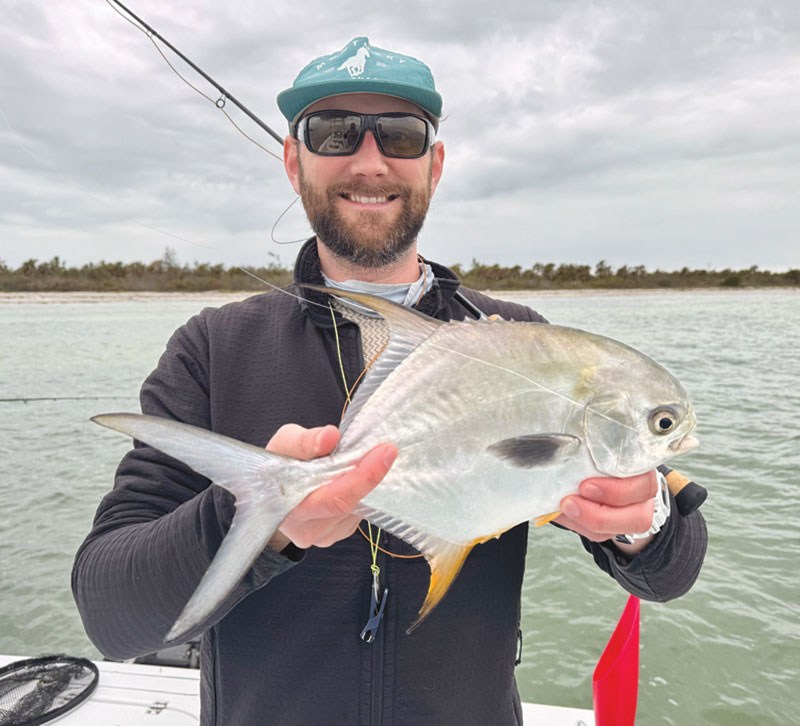
Finally, for those who don’t have access to a boat, fishing along the Gulf beaches can be productive. Casting jigs tipped with shrimp can result in a variety of hookups on trout, ladyfish, bluefish and pompano.
Capt. Johnny Mattay is taking most of his charter fishing trips in the Gulf of Mexico when the winds are light and the seas calm.
In depths of 100-plus feet, Mattay says the red grouper bite is quite good, as he is easily putting clients on limits of these tasty fish. Also while in the Gulf, Mattay is finding a variety of other catches, including hogfish, mangrove snapper, Key West grunts and gag grouper.
Moving inshore, Mattay is setting his anglers on catching spotted seatrout around deep grass flats, channel edges and canals. He’s also finding some sheepshead and redfish by casting shrimp around docks and along seawalls.
Capt. David White is finding action while working inshore throughout Tampa Bay. Fishing along the gulf beaches with live shrimp is leading to action on a variety of species, including black drum, redfish, pompano and sheepshead. In many instances, White is tipping a small jig with fresh cut pieces of shrimp to attract these fish to the client’s hook. Slowly dragging these jigs on the bottom through the sand is resulting in a bite.
Fishing over deep grass and in canals is leading to action for White’s charters, too. Spotted seatrout and redfish are being found in these areas as well as an occasional snook.
Capt. Wes Wildman is putting a bite together while fishing rocks and docks in Sarasota Bay, resulting in a mixed bag of species while using live fish shrimp as bait. Redfish and black drum are prevalent in some areas, while spotted seatrout are in others. Other species such as mangrove snapper and sheepshead also are being caught. And with the last full moon of January, Wildman expects the sheepshead bite to improve as more fish should be moving into bays and Intracoastal Waterways.
Lastly, jigging with soft plastics over deep grass flats is yielding spotted seatrout and an occasional pompano for Wildman’s anglers.
Send high-resolution photos and fishing reports to fish@islander.org.