






Although anglers on Anna Maria Island are experiencing some exceptional weather conditions made of warm breezes and air temps in the upper 70s, fishing inshore is challenging.
Although we had a warmup, water temps are hovering in the mid- to upper-50s thanks to the overnight low temps, and that’s still a little chilly for many of the inshore species we like to target.
If you’re staying inshore, try to find areas where water temps are slightly higher. You can also plan to get out slightly later than normal to let the sunshine do its magic and warm the waters.
Although catching fish is harder than normal, a little determination and patience will go a long way if you’re on the fish. They may not be as apt to pursue a bait, but with enough convincing they may venture over for a little taste. Then it’s up to you to set the hook for the battle that ensures.
If the inshore bite just isn’t supplying the fix you need, you can venture into the Gulf of Mexico to try bottom fishing. In depths of 40-60 feet the water temps remain more consistent, which seems to yield a better bite.
Live shrimp on a knocker rig will attract many species to the hook in these areas. Sheepshead, snappers, porgies, grunts and hogfish are susceptible to live shrimp on a hook, which can produce quite a bit of action in a short period of time. It’ll take longer to get out there than it will to fill the cooler with enough fish for a fish fry, so be ready for action and be sure to carry plenty of bait.
On my Just Reel charters I’m finding good action while inshore fishing, although it’s taking patience and determination to pull it off. Spotted seatrout are responding to live shrimp, either free-lined or rigged with a split shot. Typically, once the trout are located, there are a bunch of them in the vicinity, which can yield a fairly consistent bite.
Fishing around the Gulf beaches is producing action on sheepshead, black drum and whiting, with a few permit mixed in for lucky anglers. Moving to deeper water in the Gulf, bottom fishing is providing action.
Species such as sheepshead, snappers, hogfish, porgies and grunts are quite abundant and are ideal for those hoping for a fish dinner.
Capt. Wes Wildman says nearshore fishing is where it’s at— although chilly water temps are causing inshore species to seem lethargic and finicky.
In depths of 40-50 feet of water, Wildman is finding plenty of action while fishing ledges and hard bottom in the Gulf of Mexico. Species such as flounder, sheepshead and Key West grunts are frequent, while species such as hogfish and mangrove snapper are mixed in.
Wildman is employing a 1- to 2-ounce knocker rig topped off with a live shrimp to get a bite. During stronger tides, more weight is required to get the bait down to the bottom, where the fish lurk.
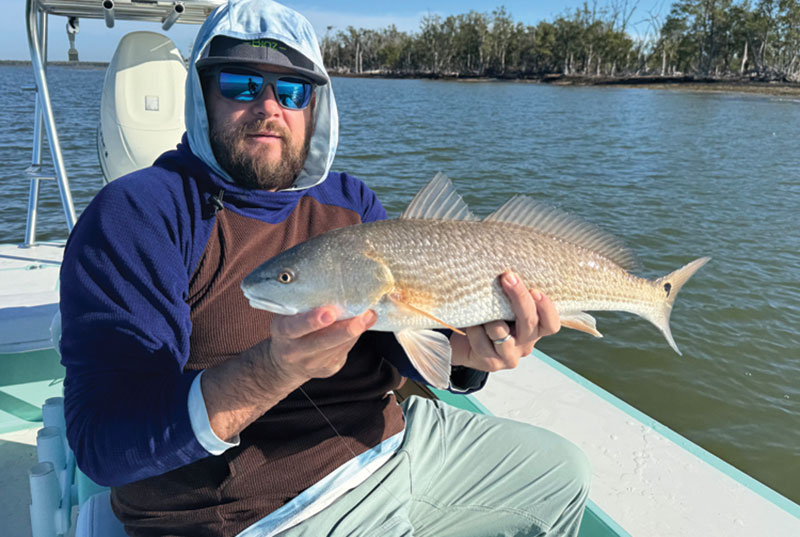
Capt. David White is finding action on sheepshead and redfish while working inshore in Tampa Bay. Fishing canals, seawalls and docks is producing a somewhat consistent bite as the water temps in these areas are generally a couple of degrees higher than the waters out in the open. The small difference in temperature seems to help the fish find their comfort zone and take a bait.
Moving out into the Gulf, White is targeting hogfish. Using live shrimp as bait is leading to hogs 3-5 pounds. Mixed in are Key West grunts, porgies and plenty of mid-range groupers.
Send high-resolution photos and fishing reports to fish@islander.org.