





For the past three weeks — in the wake of Hurricane Hermine — no new loggerhead sea turtle nests have been observed on the beaches of Anna Maria Island.
But even the wind, rain and rough surf Hermine dealt when it passed Anna Maria Island in the Gulf of Mexico and made landfall Sept. 2 in north Florida as a tropical storm has not deterred hatchlings from emerging from their nests on the beach and making their way to the Gulf of Mexico.
Suzi Fox, executive director of Anna Maria Island Turtle Watch and Shorebird Monitoring, said she has received several calls from local waterfront businesses asking if they still need to keep lighting turtle-friendly, following the damage caused by Hermine to the nests.
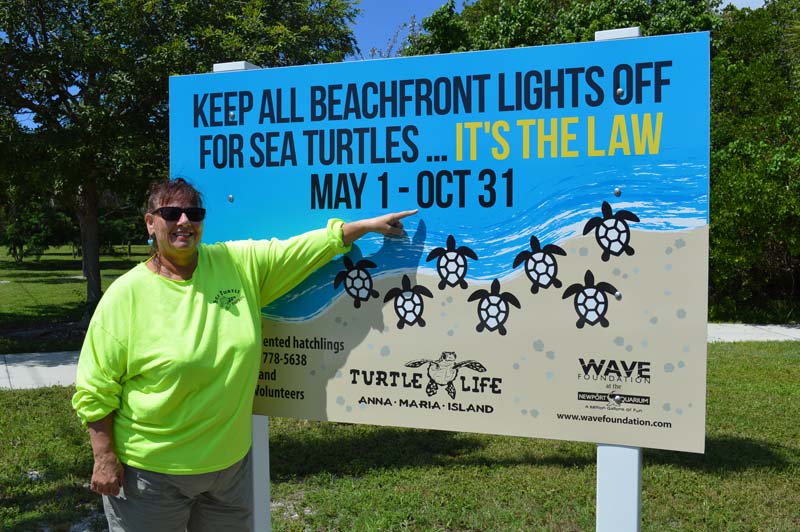
“We don’t know where all the nests are after Hermine, so it is especially important to keep lights sea-turtle friendly,” Fox said. “Sea turtle season isn’t over until Oct. 31 and we may even have hatches into November.”
When a powerful storm causes increased rainfall and higher tides, sea turtle nests lining the beach are considered “wash-outs.” It becomes questionable as to whether eggs and hatchlings in the nest will survive, said Fox.
Sea turtle eggs absorb water and the tiny hatchlings can drown in the nest if the tide inundates the clutch with water.
Following the storms that resulted from Hermine, many of the stakes AMITW used to mark a nest for protection and tracking were swept away in the surf, leaving unmarked nests that can produce surprise hatchlings, according to Fox.
While no new nests have been observed since the storm, approximately 302 hatchlings have emerged from pre-storm nests in the weeks post-Hermine, according to AMITW.
As of Sept. 20, 57 unmarked and 65 marked nests remain on AMI beaches — and are likely to hatch before Oct. 31, the official calendar end of sea turtle season, said Fox.
Waterfront residences and businesses on Anna Maria Island must have outdoor lights installed low and shielded and use turtle-friendly bulbs. Indoor lights must be turned off or curtains and blinds closed after dark. This is because sea turtles — which usually hatch from their nests when the beach cools down at night — follow the reflection of the moon and stars on the water to find their way to the Gulf.
Artificial lighting visible from the shoreline can distract sea turtles, causing them to head away from the waterline, which can lead to death by predation or dehydration.
On the morning of Sept. 20, AMITW volunteers Matt and Tammy Rosenfeld were conducting their morning survey walk in AMITW section 6, which extends south from the Manatee Public Beach, 4000 Gulf Drive, to 26th Street in Holmes Beach, when they discovered signs that an unmarked nest hatched the night before.
The tiny tracks in the sand indicated the hatchlings made their way to the water.
The nest, located on the beach in the dunes near 3110 Ave. F, Holmes Beach, initially had been marked as a false crawl, according to AMITW section 6 coordinator Annie Camp.
A false crawl occurs when a sea turtle emerges from the water to nest, becomes distracted and returns to the Gulf without nesting.
“When we first investigated the crawl, we didn’t find the clutch of eggs, so we were pleasantly surprised by the hatch,” said Camp.
“This is proof that we still have viable nests out there. So lights must stay compliant through the end of October,” Fox said. “We are still in season and will be working right up until the last nest hatches.”
For more information about sea turtles, contact Fox at suzilfox@gmail.com or 941-778-5638.