






Migratory shorebirds — including terns, plovers and skimmers — are returning to their winter home on Anna Maria Island beaches to rest and nourish before mating and nesting in spring.
But this respite comes with a variety of challenges.
Red tide — an algae bloom in the Gulf of Mexico producing toxic chemicals in high concentrations affecting marine life and humans — can affect shorebirds.
“Eating toxic fish will make shorebirds sick and ill birds will not be able to fend off predators, preen or take care of themselves and may die,” said Suzi Fox, Anna Maria Island Turtle Watch and Shorebird Monitoring executive director.
Red tide blooms can last from a couple of weeks to a year, but generally move north or south with wind and current, according to the Florida Fish and Wildlife Conservation Commission.
As of Sept. 29, red tide conditions along offshore areas of Manatee County were moderate-high, according to the National Oceanic and Atmospheric Administration.
On Sept. 28, Fox said there are more migratory shorebirds on the island than usual for this time of year, likely due to birds moving north, away from higher concentrations of red tide off Longboat Key.
Sewage released in Tampa Bay — millions of gallons of untreated or partially treated sewage, according to the XXX Department of Environmental Protection — also has been a source of concern for AMITW.
Fox said several sick shorebirds — laughing gulls — were found on the beach near Palmetto Avenue and on Bean Point in Anna Maria, the week after the most recent sewage release, Labor Day weekend. AMITW volunteers took the birds to Wildlife Rescue and Rehabilitation Center Inc. in Bradenton Beach.
AMITW volunteers are on the lookout for sick birds.
Volunteers conduct biweekly beach surveys to account for shorebird species and report the findings to the FWC and Manatee County.
Permitting for county beach renourishment projects requires accurate shorebird counts, said Fox.
During a survey, AMITW volunteers observe bird behavior, habitat type, possible disturbances affecting birds and beach conditions, Fox said.
“It takes about four hours to cover the island and we write down everything we see,” Fox said.
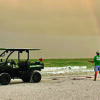
AMITW works with Mark Taylor, a Manatee County parks and natural resources employee who usws a tractor to rake county beaches, to ensure his equipment does not disturb shorebird habitats on the beach close to the waterline, according to Fox.
When encountering shorebirds resting on the beach or in the dunes, it is important not to agitate them, Fox said.
“These shorebirds are here putting on fat and muscle for the spring — chasing or otherwise disturbing them will cause distress which will impede mating,” Fox said. “Let them be so they can get strong for the season to come.”
For more information about shorebirds or to report a sick or injured shorebird, contact Fox at suzilfox@gmail.com or 941-778-5638.