




A little taste of fall weather is a welcome signal to the fishing community of Anna Maria Island and surrounding areas.
We’re finally settling in to our fall pattern, which promises some great fishing for both inshore and nearshore anglers alike. Bait is being found in abundance — another good sign. And even better yet — the red tide appears to have abated.
On the flats, I’m experiencing a great snook bite. Rallies of 20-30 snook are not uncommon. Most catches are schooley fish — 20-26 inches — but I’m seeing a keeper once in a while. Mixed in with the snook, I’m finding a lot of rat reds, most running 15-16 inches. There are keeper fish present, too, although I’m not seeing them with the frequency of the smaller fish.
Moving out along the beaches of Anna Maria Island and beyond, I’m seeing a surplus of Spanish mackerel. These fish are a great adversary on light tackle and an enjoyable species to catch. Kingfish also are making a showing. Numerous kings in the 5-10 pound range are being caught with fish up to and exceeding 20-pounds mixed in. That being said, it’s time to get the smoker ready.
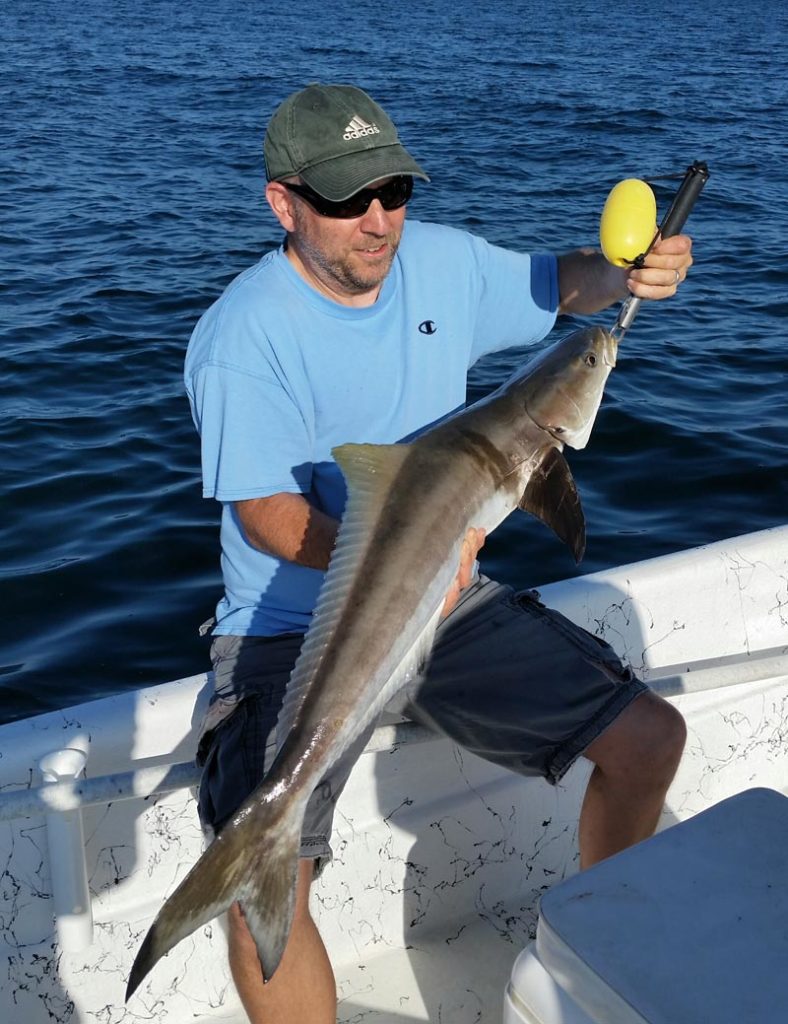
Capt. Aaron Lowman is working nearshore structure along the beaches out to about 40 feet of water with good results. Spanish mackerel, kingfish and, most importantly, cobia are being caught on live shiners. According to Lowman, the macks are most abundant in areas where artificial reefs and rock piles are found. The kings and cobia are following suit.
For the inshore bite, Lowman is fishing shallow grass flats where mangrove islands or oyster bars are present. Snook and redfish are both being taken in these scenarios via a live shiner as bait. Spotted seatrout are biting on grass flats, although in deeper water of 4-6 feet. Again, live shiners are the bait of choice.
Capt. Warren Girle is working nearshore structure and finding an abundance of kingfish and mackerel for his clients. Both species are being caught with frequency by free-lining live shiners behind the boat. For the macks, small shiners in the 3-inch range are working best. As for the kingfish, larger shiners in the 5-6 inch range are proving to be perfect. While targeting macks and kings, Girle is hooking into an occasional cobia.
Moving inshore, Sarasota Bay is providing some excellent action on redfish. During low tides, Girle is stalking reds along shallow flats where sandy potholes or “depressions” are found. During these low tides, the redfish take refuge in the pockets of water. This being said, rallies of redfish are coming aboard Girle’s boat.
Jim Malfese at the Rod & Reel Pier says fishing is quite good at the northern tip of Anna Maria Island. Pier fishers using live shrimp as bait are catching a wide variety of species, including redfish, black drum, flounder and sheepshead. Live baits such as pinfish and shiners are producing a bite. Numerous snook are being caught on either bait.
Pier fishers electing to use lures are grabbing for Gotcha plugs or small jigs. Results from their choice include Spanish mackerel, ladyfish, blue runners and jack crevalle.
Capt. Jason Stock is taking clients offshore for kingfish, mackerel and cobia. For the kings, slow trolling large baits —threadfin herring, blue runners or large shiners — is attracting a bite. The macks and cobia are being taken while at anchor. Free-lining smaller size live shiners is attracting both species to the boat.
Tripletail are being caught on the Stock charters. Live shiners or shrimp under a popping cork or just free-lined around floating debris are quickly eaten by these mysterious-looking fish.
Capt. David White of Great White charters says the Spanish mack action is “crazy right now.” Free-lined live shiners on a longshank hook are a sure thing when trying to catch macks and kingfish are being caught on larger baits, such as threadfin herring. When fishing around structure White is finding gag grouper while trolling lipped plugs around the reef. Pinfish or shiners dropped to the bottom while at anchor can also produce a bite on gags. Lastly, cobia are being taken in the same areas as the gag grouper. Bottom rigs with live pinfish attached and sent down to the reef are being devoured.
Send high-resolution photos and fishing reports to fish@islander.org.