






As we progress through April, Anna Maria Island anglers with pent-up anticipations of a springtime catch are finally seeing fruition.
Water temperatures are on the rise and the bite inshore and in the Gulf is beginning to break loose, resulting in anglers who want to spend as much time as possible on the water — especially after experiencing such a long, cold winter — at least by island standards.
With minimal amounts of rainfall, most of the inshore waters from the Sunshine Skyway Bridge south through Sarasota Bay are about as clear as they can get, making for a surreal experience in the shallows. It’s possible to see everything on the bottom and peer into a mysterious, lush world that most of the time is hidden from the naked eye.
Lush grass flats and pristine sandy bottoms are exposed for all to see, as well as prop scars and bare patches from delinquent boats that have been abandoned and remain resting in place, blocking light to the habitats below.
These clear waters present opportunities to find inshore and nearshore structure like wrecks, rock piles and reefs for future reference. Spending some time during midday when the sun is straight overhead can be well worth the effort, as it can lead to discoveries and potential places to catch fish.
Or in some instances, just going over old waypoints is good, as you can monitor if they’re still there, broken up or even covered with sand from Hurricane Milton.
In any scenario, now’s the time to get out and do some exploring as well as some fishing. The inshore bite is really getting good with good numbers of snook, redfish and trout inhabiting the flats and mangrove shorelines.
Migratory species like cobia, kingfish and mackerel are patrolling structure in the bays and the Gulf. And with the clear water in the Gulf, you should be able to spot cruising cobia from a long distance as they typically stick out like a sore thumb.
Moving farther to depths of 100 feet or more is getting good as red grouper and mangrove snapper are frequenting wrecks and hard-bottom areas in good numbers.
So while the waters are perfect, make some time to get out there for scouting and fishing.
On my own Just Reel charters, the clear, calm conditions of the inshore waters of Tampa Bay are yielding pleasurable days and plenty of action.
Spotted seatrout are making quite an impression as they aggressively strike live bait and artificials. All size ranges are coming to the boat for my anglers and depending on location, we’re hitting limits on most days, plus plenty more being caught and released.
Larger specimens 22-25 inches are being found on shallow flats during high tides, while fish 13-18 inches are abundant on the deeper flats.
Targeting snook is finally getting dialed in, as many fish have finally moved out of their wintertime haunts and are prowling the flats in search of a meal. Live shiners free-lined along mangrove edges are quickly being inhaled by hungry linesiders. Many are schoolies of 20-24 inches, although larger fish are in the mix, surprising unexpected anglers as they dump line off the spool and the drag screams across the flat.
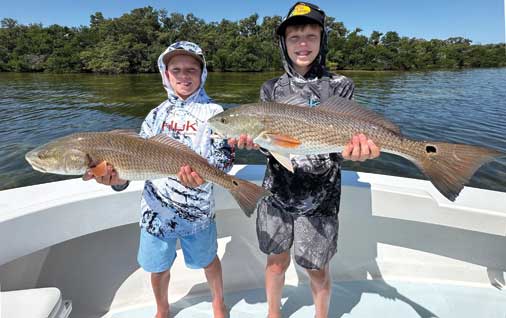
Redfish are frequenting the same areas as snook and are being caught randomly to add variety to the bite.
Fishing over structure or deep grass in the bay is yielding migratory fish like mackerel, ladyfish and jack crevalle. The size of most macks being caught is impressive, as some exceed 24 inches to the fork. As for a tablefare, not everyone likes it, but they drive some folks wild. As for ladyfish and jacks, they’re good for action and shark bait. They’re effective in both departments.
Capt. Johnny Mattay of Anna Maria Charters is growing enthusiastic about fishing inshore around AMI as the water temperatures rise. Fishing mangrove edges, oyster bars and shallow grass flats with sandy potholes is leading to some great inshore action.
Mattay says snook fishing is proving to be quite good with numerous catches occurring during the higher stages of the tides.
The same applies to targeting redfish. Schooling reds are being found, resulting in multiple simultaneous hookups, which is enough to keep everyone occupied until their arms are worn out.
Moving to deeper grass flats is yielding plenty of spotted seatrout for Mattay’s clients, with most action occurring on the incoming tides.
For anglers looking to cast their line in the Gulf, Mattay says nearshore and offshore action is starting to heat up. Artificial reefs and wrecks are producing kingfish and Spanish mackerel as well as gag grouper and Cobia. And in the deeper offshore waters, red grouper and large mangrove snapper are rounding out the bite.
Capt. David White is finding good action for his clients while working the reefs and wrecks in the Gulf. Kingfish and mackerel are putting White’s anglers to the test as they peel drag and fight until the end. Cobia are present in these areas, too, and are equally as strong, just not as frequent.
Moving inshore, White says snook fishing is starting to get good with good numbers of fish being caught on half-day charters. Redfish also are a good bet during higher tides, and casting live shiners along sandy beaches and mangrove edges with oyster bars present is doing the trick.
Send high-resolution photos and fishing reports to fish@islander.org.