







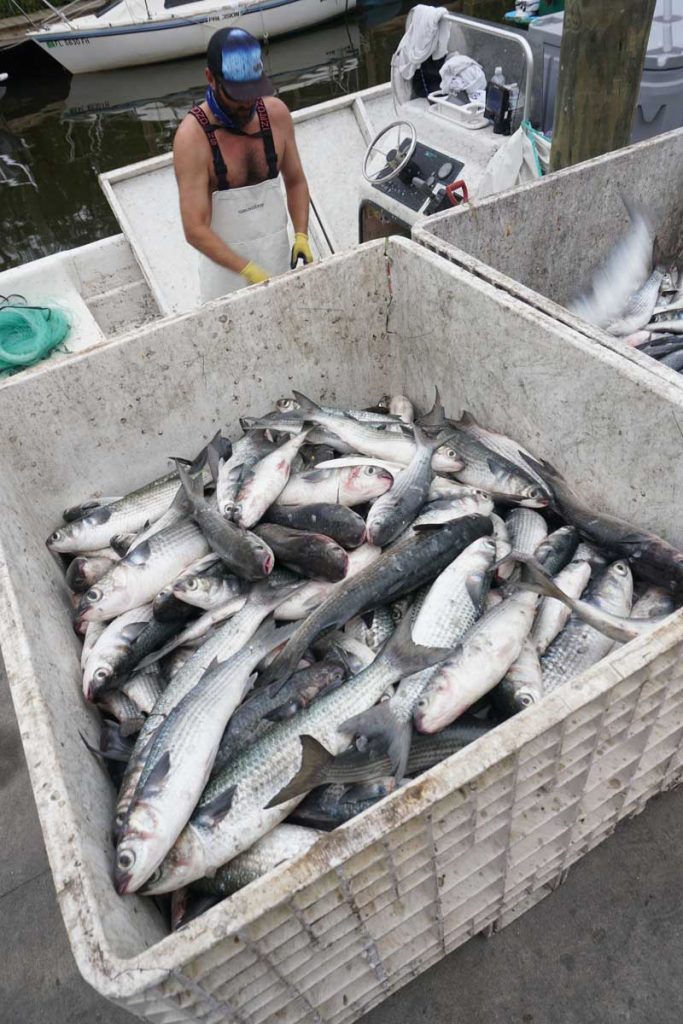
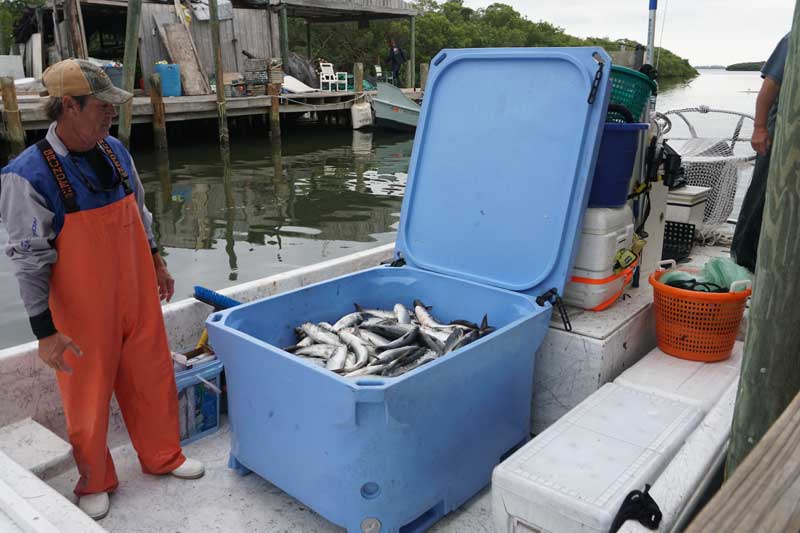

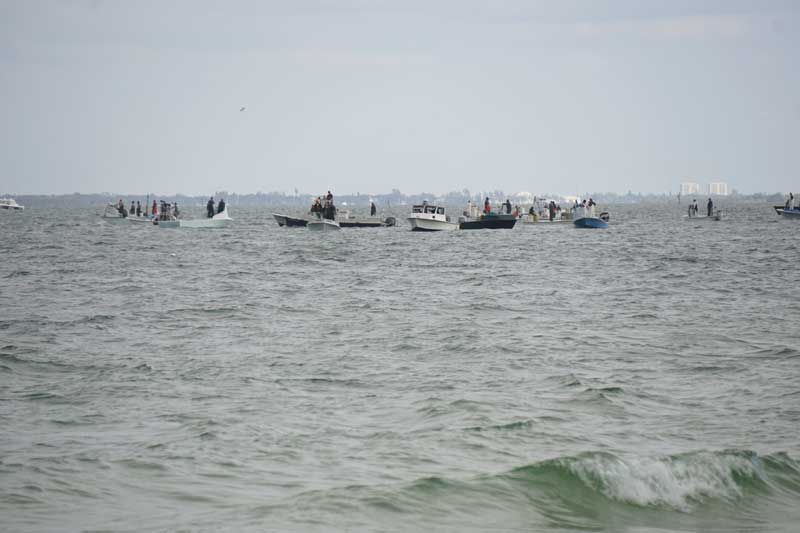
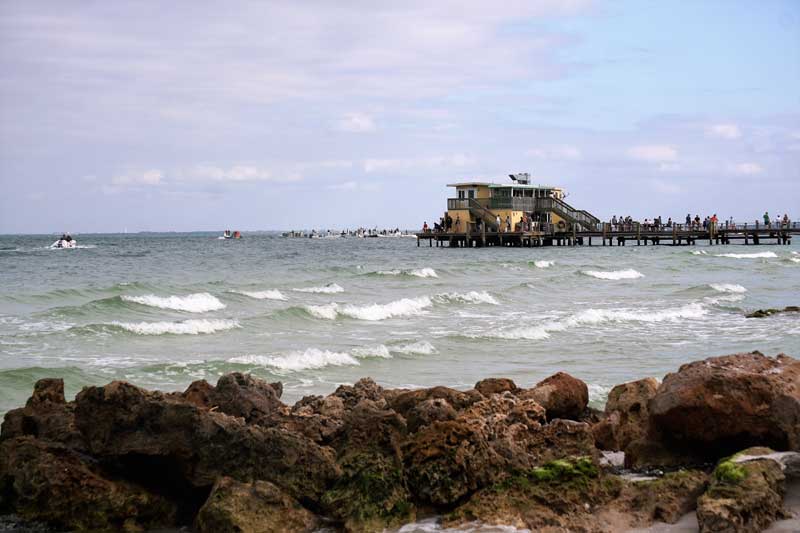
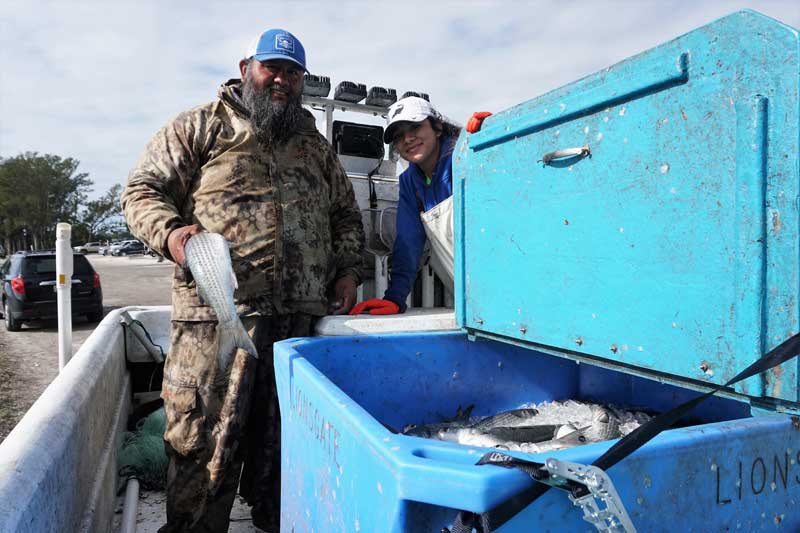

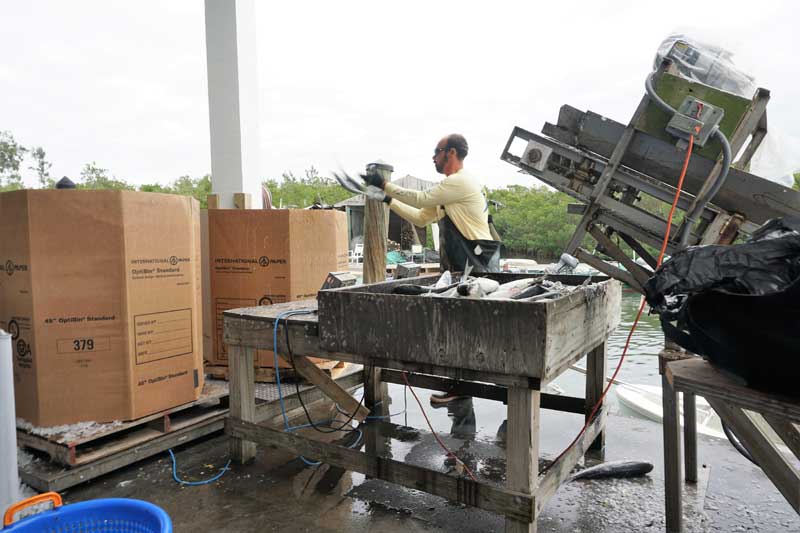
The start of the 2017-18 mullet season is looking good, although a bit late.
Fishers count on the mullet cash to sweeten their Christmas shopping.
At least the Cortez fish houses were kept busy for Christmas.
Cortez Bait & Seafood Co. is “a little bit in the weeds,” John Banyas, owner of the Cortez fish house, Swordfish Grill and N.E. Taylor Boatworks on 119th Street West, said Dec. 27.
Banyas reported the mullet season picked up with “a good Christmas Day run.”
“Too busy” with “lots of mullet” is how Karen Bell described her fish house in a Dec. 26 text.
Bell is the president of A.P. Bell & Fish Co., 4600 124th St. W., Cortez. She also owns the Star Fish Company, a market and restaurant next to the larger Bell fish house and docks on the waterfront.
The mullet runs annually in the Gulf of Mexico off Florida coasts, including Anna Maria Island, between late December to February.
Jupiter fisherman William Modaffari, now in his 12th year of mullet fishing in Cortez, predicts a good mullet season despite the late start.
Fishers, including Modaffari, estimated they casted 3,000-4,000 pounds of mullet from their vessels Dec. 26, and brought the fish to Banyas’ 119th Street dock.
The red roe — the female eggs popular overseas in Europe and Asia — demands the highest price, yet all of the mullet is popular, say processors.
Banyas and Bell said the prices per pound are $1.30 for females and 20 cents for males.
With “tall orders” for white roe this year, Banyas doesn’t expect mullet waste as in past years.
Male mullet littered the beaches during a bumper mullet harvest in 2015 blamed on fishers discarding the male mullet, in favor of the more valuable females.
Returning mullet to the water before they perish is key to preventing the problem.
The Florida Fish and Wildlife Conservation Commission increases patrols during mullet runs to ensure fish are properly handled and stored on ice, and to prevent mullet waste, according to Robert Klepper, FWC law enforcement spokesman.
FWC spokesman James Boogaerts believes mullet waste hasn’t been a problem because with the “slow year,” fishers were keeping and selling their entire catch.
State law prohibits spearing fish and limits gear to two cast nets, no longer than 14 feet, and two beach or haul seines per vessel. Hook-and-line fishing is allowed, but mullet are not attracted to bait.
No problems were reported Dec. 26 by FWC officer Joel Buckson at the Kingfish Boat Ramp.
“It’s holiday season,” said Buckson. “You can see it’s busy out here. We’re here to make sure they’re playing by the rules.”
Fishers, processors and the FWC say the later-than-usual mullet run is a response to weather.
Falling water temperatures signal the start of the spawning trek.
Cold fronts with northwesterly winds and a dropping barometric pressure trigger mullet migration from canals, backwater and shallows in large schools to spawn in the Gulf of Mexico.
Catching the mullet before they spawn is the fishers’ goal.
The male and female mullet are in the process of congregating and traveling some 100 miles to the continental shelf to spawn, according to Fish & Wildlife Research Institute researcher Ed Matheson.
The migration slows after a cold front, with the mullet awaiting the next cold snap to move offshore.
“Now we’re waiting on the next weather system, hoping for a new year’s run,” Banyas said Dec. 27.