




Late summer on the Gulf Coast of Florida means storms.
Sea turtles nest on Anna Maria Island beaches May-October, paralleling the rainy season.
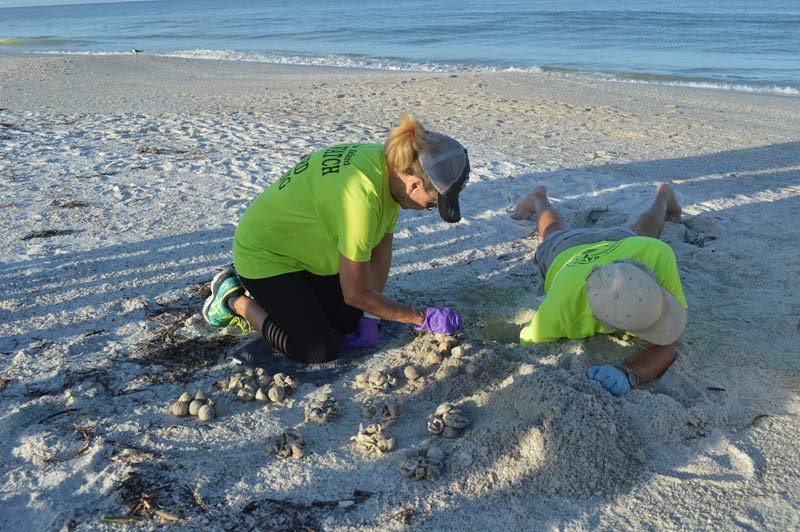
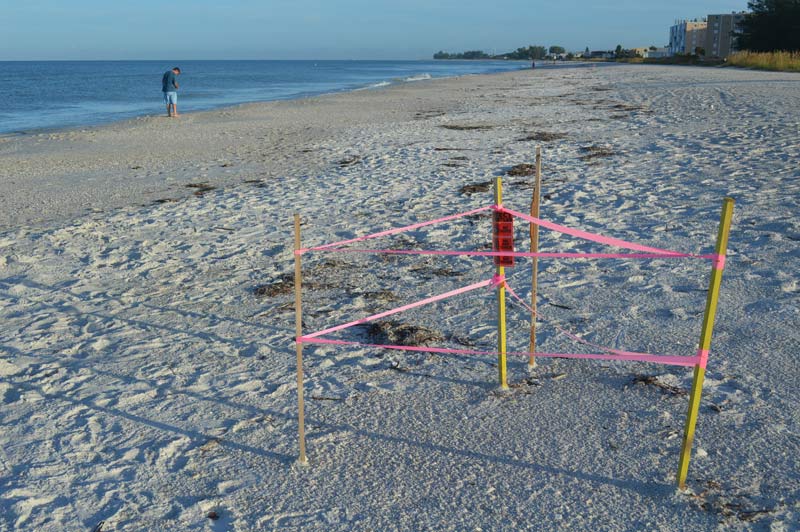
In mid-August, a week of heavy rains and high tides meant some nests close to the shoreline sat in water for days.
When exposed to increased rainfall and higher tides, nests can be washed-over and eggs and hatchlings inside may not survive, according to Suzi Fox, Anna Maria Island Turtle Watch and Shorebird Monitoring executive director.
Sea turtle eggs absorb water and the hatchlings can drown before they can emerge.
However, Fox said this is just a part of a natural cycle.
“We used to relocate the lower nests to higher ground,” she said. “Now, due to research, we know it is better to let them be and let nature do its thing.”
Fox said the temperature of a clutch of eggs buried in the sand to incubate determines the sex of hatchlings, with embryos in eggs closer to the surface becoming females and those deeper in the sand, where it is cooler, developing as males.
“Moving the nests could change the sex of the hatchlings,” Fox said. “And where the nest is placed should be the mother turtle’s decision, not ours.”
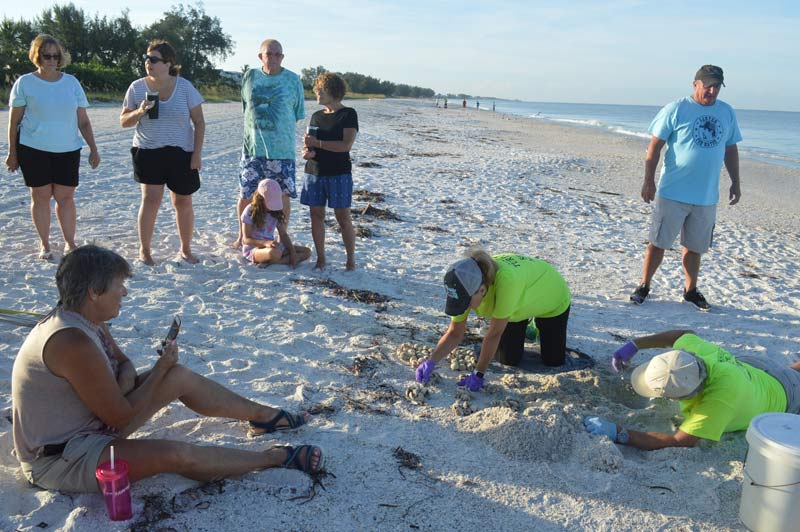
Fran Kramer, AMITW volunteer section coordinator for the stretch of beach from 66th Street to the Manatee Public Beach, 4000 Gulf Drive, in Holmes Beach, said Aug. 20 that data in her section showed some washed-over nests had good hatch rates, but many others contained unhatched eggs.
“I think it has to do with drainage,” Kramer said.
Fox agreed.
She said that part of the beach is mostly flat, so it does not drain as well as the beach to the south, which also had washed-over nests, but with higher hatch rates, thanks to a steeper slope toward the water.
With 530 nests documented on Anna Maria Island in 2019 as of Aug. 23, nesting numbers are close to 2018’s record-breaking total of 534 nests.
Hatchlings started emerging from nests on the beach July 4 and, as of Aug. 23, AMITW reported 17,678 hatchlings had made their way to the Gulf of Mexico.
At this point in the season, human negligence is more of a concern than storms, according to Fox.
Hatchlings, like nesting sea turtles, are guided by the reflection of the moon and stars on the water. Light visible from the shoreline — including interior lights not shielded by curtains or blinds — can disorient nesting turtles and hatchlings, leading to predation, dehydration, exhaustion and death.
As of Aug. 22, Anna Maria had five disorientations, Bradenton Beach had 14 and Holmes Beach had 22, totaling 41 disorientations, according to numbers provided by AMITW to the Florida Fish and Wildlife Conservation Commission.
On the same date in 2018, 32 nests had disoriented: one in Anna Maria, 10 in Bradenton Beach and 21 in Holmes Beach.
“We are a little higher than last year, but not much,” Fox said. “The goal is for code compliance in the three cities to continue contacting owners with problematic lighting to get the situations handled.”
Fox sends disorientation reports daily to code compliance in the cities, so the officers know which properties to inspect.
“We need code to keep on the properties that we have problems with every year,” she said.
Additionally, AMITW provides the cities with turtle-friendly bulbs, funded through grants, to hand out to people who need them for their properties to be compliant.
“We are most of the way through another great season,” Fox said. “Let’s hope we can keep disorientations to a minimum and get as many hatchlings as we can off to the sea.”