







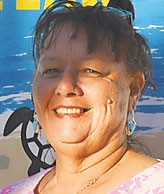
Anna Maria Island Turtle Watch and Shorebird Monitoring executive director Suzi Fox loves sea turtles.
With sea turtle nesting season getting underway, Fox May 3 discussed the history of AMITW and her experience with the organization with The Islander over the phone.
The Islander: How did the program get started?
Suzi Fox: In 1983, there was a man named Dr. Dodge. He was a statistician. He and his wife were very interested in sea turtles. Sea turtles were endangered, but there was no program to measure the success rate. Being a stat guy, he knew protection and data collection were the key. Our program is older than Mote Marine’s program.
Q: How long have you been with AMITW?
SF: Since 1990.
Q: Were you a volunteer first?
SF: I was.
Q: When did you become the executive director?
SF: I took the director position in 1996, but I was still working full time. I can’t remember when I started to get a salary. I think it was the year 2000.
Q: What did you do before AMITW?
SF: In the seventies, I lived in Miami and I managed large hotels. When I came here, my mother was with me and my grandmother lived with us because she had dementia. Within a couple of years, both of them passed away. Depression was tough. That’s when I really got into turtle watch. At the time, my mother had had a cleaning business that cleaned rentals out here on the island. I picked that up because it was mindless and it was active. So I cleaned toilets. It’s not embarrassing to me. It actually helped me heal.
Q: How have things changed since the early years?
SF: We realized that education was a really big component to this. We never asked for money from the cities. We raised it ourselves and we received some county funding. I found grants. I’m not a grant writer. It’s a hard job, but I learned to wear many different hats. I found that if you surround yourself with good people, it’s a win-win.
Q: What about the program itself has changed?
SF: ATVs and automation made a big difference because they are more efficient. We also have cut back on allowing masses of people to monitor together. Before, we thought that educating on the beach was good. We realized volunteers were missing crawls and nests. That was a huge change. It had turned into such a social club, but really we’re an environmental group. It was hard because every time someone volunteered, they became a part of me. When the pandemic started, I had to call some of our people who had breathing problems and ask them to step back.
Q: How does your past experience influence how you go about turtle watching today?
SF: We have fine-tuned it to where we have almost every tool to make this go smooth. There’s no brick walls for us anymore. We have ATVs and we have a software engineer who designed an app for us. He’s redesigning it right now. His wife is going to make it people-friendly.
Q: What have you learned about sea turtles?
SF: I learned that being cranky and trying to demand what the public should do isn’t helping the turtles. We need to teach people to fall in love with them and protect them by staying back, giving us a heads up if they see something and filling in the holes. That is what’s going to help these turtles. Nothing has changed with these ancient, wonderful creatures. I’m more in awe of them than I was when I first started.
Q: What have you learned about beachgoers?
SF: The island has gotten more busy. I lived here I believe in the best of times. Visitors come here to this island not to seek high-rise accommodations. They want to be your neighbor. I worry that they’re going to love these turtles to death. So, again, the education is very important.
Q: What’s the biggest challenge?
SF: The enforcement of our ordinances is not an easy job. We must work with code officers constantly to help them and keep them trained. The hardest thing is helping the cities protect the turtles. It’s my job to collect data. It’s their job to go question it.
Q: Do you have any plans to change the program in the future?
SF: We made such huge changes in the last two years. We don’t know if what we designed this year is going to work as smoothly as we think it will. We’re adaptable.
For more information, go to AMITW’s website at islandturtlewatch.com or call AMITW at 941-778-5638.