







FWC, fishers jaw about sharks
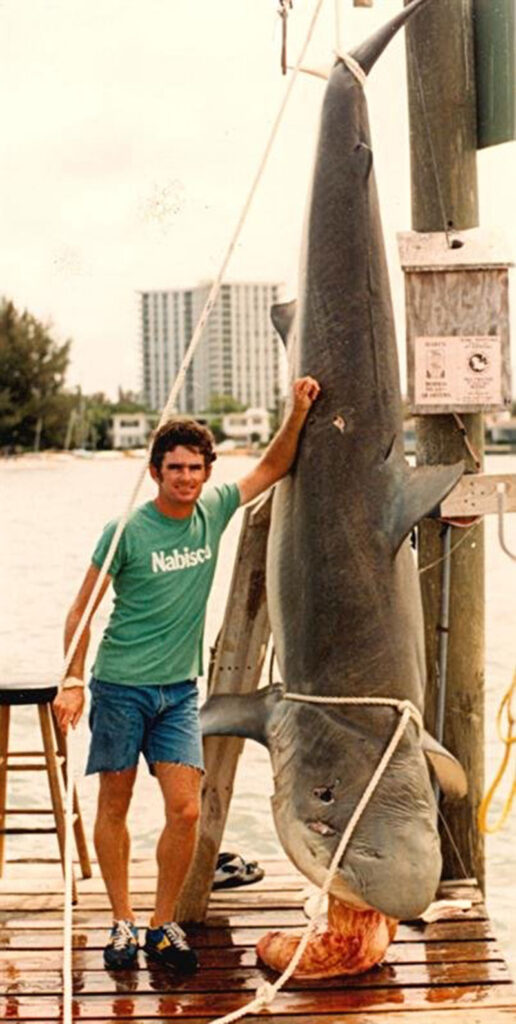

Angler vs. predator.
The Florida Fish and Wildlife Conservation Commission hosted a roundtable discussion May 12 focused on interactions between fishers and sharks in Florida waters, which some say are becoming more frequent.
Sharks tend to mangle hooked fish and damage fishing gear, negatively impacting 1
commercial and charter fishers’ bottom lines.
The FWC, which has received an influx of complaints about sharks in recent years, staged the discussion to understand the issue better and promote a dialogue between fishery managers, fishers, scientists and conservationists, according to FWC Commissioner Mike Sole.
According to the presentation that accompanied the discussion, east coast shark populations rapidly declined from the mid-1970s to the early 1990s due to overfishing.
Since then, the FWC has implemented regulations that have allowed some species to bounce back.
Of the more than 50 species native to the U.S. Atlantic coast, 16 can be harvested in Florida.
Bull, great hammerhead, sandbar and dusky sharks are the most commonly reported species in predation interactions. Of the four, only bull sharks are unprotected.
The discussion also included a review of a predator interaction survey emailed to fishers in March.
In addition to queries about sharks, the survey included questions about bird, dolphin and grouper predation.
Of the 1,166 commercial fisher respondents, 87% had a predator interact with their catch last year. Sharks were the most frequently noted culprit.
Capt. Tan Beal, a 40-year Florida commercial fisher who has been subcontracting for A.P. Bell Fish Co. in Cortez for five years, said May 18 shark interactions this year are the worst he’s ever seen.
On a recent eight-day red grouper fishing trip 60 miles into the Gulf of Mexico, Beal said he lost more than 100 hooks per day to sharks — up from about 25 per day in years past.
“And we’re not talking little coastal sharks. We’re talking 6-footers and up. We had a hammerhead up beside the boat there that was every bit of 12-foot,” he said.
Time is money for commercial fishers, and Beal said it’s more efficient to cut the line than try to recover gear, no matter how expensive.
Shredded fish are the other costly consequence of shark predation, Beal said.
“A lot of fish are getting eaten, molested, to where they’re not sellable,” he said. “When a shark bites the tail off the fish, he’s not a sellable fish.”
Beal said it’s time to open the shark fishery back up to protect the interests of fishers and beachgoers.
“Let’s thin them back down. They came back a lot quicker than they thought they would, too,” he said. “We’re going to have to either open it up, or I think we’re going to have problems with shark bites — interactions with people on the beaches.”
According to the FWC, an increasing shark population is an indicator of ecosystem health and resiliency.
As apex predators, sharks stabilize the ecosystem by removing sick or weak fish from their prey populations and limiting the number of other predators in the water.
Capt. Warren Girle, a local charter fishing guide, said May 18 he is not sure there are more sharks in the water, at least in the 9-mile offshore range he fishes.
He also said he supports the current shark fishing regulations.
“I actually hold a world record, a 764-pound dusky shark,” he said. “And I would never kill one ever again, because it’s part of the ecosystem. We need the sharks out there.”