







There’s no intent.
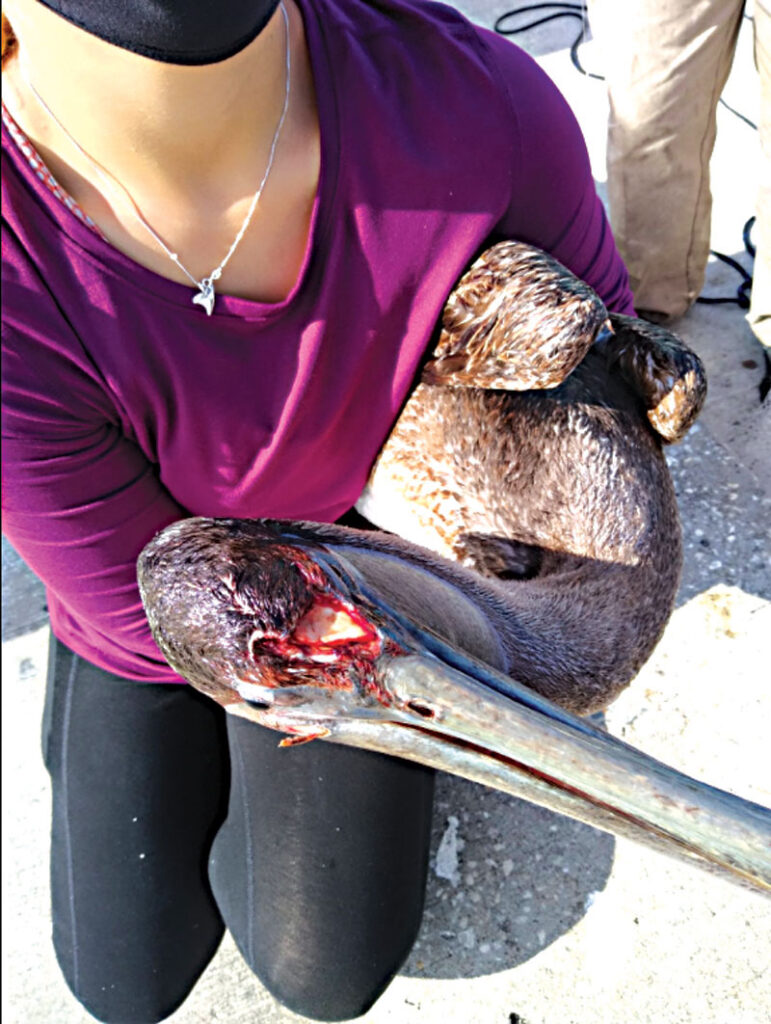
Reports made in mid-February of “scalped” pelicans at the Sunshine Skyway Fishing Pier sparked outrage and ramped up tensions between fisher and bird rescue groups, but a Florida Fish and Wildlife Conservation Commission investigation found no evidence of intentional abuse.
The investigation, which included 416.5 hours of patrol work at the pier over 45 days, was spearheaded by FWC Officer William Freemon.
“Based on the interviews, evidence, and information gathered to date, I find it unlikely an individual or group of individuals were intentionally causing harm to brown pelicans at the South Skyway Fishing Pier,” Freemon wrote in the investigation report finalized May 25.
“During the investigation, the FWC did not establish any credible leads, evidence, motives or suspects from past incidents involving injured brown pelicans,” he said.
Rebecca Schneider, an FWC regional species conservation biologist, assisted with the investigation and consulted with wildlife rehabilitators and pelican researchers about possible explanations for the “scalped” patterns on the pelicans’ heads.
The explanations included blunt force trauma from pelicans diving into structure, lacerations from fishing line, injuries from other pelicans and cuts from boat propellers and oyster shells.
Freemon and Schneider agreed that natural causes were a more likely explanation than intentional harm.
During the investigation, Freemon interviewed Liz Vrelander, a contracted Skyway Fishing Pier pelican rescuer, who said she had seen similar injuries to pelicans since 2008.
The investigation’s initial complainant was Jeanette Edwards, founder of Friends of the Pelicans, a nonprofit seabird rescue group that hired the rescuer in October 2020.
The group encountered 20 pelicans with the wound pattern in January and February.
Edwards, who lives near Anna Maria Island, maintained people were to blame for the injuries. Two seabird rehabilitators bolstered her claim, saying the injuries looked too precise to be natural.
Edwards initially advocated for closing the pier at night, when she believed the abuse was taking place, but later changed her stance.
The prospect of pier closure and inflammatory reports, opinions and social media increased tension between fishers and Friends of the Pelicans on the pier — at the mouth of Tampa Bay in Manatee County.
At a June 8 meeting, Manatee County Commissioners discussed the plight of pelicans on the pier.
At the time of the discussion, the pelican abuse investigation report had not been released.
Commissioner Carol Whitmore added the issue to the meeting agenda the week prior, citing an email from FOTP that said, “over 800 birds or more last year were caught, and most of them hanging from trees, dead or floating, starving to death because they couldn’t use their wings.”
“We just can’t keep letting this happen,” Whitmore said.


