





Modeling, sampling in Tampa Bay
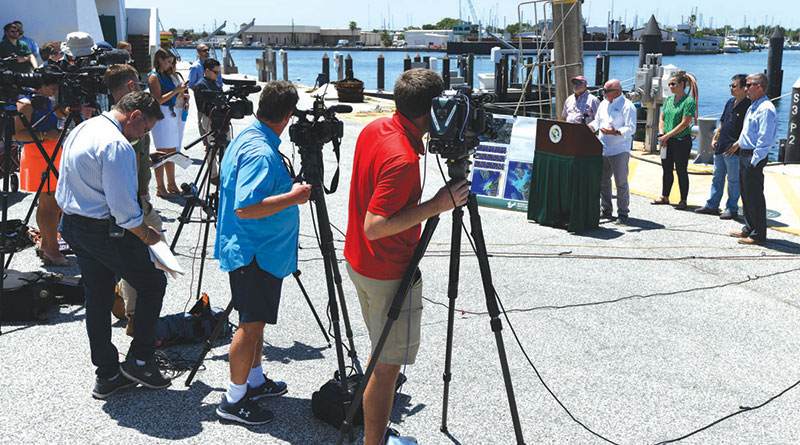
A team with the University of South Florida College of Marine Science addresses the news media May 24, sharing findings of how the Tampa Bay ecosystem responded to the discharge of nutrient-rich wastewater from the defunct Piney Point fertilizer plant earlier this spring. The scientists launched their first research cruise April 7, two days before state-authorized discharges ceased. Early results indicate the effects of the wastewater discharges were localized in nature, not widespread. Also, concentrations of nutrients declined over time and now are typical of those in the historical record for this part of the bay.
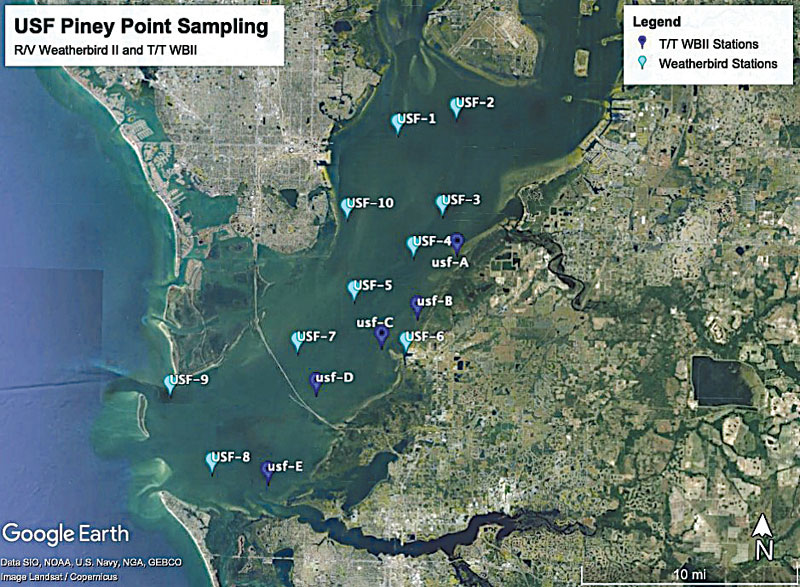
The light blue marks show the stations visited by the R/V Weatherbird II, part of the USF Piney Point sampling effort after discharges of wastewater from the defunct Piney Point fertilizer plant. The dark blue represents stations visited by the Weatherbird’s small boat. Scientists do not know the long-term impact of the discharged water on the bay or whether heavy metals and nutrients sequestered in bay sediments. Islander Images: Courtesy USF