





There’s more to turtle research than meets the eye.
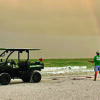
Scientists from the Florida Fish and Wildlife Conservation Commission Research Institute surveyed island beaches May 18 with Anna Maria Island Turtle Watch and Shorebird Monitoring volunteers and the executive director.
AMITW recently switched to an FWC nest survey application to record data and FWC research scientists Tonya Long and Kasey Ward were on hand to answer any questions.
The AMITW application previously used to track nests was outdated and in need of modifications that were not cost-efficient, executive director Suzi Fox told The Islander May 18.
Making the switch to the FWC application was the best option to provide consistency in reporting information to the state.
FWC has more than 200 marine permit-holders and each holder can have 24 authorized people monitoring nests, in addition to other activities, including the stranding program.
AMITW volunteers Chuck and Karen Anderson received FWC stranding program training to retrieve dead sea turtles or capture and transport injured sea turtles to authorized rehabilitation centers.
Data collected from the stranding program, as well as during the turtle watch surveys and nest excavations, are entered into the FWC nest survey application.
Volunteers also perform assessments to ensure sea turtle-friendly lighting is used, educational materials are distributed to local establishments and beachgoers, and also report to Manatee County any beach escarpment over 18 inches, which creates a wall between the water and the beach for the female loggerheads to cross on their way to the dune area to lay eggs.
During the joint survey May 18, Hans Duerr and Birgit Kremer staked a loggerhead nest near the 3000 block of Avenue F in Holmes Beach and logged a false crawl near the 1400 block of Gulf Drive South in Bradenton Beach.
False crawls occur when turtle tracks are identified but there is no sign of nesting activity, usually noted by the impressions in the sand from the head and tail, as well as the movement of sand by the female to bury the eggs and disguise the nest.
The false crawl was the subject of discussion between the AMITW volunteers and the FWC scientists as the sea turtle was seemingly indecisive about nesting, something the scientists noted is common.
Many body impressions were made in the entry tracks on the way to the dune and one on the exit tracks, but no definite impression to ascertain eggs were laid.
Also, the Andersons staked a loggerhead nest and noted four false crawls May 18 on the northern end of the island.