





With “Shark Week” upon us, you can bet many beachgoers and anglers have a heightened awareness about what could be lurking in the waters that surround Anna Maria Island.
And with the national and local television news media reporting shark encounters and showing footage of shark bite victims day in and day out, it’s easy to be convinced the world’s oceans are overrun with sharks and it’s not safe to go in the water.
If you believe that nonsense, then you might as well put on your tinfoil hat and see if you can communicate with UFOs.
In fact, it’s the opposite. Shark populations throughout the world are diminishing due to overfishing and loss of habitat. It bewilders me that a species around since the dinosaurs is threatened by having to coexist with another species called humans.
- I’ll step away from the podium.
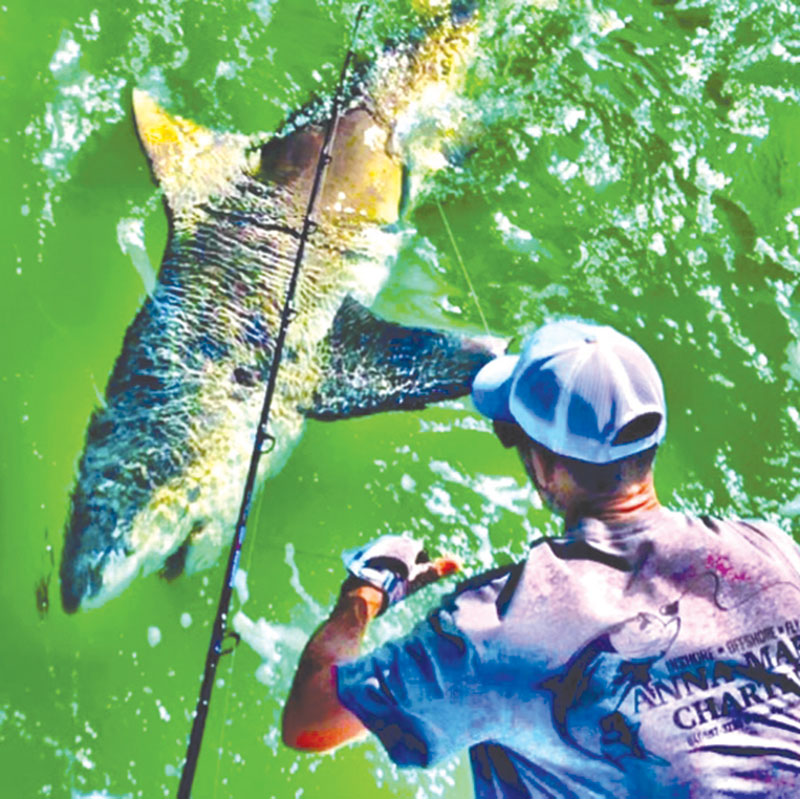
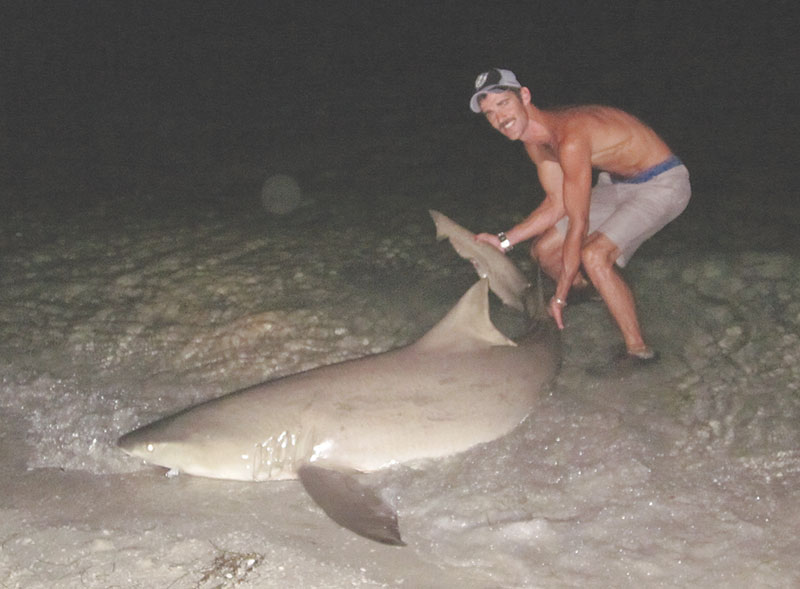
After all, I am a fisherman. I’m not opposed to shark fishing, especially during the summer, when sharks migrate to our waters in surplus numbers. I’m keen to put my eyes on them when I’m on the water.
However, I only sport fish for sharks — all catch-and-release. That’s because I’m enamored with the majestic animals. In fact, I’ve loved sharks ever since I was a kid. So, when I’m targeting sharks, I take extra steps to ensure a safe release.
First of all, using gear stout enough to handle a large fish is key. I tend to use large spinning reels packed with plenty of line combined with an 8- or 9-foot heavy-action spinning rod. Most of the sharks I catch are in the 5- to 8-foot range and this tackle seems to handle the fish just fine. Using this gear, a shark can typically be reeled to the boat inside of 30 minutes which, in turn, doesn’t put too much strain on the shark.
Your rigging can be helpful in ensuring a safe voyage for your shark. I tend to use about 2-3 feet of 125-pound hardwire as leader connected to a 9/0 circle hook. To this, I’ll add 8-10 feet of 100-pound mono, which is tied to the braid.
The use of a circle hook is crucial and I’ve experienced good results. The hook typically will attach itself somewhere on the outer jaw — usually on the corner of the mouth. This aids in the removal of the hook.
And going one step further, I like to use bolt cutters to remove the hook. I place the bolt cutters right at the bend of the hook — below the hook’s eye — and squeeze to cut the hook in half. This way, the barb-side of the hook will fall out of the shark’s mouth as it swims away. Hopefully, this way, you won’t see a bunch of sharks swimming around with lip piercings.
Lastly, the whole event can be an educational experience — especially for visiting anglers who aren’t accustomed to seeing sharks. Both adults and children are fascinated with being able to get up close and personal with such a large animal and the mystique it carries.
So if you’re going to get out and do some shark fishing this summer, just remember do it right, do it ethically, be safe, protect the species and have fun.
Capt. Jason Stock is impressed with the American red snapper season so far. Limits of the fish are being caught on most offshore charters, with both live and frozen baits working well. Gag grouper are in the mix with some being of considerable size. Another good catch while offshore is mangrove snapper — good for the cooler. As far as size on these, most are over 20 inches in length.
After bottom fishing for snapper and grouper, Stock is finding floating debris on the water. Areas with debris — big clumps of sargassum weed — are attracting migratory species such as large kingfish, wahoo and mahi. Trolling around these areas is the most effective.
Capt. Warren Girle is working in Sarasota Bay, targeting a variety of inshore species. He’s zeroing in on snook and redfish along the shallow flats where mangroves and oyster bars exist and it’s resulting in bent rods. Free-lining live shiners works best in these areas.
Timing is a factor. Getting to the shallow areas early in the morning, while it’s slightly cooler, seems to be resulting in the best bite.
As the day progresses, Girle is moving to deeper flats in the bay, where he is finding action on spotted seatrout, Spanish mackerel and bluefish.
Lucky anglers are experiencing encounters with juvenile tarpon. The tarpon are 30-40 inches which, on light spinning tackle, can be quite a handful.
Finally, while fishing the artificial reefs in the Gulf of Mexico, Girle is finding mangrove snapper and juvenile grouper.
Jim Malfese at the Rod & Reel Pier says the Tampa Bay bite remains consistent for anglers willing to brave the heat. According to Malfese, pier fishers in the know are arriving as early as they can to fish and leaving before the afternoon when the heat becomes unbearable for man, woman and fish.
Catch-and-release snook are the highlight this week at the pier. Most are under-slot, although there are plenty of large fish present to keep the anglers motivated.
Mangrove snapper are being caught and are keeper-size. Most are in the 12-inch range and are being caught by anglers using live shrimp as bait. Determined anglers are catching limits of these tasty snappers.
Lastly, casting small white jigs around the bait schools that surround the outer edge of the pier is resulting in some Spanish mackerel, ladyfish and skip jacks.
Capt. David White is finding limits of American red snapper while working offshore in the Gulf of Mexico. At depths near 150 feet, White is using frozen sardines as bait which are readily attracting some large snapper to bite. As the American red snapper bite calms down, White’s clients are reeling up some hefty red grouper and mangrove snapper.
Moving inshore, the snook bite is keeping White’s clients busy. Targeting snook along the beaches or in the mangroves is producing action for sport anglers. Meanwhile, working the deeper flats and over wrecks, the mangrove snapper are the highlight of the inshore bite.
Submit photos and reports to fish@islander.org.