






April fishing around Anna Maria Island is shaping up nicely.
With almost zero rainfall, the bays and inland waters are about as clear and emerald green as they can get —especially along the beaches.
Anglers are enjoying mild 78-degree water temperatures, which is perfectly suited for a quick dip to cool off from the springtime sun. The tranquil, inviting waters of the Gulf of Mexico are hypnotizing as they meet with the white sugar sand on the shore, perfectly suited for an evening walk before sunset.
But wait, the main attraction in April on AMI for us is — of course — fishing.
Anglers from far and wide are finding themselves uncontrollably urging their families to go on vacation to Anna Maria Island in April so that once here they can sneak away and experience some of the best fishing of the year.
Targeting gator trout in April is producing just that. Typically April is favorable for big trout — 20 inches or larger. And with the famous trout waters of Sarasota Bay just a few miles to our south, you stand a good chance of hooking up with a big one.
Even with the grass flats’ slow recovery from red tide years back, Sarasota Bay is gradually rejuvenating and the gator trout are on the comeback.
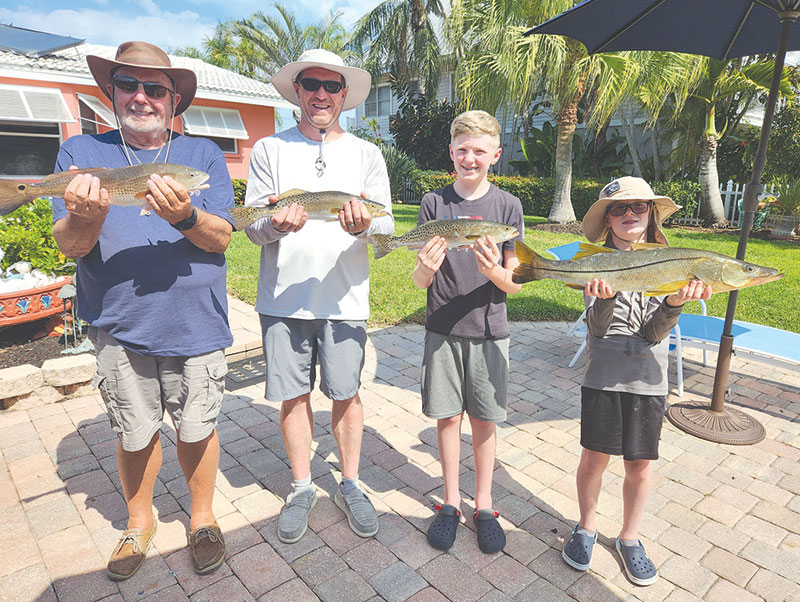
Although the trout fishing is very good, don’t limit yourself to just the buck-toothed fish. Explore the mangrove shorelines and oyster bars, where predators such as snook and redfish can be found prowling around in search of a snack. Both species are prone to eating a live shiner placed properly in front of their noses.
If you like to work in slightly deeper water, the wrecks and reefs in Tampa Bay and some of the deeper grass flats are holding Spanish mackerel. These springtime macks are larger than normal, with some reaching 28 inches in length. And, on light spinning gear, a mack of this size can entertain a seasoned angler with drag-screaming runs and erratic, split-second changes of direction. The macks rank at the top among light-tackle sports fishing.
On my Just Reel charters, I am in pursuit of spotted seatrout and I’m finding quality fish from Miguel Bay south to Sarasota Bay. Most catches are falling in the slot of 15-19 inches with many other over-slot fish being released. In fact, I’ve seen many trout in the range of 20-24 inches.
On deeper grass flats, my charter fishers are getting into a mix of mackerel, ladyfish and bluefish — all crowdpleasers on light spinning tackle as they fight hard for their size and bite when schooled up.
Lastly, we’re finding snook and redfish along the mangrove shorelines during the incoming tides and both are eating live shiners.
Capt. David White is finding a variety of species while fishing the inshore waters of Tampa Bay. Fishing over deep grass with live shiners as bait is working well for spotted seatrout, Spanish mackerel and ladyfish. And, with two-out-of-three species being good table fare, the odds of catching dinner are favorable.
Another inshore species taking the hook is redfish. These reds are being found along sandy beaches where they are lurking for unsuspecting crabs and baitfish.
Moving offshore, White is enjoying the chase for pelagics — African pompano and blackfin tuna. Reef species such as gag and red grouper also are being caught. And all that adds up to full coolers.
Capt. Jason Stock also is in pursuing pelagics with his clients opting to run offshore in the Gulf of Mexico. African pompano are being caught when traveling great distances and amberjack also are present in these deep waters, especially around wrecks and springs.
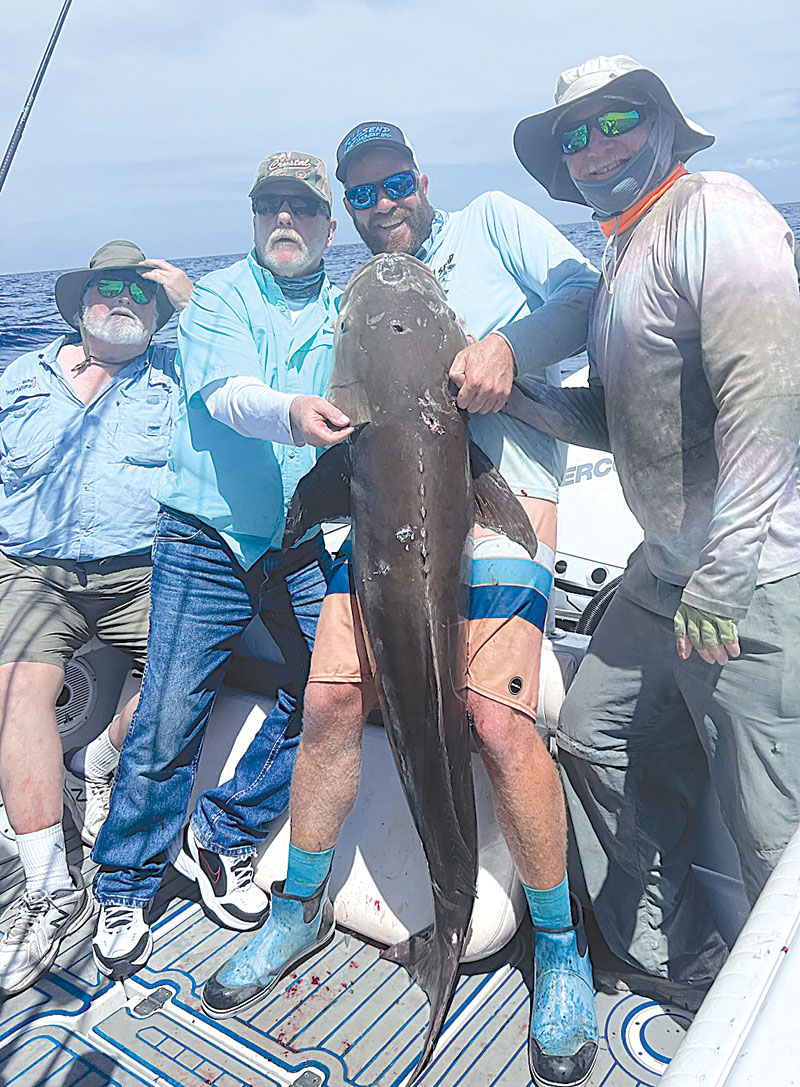
In shallower offshore waters — in less than 100 feet of water — Stock is finding plenty of action for clients on blackfin tuna. These football-shaped torpedoes are notorious for their runs and a fight to the end. After that, they make great tuna steaks. As a bonus, Stock says kingfish are being found among the tuna, as well as an occasional cobia.
Lastly, bottom fishing is yielding red grouper and an assortment of snappers for Stock’s anglers.
Capt. Warren Girle says spotted seatrout fishing in Sarasota Bay is putting fish in his clients’ coolers for dinner. Free-lining live shiners over deep grass flats is producing limits of the popular fish, with many released for being over the slot of 19 inches.
While targeting trout, Girle is seeing ladyfish and jack crevalle. And while working around the grass flats where sandy potholes are present — as well as mangroves and oyster bars — Girle’s clients are hooking into snook and redfish on live shiners.
Jim Malfese at the Rod & Reel Pier says he’s selling more live shrimp for bait than he can keep in the bait tank. Visitors from all over are flocking to the R&R in hopes of a cold beer and a leisurely day of fishing. And, with standing room-only on the deck, you can bet fish are being caught.
Pier fishers dropping live shrimp on a weighted rig over the side are still hooking into winter sheepshead, although Malfese says the bite is tapering off as the season is ending.
Spanish mackerel are stepping up to fill the void with bursts of action as passing schools of these high-speed fish stop long enough to ravage the unsuspecting schools of bait fish. Anglers using silver spoons or spec rigs are having the best results on the macks.
And with the schools of bait around the pier, snook are starting to appear. Casting live shiners or pinfish under the pier is attracting them to take the hook.
Send high-resolution photos and fishing reports to fish@islander.org.