







It’s happening again. The poinciana trees are in bloom and their red and orange flowers are creating a radiant display.
The lovebugs are around, splattered on vehicle windshields and grills.
And, if you’re a fisher in west central Florida, you know what that those developments signal.
That’s right.
It’s late spring and it’s tarpon time.
Respectable numbers of fish migrating along the coast are gathering along our beaches as they meet up with resident stocks in preparation of their annual offshore trip to spawn.
Finding the fish is fairly easy for the trained eye, especially with the clear water conditions we are experiencing. The barrier islands — Longboat Key, Anna Maria and Egmont Key — are being visited by tarpon and also hordes of fishers hoping to catch the fish of a lifetime.
It’s wise to get out early to beat the heat and the crowds when targeting the large prehistoric-like fish.
Casting baits such as threadfin herring and pass crabs is advantageous, although other baits — pinfish, shad and dead baits — will work.
Live baiting is the favored way to target the silver kings, although anchoring and chumming with dead baits — despite not being as challenging — can be effective.
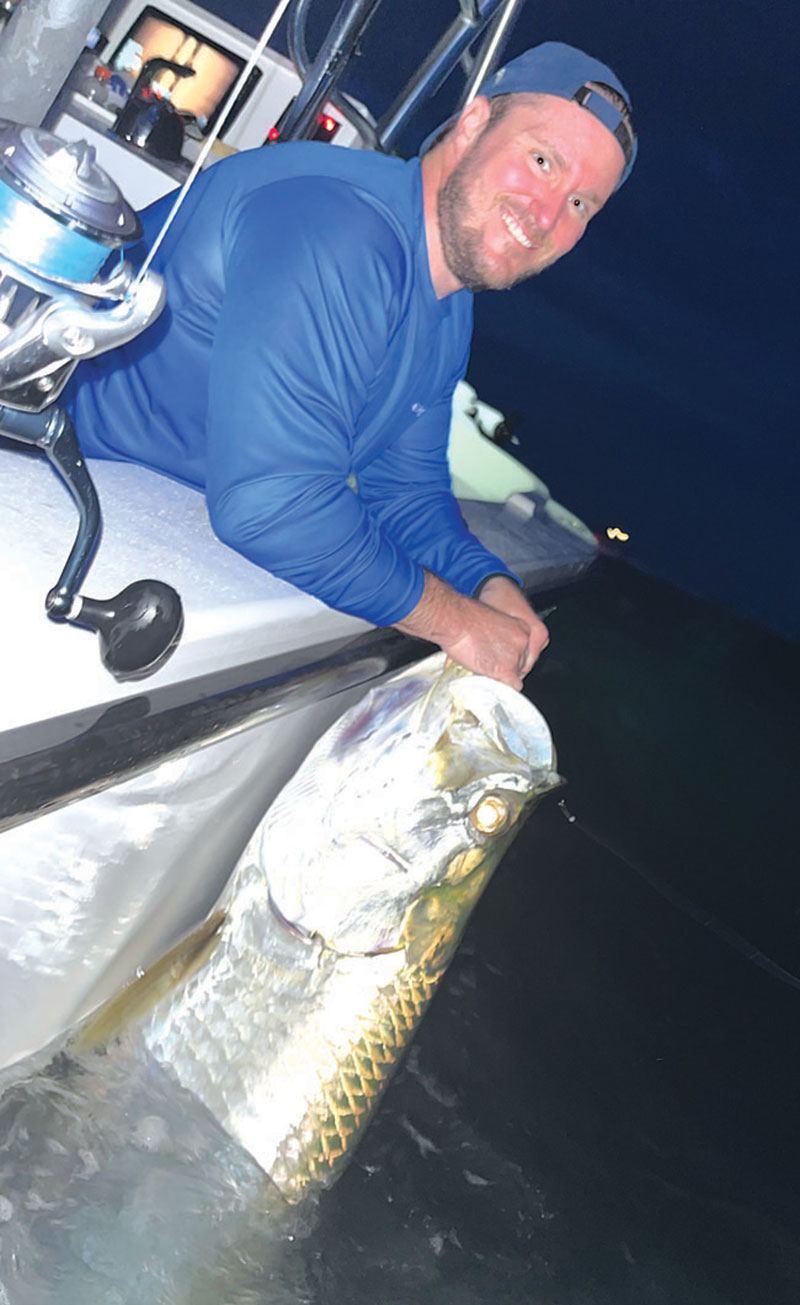
Most catches range 50-100 pounds, although hooking up a fish nearing 180 pounds or larger can occur. So the use of large spinning tackle with heavy braided line is preferred, especially when casting baits to schooling fish.
For those lacking enthusiasm for tarpon fishing, the back country waters of Tampa Bay and its adjacent bays are producing plenty of action.
Catch-and-release snook fishing is in full force as the fish school up in preparation for their spawning season and spotted seatrout are quite abundant. Fishing deeper grass flats is working well when targeting trout and you also might find trout along the beaches if you know where to look.
Other inshore species — jack crevalle, Spanish mackerel and ladyfish — are being caught. Again, deep grass flats are a good place to search, while macks can be found around artificial reefs or wrecks.
Lastly, numerous sharks of all sizes and species are being seen along the beaches and in the shallows of the bays. Blacktip sharks are the most common but don’t rule out encounters with bull sharks and hammerheads.
On my Just Reel charters, I’m seeing plenty of catch-and-release snook action. On some mornings, 25 or more snook are being reeled to the boat. Most catches are 20-26 inches, although some slot-size fish of 28-33 inches are in the mix.
Spotted sea trout are frequent hookups for my clients, who are finding free-lining shiners over deep grass is working best. Keeper-size fish — 15-19 inches — are being caught and the fish fry is on.
Lastly sight-casting chunk baits to sharks along the shallows and sandbars is exciting for saltwater anglers, as hungry blacktip and sandbar sharks are quickly devouring our offerings.
Capt. David White is spending most of his days taking challengers tarpon hunting along the beaches of Anna Maria Island. Casting threadfin herring to schooling tarpon is working well in 10-20 feet of water. Using live crabs as bait is producing the best action, especially when working the passes around Longboat Key and Bean Point.
On days when he’s not targeting tarpon, White is inshore fishing for variety, including snook and redfish are along the sandy shorelines. Casting live free-lined shiners is working best for the snook. For the reds, crabs and shrimp are a good bet, but shiners are working, too. Schools of jack crevalle are present in the same areas and are being employed for shark bait.
White says blacktips and sandbar sharks are the most apparent.
Lastly, working around wrecks and reefs is yielding some Spanish mackerel and a few mangrove snapper.
Sydney Neville at the Rod & Reel Pier says she’s seeing snook on the hook by anglers using live shrimp as bait. The use of live pinfish as bait also is working on the snook with casts under or around the edges of the pier resulting in the most action.
With the arrival of hatch bait at the pier, anglers are seeing passing schools of mackerel stopping for a quick snack. Casting small silver spoons and speck rigs is attracting the toothy fish to the hook.
Also, some tasty mangrove snapper are starting to show up at the pier and are taking live shrimp as bait.
Capt. Warren Girle is patrolling the beaches of Longboat Key and Anna Maria Island for tarpon. Beginning at daybreak, Girle is slowly motoring along the coastal waters in the Gulf in search of schooling tarpon. Once located, he’s quietly getting the boat in position — stealth is key to a silver king catch — to have his clients cast to the fish. Live crabs as bait are working nicely to entice the large tarpon to bite, but threadfin herring also are working. M
Girle says most catches are 60-100 pounds.
On days when he’s not hunting tarpon, Girle is spending time in Sarasota Bay, where he’s finding action on the top inshore trio, snook, redfish and spotted seatrout.
Send high-resolution photos and reports to fish@islander.org.