





Suzi is doing warmups in the Gulf of Mexico.
The Sea Turtle Conservancy’s Tour de Turtles doesn’t begin until Aug. 1 but tracking is ongoing for Anna Maria Island’s entry in the “marathon” intended to educate the public about loggerhead turtles and help scientists learn about a sea turtle’s movement in the water and nesting on land.
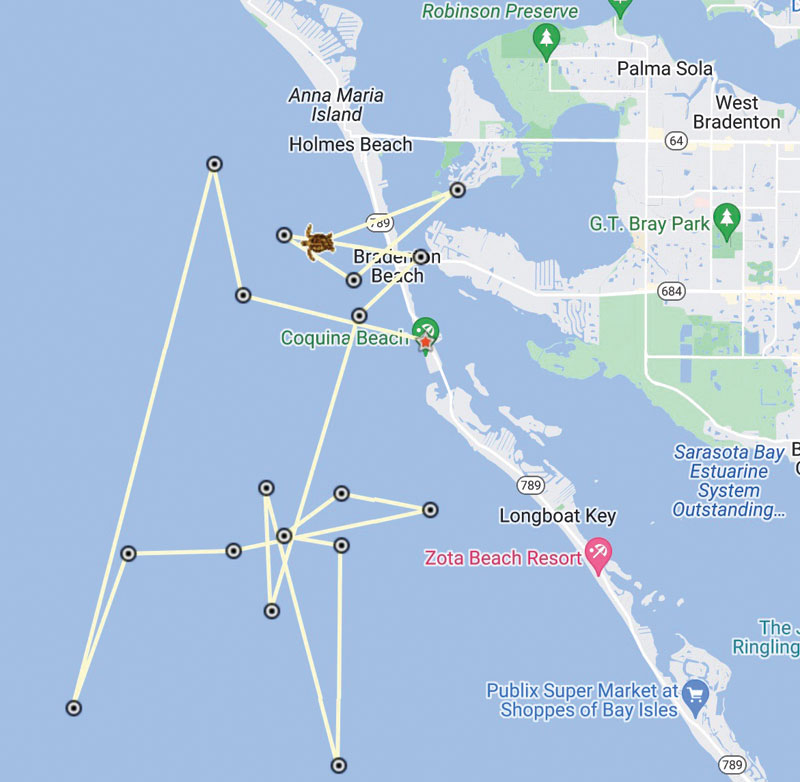
Since Suzi was tagged and released June 27 at Coquina Beach in Bradenton Beach, the turtle has spent time in the Gulf off the coast at Holmes Beach, Bradenton Beach and Longboat Key, as well as in the bay south of Perico Island.
People can follow Suzi’s journey and sign up for sea turtle updates at tourdeturtles.com.
Excavation time
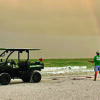
Anna Maria Island Turtle Watch and Shorebird Monitoring volunteers are digging a change in the nesting season routine.
With sea turtle hatchlings emerging from the earliest laid nests on AMI, AMITW’s duties now include excavating the hatched nests.
But they don’t rush in.
The Islander checked in July 14 with AMITW executive director Kristen Mazzarella about the process.
The Islander: How does turtle watch know a nest has hatched? Do you see tracks? Dip in the nest?
KM: We check each nest every day for any sign of disturbance or hatch.
Just like we see adult tracks coming from the ocean when a turtle lays a nest, we find hatchling tracks coming from the posted nest area when a nest hatches.
Usually the hatchling tracks come from a depression in the sand where the hatchlings emerged.
The Islander: You wait before you excavate the nest. Why?
KM: To give all the hatchlings time to emerge naturally.
The Islander: When you do excavate, what kind of information do you collect?
KM: Excavations are a way to determine the nest’s success.
We determine how many hatchlings hatched inside the nest and how many emerged from the nest. This gives us an idea of how many hatchlings are potentially getting to the ocean.
The Islander: All the bio-material goes back in the nest?
KM: Yes, we replace everything back in the nest chamber when we are done and cover it up. This way we are leaving the natural material where it belongs.