





For yet another week, record-breaking temperatures are causing Anna Maria Island anglers to brace themselves for the heat.
With little to no breeze on the water and high heat, fishing requires stamina, a little shade and plenty of fluids. Hydration becomes paramount. Wearing proper attire, such as a long-sleeve shirt, wide-brimmed hat and polarized sunglasses also is a must when fishing in air temps of 95 degrees or higher.
And there’s not much relief from jumping in the water, as water temps are 86-90 degrees.
But don’t be discouraged.
Fishing is quite good as long as you target species that aren’t affected by the warm water.
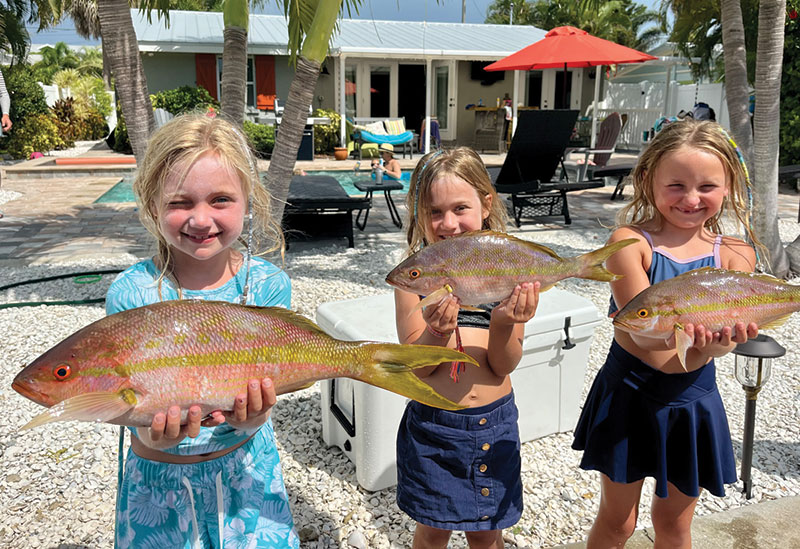
Snapper comes to mind. Many varieties of snapper are being caught inshore and offshore. Inshore varieties, such as mangrove and lane snapper, are available in Tampa Bay and in the Gulf of Mexico.
Offshore species, such as yellowtail, vermilion and American red snapper, are being caught in the deeper waters of the Gulf.
Spotted seatrout is another species that seems to stay active during the warmer months, and the best action occurs during the early morning, with swift moving tides. Deeper grass flats in Tampa Bay hold good numbers of fish.
Lastly, schools of redfish are appearing in the inland waters of Tampa Bay southward to Sarasota Bay. Again, early morning tides, when the waters are slightly cooler, are best.
If you find a school, try casting gold spoons to reds that are slightly spooky. If you find yourself close enough to cast baits to the school, live shiners will work. And don’t rule out fresh-cut chunk bait — ladyfish or mullet — as hungry redfish will devour the offering.
On my Just Reel charters, I’m targeting mangrove snapper. By bottom fishing or free-lining baits to schools of fish on the surface, I’m seeing limits being caught and my anglers are taking home a fish fry. Most are in the 12-inch range, although snapper up to 17 inches are being caught by lucky anglers.
Spotted seatrout also are cooperating. Deeper grass flats are yielding great quantities of trout, with some mornings yielding 30-40 fish or more. Keeper-size trout are harder to come by but the consistency of hooking a fish every cast is entertaining. Mixed in are ladyfish, mackerel and silver trout.
Capt. David White is finding action for his anglers offshore in the Gulf of Mexico. Using live shiners, frozen baits and cut sardines is leading to a variety of snappers including lane, mangrove, yellowtail and American reds.
Various depths are being fished to target the snappers, with the red snapper being caught in the deepest water and the mangoes in the shallowest. In between are the lane and yellowtails.
Offshore wreck fishing also is producing action. Permit and blackfin tuna are being found lurking in those areas.
Moving inshore to the passes, White is reporting finding his share of mangrove snapper. Catch-and-release snook also are being targeted in the passes and along the Gulf beaches. Finally, blacktip and sandbar sharks are being found on White’s charters along the shorelines of Anna Maria Island, where the fish are readily taking fresh-cut chunks of mackerel as bait.
Capt. Warren Girle says mangrove snapper are predominant when fishing structure in the Gulf of Mexico. The use of small shiners as bait is attracting many snapper in the 12-inch range to the hook. Mixed in with the snapper bite for Girle’s anglers are Key West grunts and juvenile grouper.
Moving into Sarasota Bay, Girle is finding plenty of spotted seatrout. Using freelined live shiners as bait is working to lure the “flats favorites” to the hook. Artificials, such as topwater plugs, are working to catch the trout, which adds variety to the method of targeting the fish. Mixed in with the trout are ladyfish and an occasional mangrove snapper.
Lastly, Girle is finding schooling redfish in the shallows during lower stages of the tides.
Jim Malfese at the Rod & Reel Pier says the number of mangrove snapper being caught is on the rise. Limits of the tasty fish are being caught by determined anglers during the early morning tides — just after the pier opens at 7 a.m. For bait, live shrimp work best.
While baiting with live shrimp, pier fishers are hooking into redfish ranging 20-30 inches. Malfese says to be prepared for a battle if you’re using light spinning gear. Catch-and-release snook also are being caught in this fashion.
And while fishing the pier while bait schools are present, don’t forget to cast a white jig or silver spoon out to catch mackerel.
Send high-resolution photos and fishing reports to fish@islander.org.