




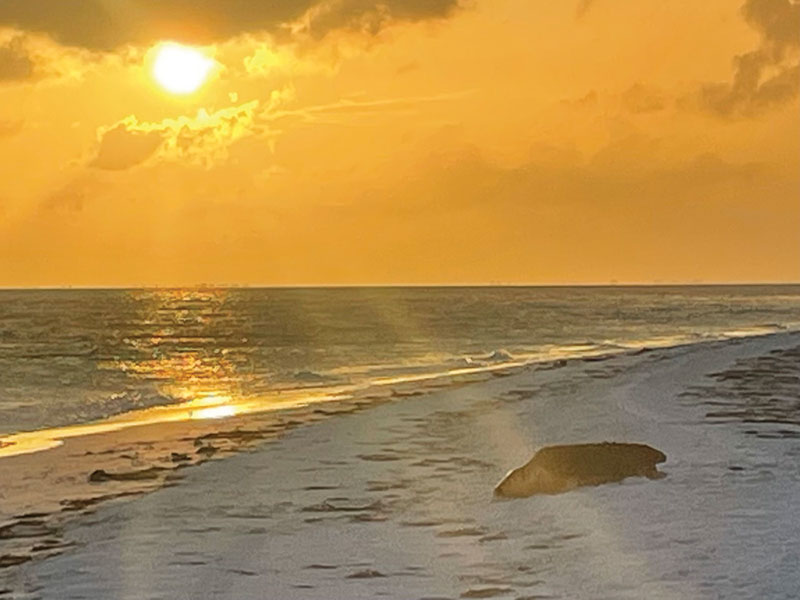
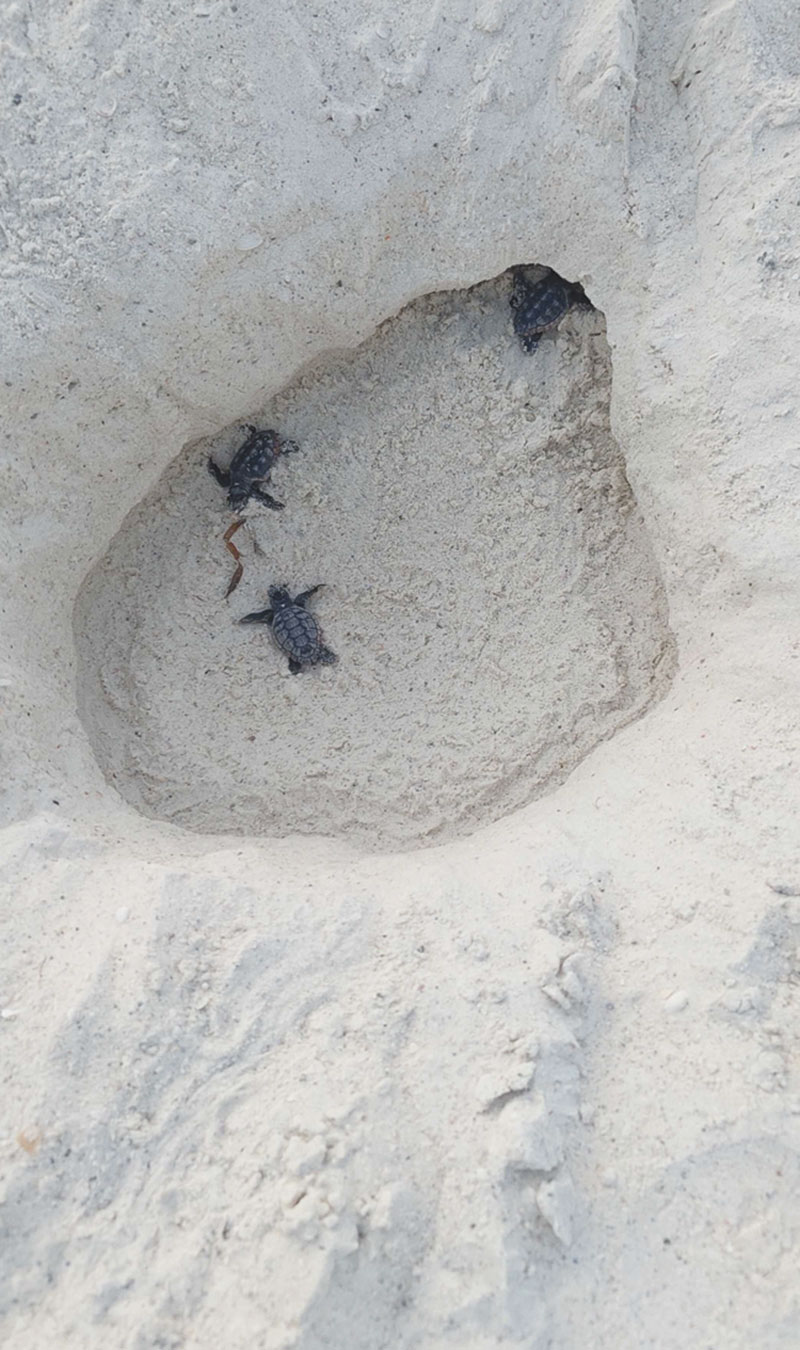
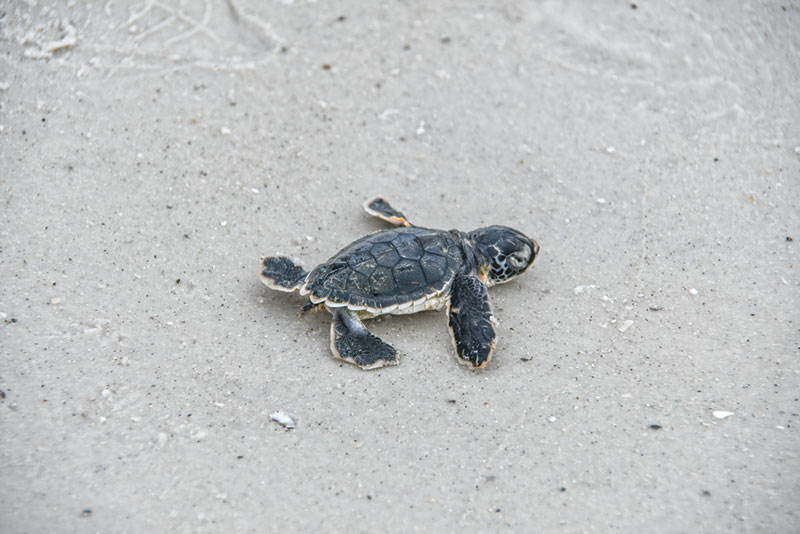
It’s dog days of August and those on turtle watch feel the heat even as they hit the beach early to document new nests and check for the emergence of hatchlings.
As the fourth month of nesting season on AMI arrived, The Islander checked in with Kristen Mazzarella, executive director of Anna Maria Island Turtle Watch and Shorebird Monitoring.
The Islander: We’re seeing high-temperature days on land and in the water. Do either impact sea turtle nesting?
Kristen Mazzarella: High temperatures can impact nesting turtles by heating the sand. Sand temperatures during a certain period of incubation — not genetics — determine the sex of the hatchlings.
Therefore during a hotter summer, we may be producing more females.
In addition, it may cause nests to incubate faster.
The Islander: Does the high heat impact AMITW’s work?
KM: Well, the heat certainly makes our job more challenging but we still do the same workout on the beach every day at the same time of day.
We just keep hydrated and try to get our work done as early as possible.
The Islander: Are temperatures included in the data collection when excavating or staking a nest?
KM: No, we do not collect air temperatures or sand temperatures when excavating or staking a nest.
We would need to collect temperatures across the entire incubation of the nest to get any useful information and such research would require a special permit from Florida Fish and Wildlife Conservation Commission.
The Islander: The patrol is doing a lot more nest excavations these days, as the number of hatched nests is increasing. How do you determine a successful hatch?
KM: A successful hatch is determined by the proportion of hatched shells we find compared to the total number of eggs in the nest.
When that proportion is high, we deem it a successful nest.
However, any hatchlings produced from a nest are a success in our eyes — especially if the nest has been inundated with high tides over the season.
The Islander: What’s the highest number of hatchlings to emerge from a nest this season?
KM: The most hatchlings that emerged from a nest this year was 146 — so far.
The Islander: Hatchling disorientations also are increasing. Is lighting the main issue?
KM: Disorientations are related to lighting whether it’s causing hatchlings to go in the wrong direction or meander and circle.
Hatchlings go away from dark backgrounds and toward white full-spectrum light.
Artificial lights that illuminate the dunes, especially when it’s brighter than the night sky over the ocean, will confuse hatchlings.
The Islander: Do you know, is it mostly lighting from beachfront properties, streetlights or actually people on the beach?
KM: We have seen disorientations from all types of lighting this year.
Everyone can do their part by closing their blinds and shutting off and shielding any light that can be seen from the beach.
Even inland, people can help by directing their lighting downward as inland lighting can cause skyglow, which can also confuse hatchlings.
The Islander: The turtle patrols notice lighting but they are not enforcers. Are you working with local code enforcement or police on issues?
KM: Yes, when we see noncompliant lighting, we report it to local code enforcement.
In addition, whenever a nest disorients, we give the information to the code enforcement so they can track down the lighting that caused the disorientation and hopefully resolve it before more nests hatch and disorient towards the same light.
We work together to find solutions that provide safe areas for humans and turtles alike.
For more information about AMITW, contact the nonprofit at 941-301-8434, info@islandturtlewatch.com or go online to islandturtlewatch.com.
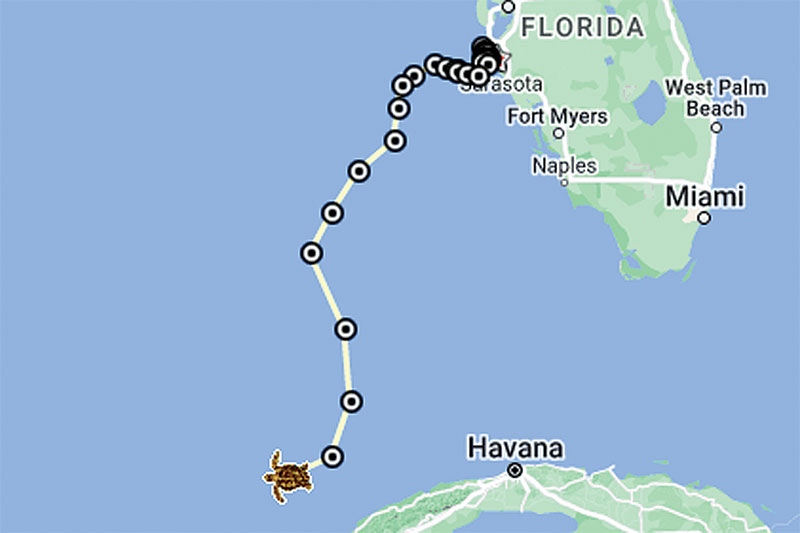
Tracking AMI’s Suzi in the Tour de Turtles
On their marks.
Swim!
The Sea Turtle Conservancy’s Tour de Turtles hard-shell marathon began Aug. 1 with 12 sea turtles being tracked using satellite telemetry to boost science, research and education.
Anna Maria Island’s entry, Suzi, is a loggerhead tagged and released June 27 at Coquina Beach in Bradenton Beach.
Suzi’s distance as of Aug. 3 in the Tour de Turtles: 136 miles.
Suzi’s ranking in the tour: second place.
People can follow Suzi’s journey at tourdeturtles.com, as well as sign up for sea turtle updates on the site.
— Lisa Neff