







Florida State University researchers this summer published research indicating that high concentrations of microplastics can increase the temperature of beach sand enough to impact the development of incubating sea turtles.
Researchers already knew that temperature influenced sea turtle fitness, hatchling success and sex.
The temperature of developing sea turtle eggs, for example, is what decides whether the offspring will be male or female.
Research shows that if turtle eggs incubate below 81.86 degrees Fahrenheit, the hatchlings will be male and if the eggs incubate above 88.8 degrees, the hatchling will be female.
Temperatures fluctuating between the two extremes will produce a mix of male and female hatchlings.
Research also has shown that the warmer the sand, the higher the ratio of female hatchlings.
Studies in recent years have looked at how a warming climate might threaten sea turtle populations by creating a shortage of males.
The new FSU study looked at the impact of pollution — specifically microplastics — on the temperature of sand.
Microplastics — plastic fragments less than 5 millimeters in length — are ubiquitous in the environment, detected in marine water, wastewater, tap water, air and, yes, sand.
“Understanding how changes to the environment could affect the temperature of nesting grounds is important for monitoring the future of these keystone species,” said study author Mariana Fuentes, an associate professor in FSU’s Department of Earth, Ocean and Atmospheric Science.
To conduct the study, researchers mixed beach sand with microplastics — 5%-30% of volume — and recorded temperatures using thermometers at the same depth as a loggerhead’s eggs — the type of sea turtle most common to AMI’s nesting beaches.
Sand with higher concentrations of microplastics saw greater increases in temperature — increases potentially significant enough to alter hatchling sex ratios, physiological performance and mortality of embryos, according to the study.
Tracking Suzi in the tour
The Sea Turtle Conservancy’s Tour de Turtles hard-shell marathon was to begin Aug. 1.
The tour program started in 2008 and each year involves using satellite telemetry to track sea turtles to boost science, research and education.
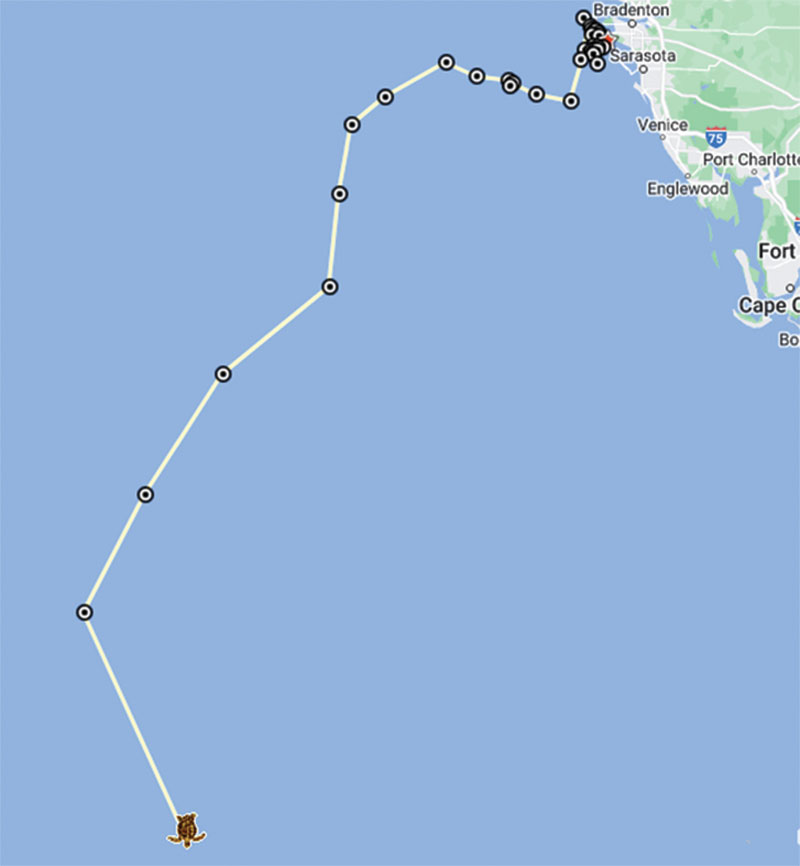
Anna Maria Island’s entry, Suzi, is a loggerhead tagged and released June 27 at Coquina Beach in Bradenton Beach.
Suzi’s distance in the Tour de Turtles: 0.
Suzi’s ranking in the Tour de Turtles: 0.
Suzi’s travels since being tagged: As far north as offshore of Anna Maria Island, as far south as offshore of Manasota Key and as many as 150 kilometers out from land in the Gulf of Mexico.
The tour began after The Islander’s press time.
People can follow Suzi’s journey at tourdeturtles.com.
— Lisa Neff