





The Florida Institute for Saltwater Heritage’s FISH Preserve is symbolic of the Cortez spirit.
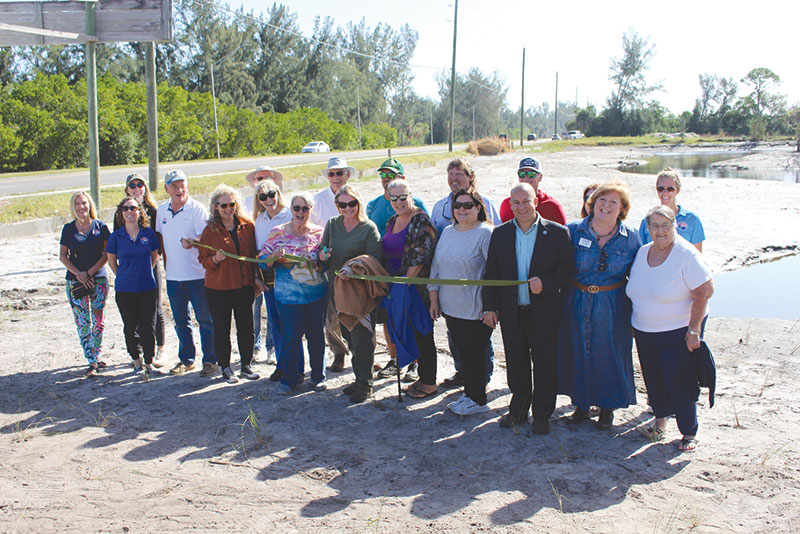
After 23 years of grassroots efforts and environmental restoration, FISH and Sarasota Bay Estuary Program hosted a celebration commemorating the completion of restorative efforts of the 95-acre preserve that began in 2000.
FISH has worked in tandem with conservation and governmental entities, including: the SBEP, Florida Department of Environmental Protection, U.S. Environmental Protection Agency, the National Oceanic and Atmospheric Administration, Southwest Florida Water Management District and Manatee County.
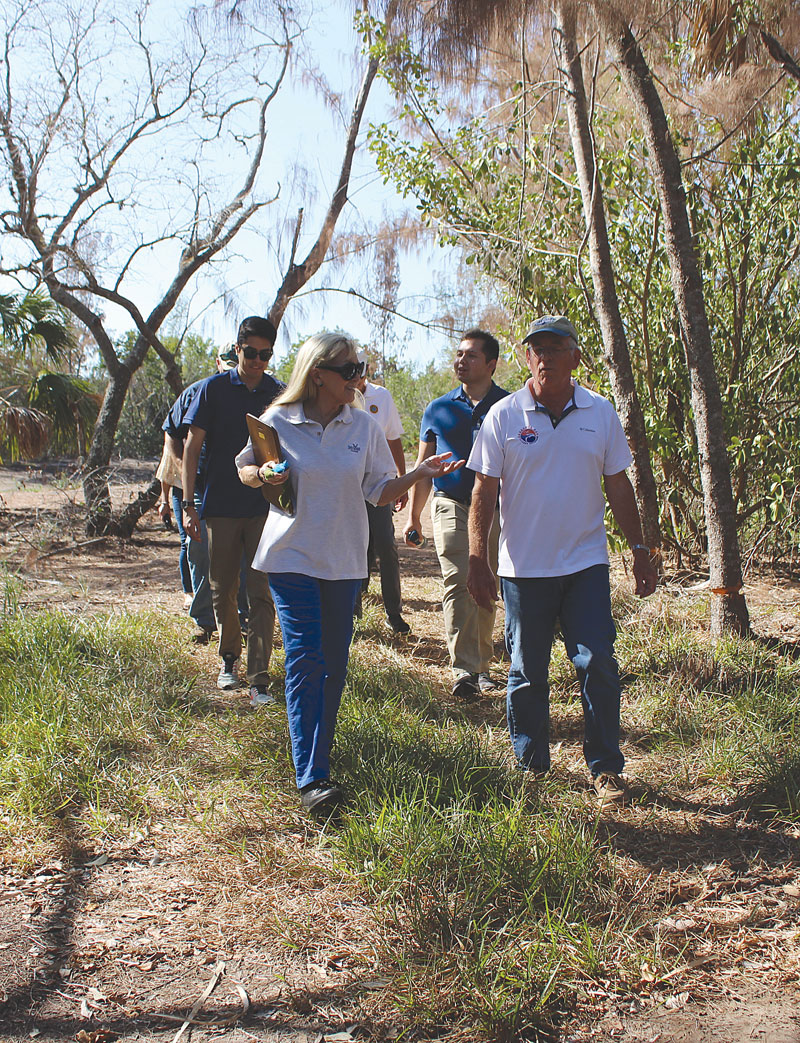
The preserve, 4404 116th St. W., neighbors the historic fishing village and has undergone a bevy of environmental restorative efforts, including renewal of aquatic habitat, planting of native species, creation of waterway connections and the removal of exotic vegetation.
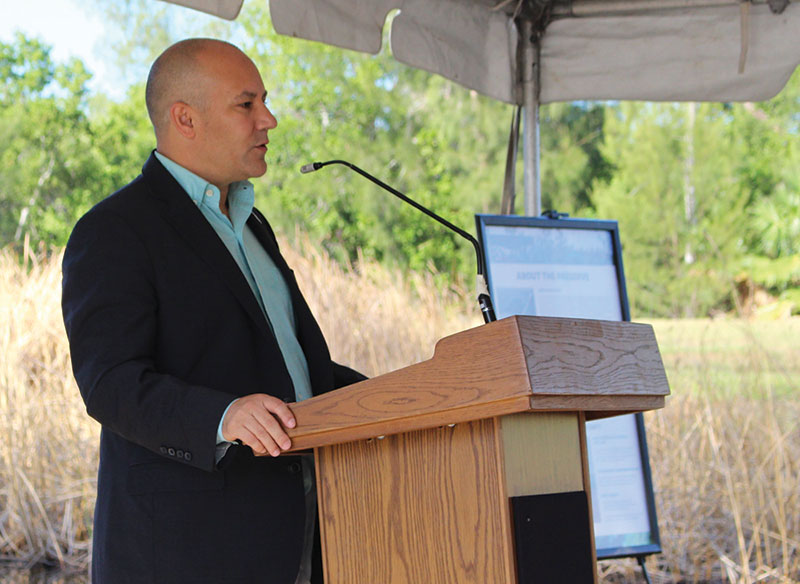
The event featured accolades from SBEP executive director David Tomasko and staff scientist Jay Leverone, FISH treasurer Jane von Hahmann, U.S. EPA Region 4 administrator Jeaneanne Gettle and Manatee County Commission Chair Kevin Van Ostenbridge.
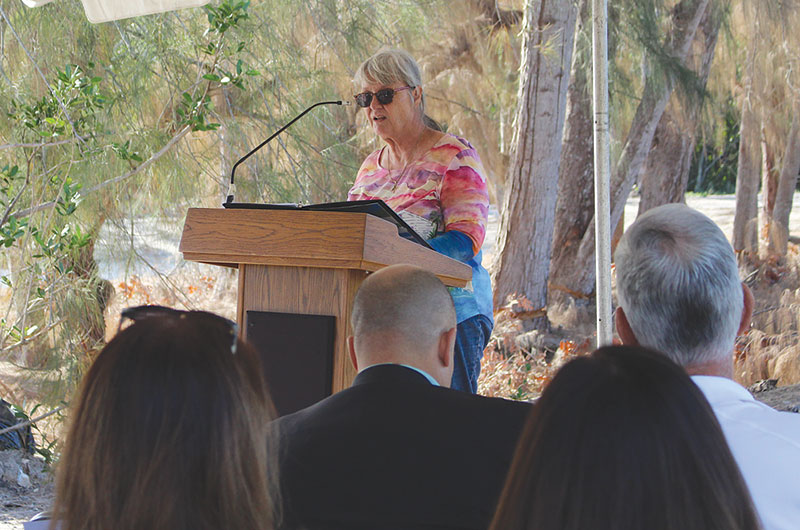
Tomasko recounted the work, thanked the many people involved with the project and introduced von Hahmann, who spoke to attendees about the history of Cortez and the partnerships it formed to preserve its heritage and the FISH property.
“The FISH Preserve is now the only untouched waterfront on Sarasota Bay,” von Hahmann said. “This habitat supports the last true working waterfront in the state of Florida. Today was accomplished because of partnerships.”
She said more than $2 million was spent to bring the property to where it is today.
Gettle spoke about how funding from the Biden administration’s Bipartisan Infrastructure Law infused an additional $900,000 per year into national estuary programs and how the FISH project benefitted.
She referred to the funding as “the single largest investment in water infrastructure that the federal government has ever made.”
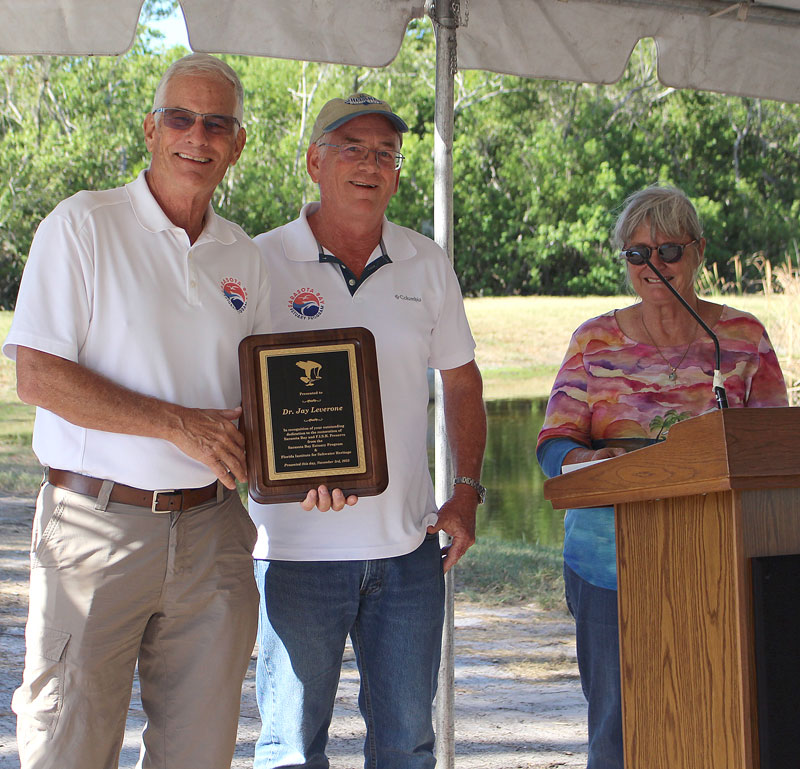
Leverone, who administered the SBEP-funded work, thanked the people he worked with on the project and spoke about the restoration.
He said there will be other projects on the property.
“We are not quite done,” Leverone said. “We are continuing to look for public funding for bridges, trails, signage, a kiosk. We want to make this publicly friendly and publicly usable. We want people to come and enjoy this and the entire FISH preserve.”
Van Ostenbridge spoke about the county’s interest in preserving the land.
“Preserves get better with time,” said Ostenbridge. “Our residents absolutely love preserves and I am so happy this can be added to that list of publicly accessible lands. If you need help with these exotics and you need help with this place, I am a phone call away. The county will continue to be your partner in this.”
At the end of the ceremony, von Hahmann and Tomasko recognized Leverone and Theresa Bert, who accepted a plaque on behalf of her late husband John Stevely.
Bert spoke about Stevely’s contribution to FISH and to Cortez.
Stevely, a founding member of FISH, was instrumental in obtaining the preserve as a buffer from development and a fixture in the village.
Bert then made a contribution of her own.
She told those gathered that she and John set aside $50,000 for the FISH Preserve in their wills “but I would like to donate that $50,000 now, specifically for trails and bridges.”
Bert also celebrated the birth of her first grandchild that day, noting the baby was being born during the ceremony.
She announced the child would be named, Slater John, in Stevely’s memory.
Von Hahmann said Cortez resident Linda Molto, Karen Bell and Stevely were a large part of not only the purchase of the land but the formation of the Cortez Commercial Fishing Festival in 1952, the main source of funding for the preserve land.
After the ceremony, Bell, a FISH board member, spoke with The Islander about the origins of the land purchase, crediting Gene Turner, a citrus farmer and real estate agent from Arcadia who helped connect FISH with the Schewe family, who owned the land that would become the core of the preserve, eventually selling the parcel to FISH for $250,000. “He made all this happen. He was friends with the Schewes. That man was instrumental in all this,” Bell said.
Von Hahmann, perhaps, summed up the ceremony best: “This parcel of land represents the future of this village and the fishing industry that’s been the livelihood of so many families for over 135 years. For us, it is not just the ecological value but the historic, the economic and the cultural value it brings to the community, this county and this state.”
She alluded to a 1999 waterfront community program that identified the Cortez community with a statement that she found in the program booklet: “Unlike every other waterfront community that was looking to be a destination, Cortez is described as a stubborn, family-oriented, family-business-driven community that just wanted to keep what they had.”
The spirit endures, in the community, in newborn grandchildren, and in the land.
About the FISH Preserve
The 95-acre Florida Institute for Saltwater Heritage Preserve is at 4404 116th St. W.
The park is open to the public — although visitors are reminded construction is ongoing — and includes two unmarked trails, with bridges and marked trails on the “soon to come” list thanks to a $50,000 donation from Theresa Bert and her late husband, John Stevely.
Park visitors will soon be able to learn about the native flora and fauna of the preserve through nature identification signage that will be installed after native plants have matured.
FISH is a volunteer nonprofit run by a 12-member board of directors, managing several properties in Cortez, including the 95-acre Preserve, a boat shop, Fishermen’s Hall and the old Cortez volunteer fire station. The nonprofit was formed in 1991 and is dedicated to the promotion, education and preservation of Cortez and Florida’s commercial fishing and other traditional maritime cultures.
The group also hosts the annual Cortez Commercial Fishing Festival that began in 1981, drawing thousands to the oldest working fishing village in the state to celebrate the fishing industry and the bounty of the area’s local fishery.
The Sarasota Bay Estuary Program, which administered much of the Preserves restoration is an environmental conservation organization that specializes in water quality, community engagement, environmental education and the restoration of estuarine habitats like seagrasses, oyster beds, and wetlands.
To learn more about FISH, go online to fishcortez.org.
Donations to support FISH can be made to: FISH, P.O. Box 606, Cortez, FL 34215.
To learn more about the SBEP, go to sarasotabay.org.
About FISH
FISH, a volunteer nonprofit run by a 12-member board of directors, manages several properties in Cortez, including the preserve, a boat shop, Fishermen’s Hall and the old volunteer fire station. The nonprofit formed in 1991 and is dedicated to the promotion, education and preservation of Cortez and Florida’s commercial fishing and other traditional maritime cultures.
The group also hosts the annual Cortez Commercial Fishing Festival, drawing thousands to the oldest working fishing village in the state to celebrate the fishing industry and the bounty of the area’s local fishery.