







With cold fronts becoming more frequent and longer in duration, Anna Maria Island anglers find themselves anticipating a colder-than-usual winter.
Temperatures greatly influence the species we target in AMI waters, as well as the baits and techniques we use to find a successful day on the water.
I guess what’s crucial to enjoy a good day on the water in the winter is wearing attire to ensure warmth. With air temps in the low 50s and water temps not much higher, you can bet it’s going to be chilly on the water — especially when you’re buzzing across the flats at 30 mph. There’s nothing worse than freezing your butt off on the water because you didn’t anticipate the cold. It doesn’t matter how good the fishing is if you can’t get warm.
So dress warmer than you think you need to and peel off layers as the sun warms the air. Having grown up in Florida, I don’t particularly care for the cold and I’m smart enough to know it’s better to be too hot and remove layers than it is to start the day cold and stay cold.
I can’t tell you how many times I’ve had clients get on the boat for a wintertime charter wearing shorts and a light sweatshirt. “It’s OK,” they say. “We’re from Michigan. We’re used to the cold.”
Well, nine times out of 10 they’re shaking and shivering before we get to the first fishing spot. I don’t care where you’re from — cold is cold, especially when you’re on the water.
So plan accordingly.
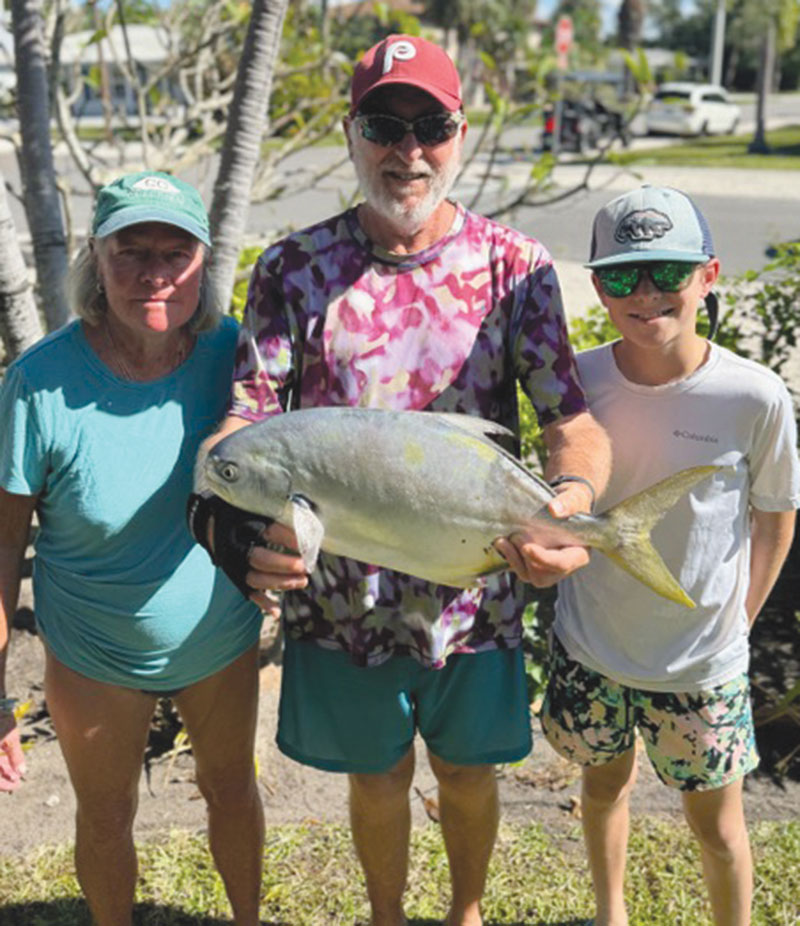
As far as fishing goes in December, you can bet that getting acquainted with your local bait shop will be quite important, as generally we rely on live shrimp in the cold months. When using shrimp as bait, you can expect to encounter several species, including redfish, black drum, sheepshead and pompano.
The list goes on, as most of the species we target will adopt live shrimp as their main food source throughout the winter.
Snook and spotted seatrout are prime candidates for this switch in menu preference and you also can bet that migratory species — bluefish, ladyfish, jacks and Spanish mackerel will follow suit. Don’t rule out the reef species — mangrove snapper, grunts and hogfish can’t resist a nice plump shrimp when dropped in front of their noses.
Yes, wintertime fishing means shrimp for bait. There may be shiners still available to be netted, but save your energy and buy some shrimp. There’s a good chance you’ll have better results.
The flounder fishery has reopened as of Dec. 1. For those wishing to take home a “flattie” for dinner, the minimum size is 14 inches and the daily bag limit is five per person.
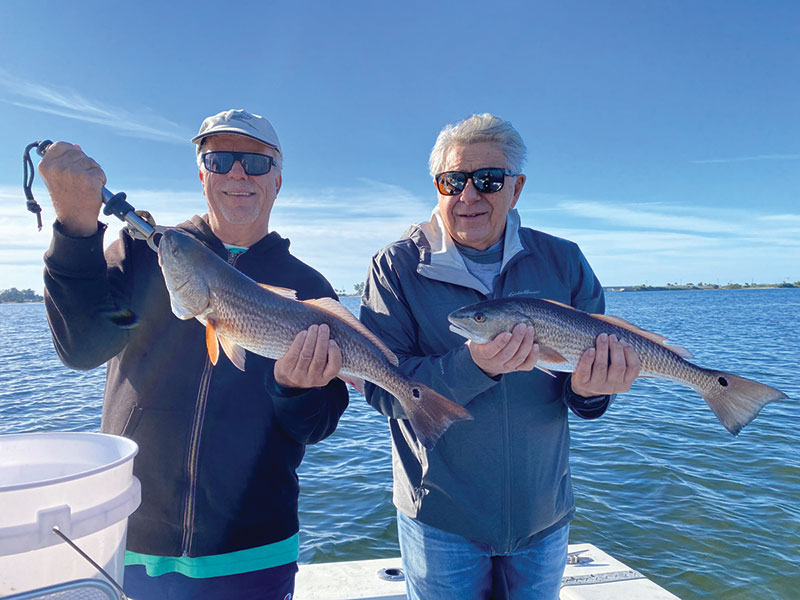
On my Just Reel charters, I’m seeing a pretty good redfish bite while casting live shrimp around residential docks, seawalls and canals. Many slot-size fish are being caught, as well as quite a few “rat reds,” which is encouraging to see as they’re fat with eggs and it ensures we’ll have a fishery in the future. Sheepshead are starting to make a showing, which is a sign that the wintertime bite is just around the corner. Most sheepies being caught are 2-3 pounds.
Spotted seatrout are another species being caught except the most consistent bites are occurring during the warmer days between cold fronts.
Also, I’m seeing a few snook being caught and, again, they are biting on the warmer days between cold fronts.
Jim Malfese at the Rod & Reel Pier says there’s plenty of action to be had for anglers looking for a relaxing morning of fishing at the pier.
Anglers using live shrimp as bait at the R&R are hooking into a variety of species, including redfish, black drum and sheepshead. Malfese says some of the sheepies are running small, although the reds and black drum are keeper-size fish. Some of them are too big to keep, which means the catch is exceeding 27 inches in length.
When baits school are present, Malfese says pier anglers casting speck rigs or silver spoons are hooking into blue runners and jack crevalle, as well as ladyfish.
Lastly, large over-slot snook is being caught by anglers using large baits, such as lizard fish.
Capt. David White says he’s finding action on snook and redfish while working charters in Tampa Bay. Both are responding to live shiners as bait, although for the reds, White favors live shrimp on the hook.
The reds are being found in a few different areas, including mangrove shorelines, residential docks and sandy beaches.
As for the snook, residential docks and canals are working best — which also provides shelter from the wind.
Also, large jack crevalle are being found in Tampa Bay and when spotted, White’s got his clients casting baits to them. These jacks are considerably large, which ensures the angler has a battle in store once the hook is set.
Capt. Johnny Mattay says fishing nearshore structure is good on days when the winds are light and the seas are calm.
Fishing artificial reefs, ledges and hard-bottom areas is leading to action on kingfish, bonito and macks. All three species are responding well to live shiners as bait. Artificials such as Clark spoons also are a good bet.
The highlight of fishing around the reefs is the chance of hooking into a cobia and Mattay is giving his clients a run at the brown bombers.
There are also redfish, snook and spotted seatrout on the agenda for Mattay’s charter clients.
Send high-resolution photos and fishing reports to fish@islander.org.