






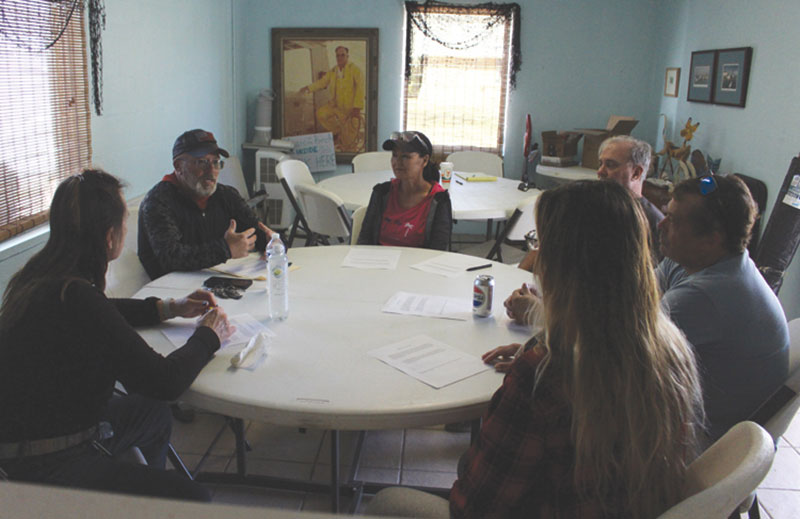
Tour boat captains, during a meeting Feb. 24 in Cortez, organized into a group dedicated to stopping the illegal harvest of marine organisms in Sarasota Bay.
The meeting at Fishermen’s Hall, 4515 124th St. W., Cortez, served as a platform for discussing strategies to combat the poaching of sea life, a growing concern in the region.
Among the attendees were Capts. Joey Sweet of Sweet Sunsets and Dolphin Tours, Katie Tupin of Captain Katie Scarlett Boat Tours, Bruce Adamo of Passage Key Dolphin Tours and Kathe Fannon of Captain Kathe & First Mate Pup-Pup Charters.
Sweet opened the meeting by proposing a name for the group — Habitat Guardian Group.
He read a mission statement: “The purpose of this group is to develop a community that takes ownership in their responsibility to the habitat we all share and facilitate change within the landscape of how it is protected. The goal is to encourage the development of a solid core action group of nonpartisans, responsible volunteers, who are committed to pursuing better, more responsible ways to manage our local natural resources. Prevention of habitat collapse needs to be a top priority everywhere in our state, beginning at the local levels.”
Over the past year, the guides documented instances of illegal sea life harvesting, often involving groups of up to 60 individuals who were observed scouring and harvesting the shallow bay waters. Their evidence has been submitted to the Florida Fish and Wildlife Conservation Commission for investigation and has yielded more than 20 citations to 11 boat captains since July 2023.
The group has made efforts to reach out to other law enforcement agencies to bring more pressure to bear on poachers.
Sweet lamented the absence of representatives of law enforcement agencies at the meeting. He said he extended invitations to representatives of the Manatee County Marine Patrol, FWC and U.S. Coast Guard, but no one from the agencies attended.
However, Sweet recounted a recent meeting with U.S. Coast Guard Chief Petty Officer Derek Waters and Boatswain’s Mate 2nd Class Zachary Smith at Coast Guard Station Cortez in early February. He said the Coast Guard offered to help when the guides observe overloaded vessels.
He said many poaching vessels are overloaded with passengers, which allows the Coast Guard to intervene.
“They told me that if we see that kind of overloaded vessel activity, it could be an illegal charter,” Sweet said. “He said if we are more than 75% sure, to call. They will get underway and if they see evidence of species violations, they will hold a boat until the FWC can arrive.”
Group members also discussed the winter weather, which has slowed their ecotourism industry, resulting in fewer poachers observed.
However, Tupin said she and her husband, Jeff Smith, observed two separate incidents of poaching in the beginning of February — one on a sandbar at Jewfish Key and another in the shallows near the Sunny Shores community in Cortez.
“There were two people collecting in the water near Sunny Shores, they had grocery bags of clams and other things,” Tupin said. She said she and Smith recently purchased a drone to help identify poachers and their vessels.
According to the captains, the poachers predominantly target edible shellfish, causing a depletion in the populations of whelks, clams, pen shells, sea urchins and other bottom-dwelling marine species. This decline in biodiversity disrupts the natural balance of the ecosystem and threatens the livelihoods of local fishers and tour operators who rely on these resources for business.
“It’s almost too late,” Fannon said. “We are this close. I have been out here my whole life and when I first started doing these charters I could take you out there and show you every species of conch we had. It was all healthy, beautiful seagrass. It is gone.”
Fannon said increased tourism has brought problems from increased boat traffic, irresponsible boat operations in shallow water habitats and the presence of large yachts that can scour shallow bays.
She said that coupled with large-scale poaching, the nearshore environment is edging closer to environmental collapse.
The assembled guides, now working as the Habitat Guardian Group, said they are focused on increased vigilance, community education and cooperation with law enforcement agencies, with their aim to stem the tide of poaching activities and preserve the environment of Sarasota Bay.
People seeking more information on the Habitat Guardian Group can contact Capt. Joey Sweet at 941-773-7298.


I applaud this group of concerned environmentalists who can make a difference. Thank you for your energy in protecting water habitats from poachers and irresponsible boaters!