






With winds subsiding, Anna Maria Island anglers are venturing into the Gulf of Mexico to take advantage of the catch available in the calm, clear waters.
Ledges, reefs and wrecks are good places to start as most species of fish gravitate toward these areas of structure in search of a meal. Migratory species, including kingfish, Spanish mackerel and cobia, can be found in these areas. Free-lining live bait such as shiners and sardines works well for the macks and kings, while pinfish are luring the cobia to the hook.
Bottom fishing is heating up, too. Mangrove snapper can be found around artificial reefs and on hard bottom areas in 50 feet of water or less. When fishing these areas be prepared to hook into numerous juvenile grouper as they are abundant in the shallower depths.
You might encounter goliath grouper and sharks in the same areas, which will devour the fish in the same areas you’re reeling up. When this occurs, you might as well move to another spot because these apex predators are determined and will eat every fish you hook.
Moving inshore, spotted seatrout are being found on most grass flats where good tidal movement exists. Free-lined live shiners work well as bait.
On deeper flats, it can be beneficial to add a split-shot to the rig to get your bait down in the strike zone. Redfish are more apparent as the water temps rise. Finding groups of fish on shallow grass flats also should become easier in the weeks to come.
As for snook, casting baits against mangrove shorelines is effective, although we are waiting for the mass numbers of fish to show.
Don’t forget to listen to the Allman Brothers Band while you’re out there on the water. The universe has some good Southern rock to listen to. If you know, you know.
On my Just Reel charters, I’m putting my time into the Gulf of Mexico. Pelagics such as kingfish and Spanish mackerel are keeping my clients busy as fish peel line off the reels before realizing they’ve been tricked into eating a shiner with a long shank hook in it. Most of the macks are large — measuring 20-24 inches. As for the kingfish, 10-20 pounds are average.
Fishing over hard bottom areas is yielding action on my charters. Red grouper and gag grouper are being caught up to 20 inches in length. Although just short of keeper-size, these fish are fun to reel up before being released back to the depths.
Mangrove snapper are going in the cooler, as most are measuring 15-18 inches.
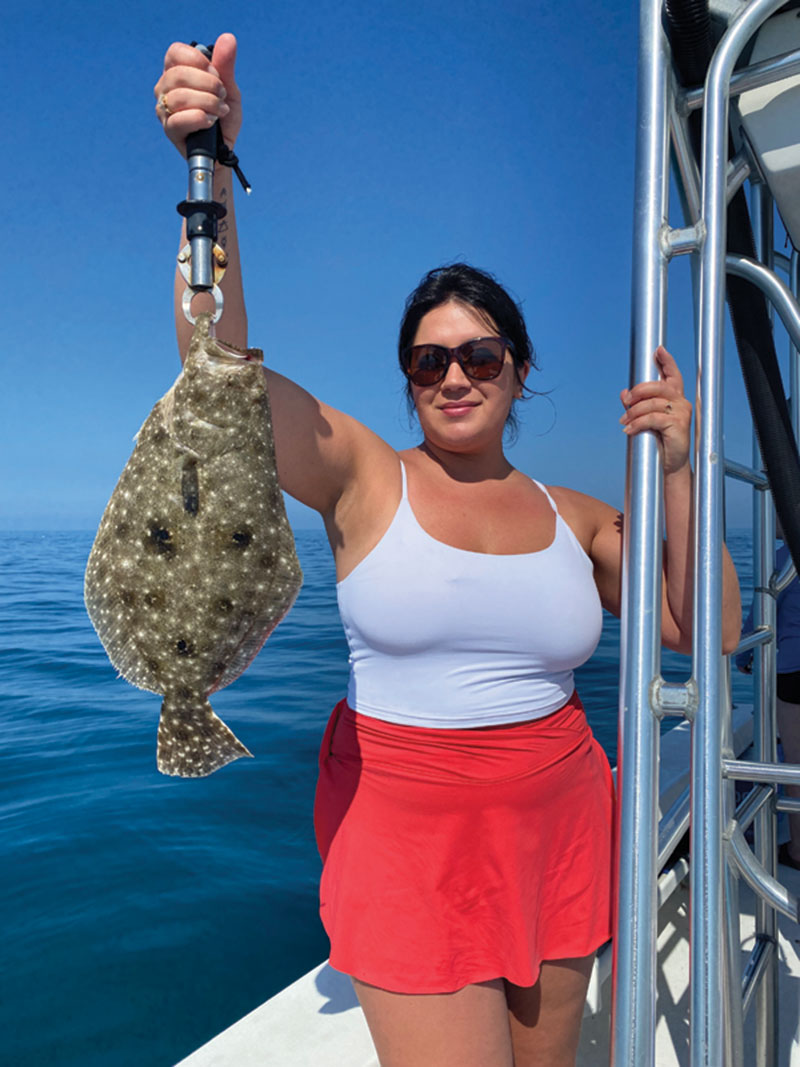
Large bull sharks are present in the areas with snapper. So reeling them up quickly is imperative. In the same areas, I’m seeing flounder up to 18 inches, but spotted seatrout are the most consistent, with many fish falling in the slot of 15-19 inches. Just as many are being released from the over-slot size.
Also, I’m finding sporadic snook and redfish action while working in the shallow flats of Tampa Bay.
Capt. David White of Anna Maria Charters says his clients are catching a lot of kingfish and Spanish mackerel in the Gulf of Mexico. Free-lining live shiners as bait work best to attract these high-speed predators to the hook.
When targeting the kings, use of some hardwire is required to guard the leader from their razor-sharp teeth.
As for the macks, a large shank hook tied to some fluorocarbon leader will suffice. While targeting these species, White’s anglers are hooking into some bonito.
Moving inshore, White is finding over-slot redfish on shallow grass flats where good tidal flow exists. Casting live shiners or shrimp to the reds is triggering a bite. Snook are being caught in similar fashion, although only live shiners are working as bait for the linesiders.
Working the deeper grass areas is resulting in numerous spotted seatrout. Sizes are varying, depending on the spot being fished, but under-size, over-size and slot-size fish are being caught.
Capt. Johnny Mattay of Anna Maria Charters is finding good action for his clients offshore in the Gulf of Mexico. Pelagic species are the highlight this week for Mattay and working the offshore wrecks is yielding blackfin tuna. These feisty tuna are also readily taking offerings of live shiners as bait.
Another pelagic species being caught is kingfish. These fish are taking live shiners but the use of a wire leader is required due to the razor-sharp teeth of the kings.
Bottom fishing for reef species also is resulting in action for Mattay’s anglers. Both frozen and live baits are attracting red grouper, as well as a variety of snappers, including mangrove and yellowtail.
Moving inshore, Mattay is finding over-slot redfish while working the shallow grass flats. Most catches are measuring 30-35 inches. Live shiners and shrimp are working as bait. Finally, spotted seatrout are frequently being caught while fishing deeper flats.
Capt. Warren Girle is back on the water after a hiatus, finding migratory species while working structure in the Gulf of Mexico, where free-lined live shiners are attracting attention from a variety of fish — macks, bonito, kingfish and cobia.
Girle says each day is different so he’s working numerous spots to target the migratory fish.
Moving inshore, Girle is pleased to put clients on many slot- and over-slot spotted seatrout. Free-lined shiners with a split-shot added to the rig are sealing the deal for the trout. In many instances, the trout are in depths of 10 feet or more, which requires the addition of a split-shot to get the bait down in the strike zone.
While working the shallow flats of Sarasota Bay, Girle is finding pockets of snook and redfish, with most action occurring around mangroves and oyster bars.
Send high-resolution photos and fishing reports to fish@islander.org.