





Momentum is building behind the barrier island governments’ combined efforts to protect mangroves.
Over the week of April 22, Anna Maria and Holmes Beach officials discussed the municipalities’ continuing exploration into seeking delegated authority of mangrove enforcement and regulation from the Florida Department of Environmental Protection.
Mangroves provide environmental benefits, such as offering a unique ecosystem for marine life, decreasing land erosion and improving nearshore water quality.
The DEP oversees mangrove enforcement under the 1996 Mangrove Trimming and Preservation Act, which sets standards for removing and trimming mangroves.
However, the removal of more than 100 feet of shoreline mangrove fringe last December at 111 Gull Drive, Anna Maria, sparked questions as to whether island governments could better preserve mangroves by seeking delegated authority from the DEP.
Officials from Anna Maria Island’s three municipalities and the town of Longboat Key agreed at an April 17 Coalition of Barrier Island Elected Officials meeting to explore cooperative efforts to enforce and regulate mangrove alterations.
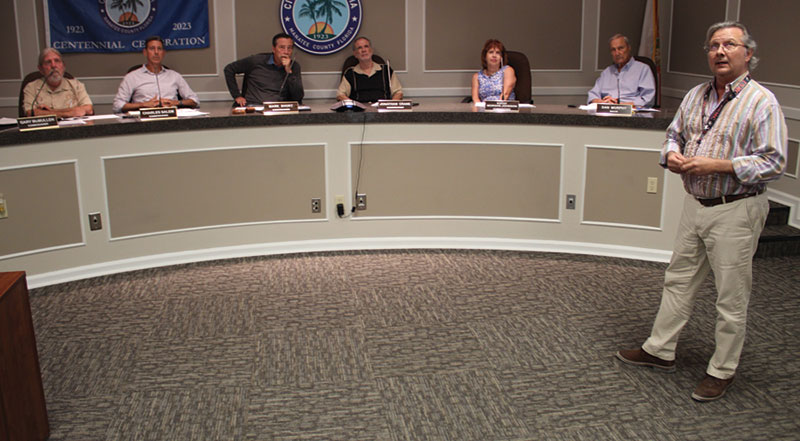
Anna Maria building department manager Dean Jones, who attended the CBIEO meeting, reported April 25 to the city commission with his findings.
Jones said cases like 111 Gull Drive will continue to happen until the city and other island governments achieve local control over mangroves by receiving delegated authority from the DEP.
Only seven local governments across the state have been delegated such authority, including Miami-Dade, Broward, Hillsborough, Pinellas and Sarasota counties, as well as the town of Juniper Island and the city of Sanibel.
Only one of those governments — Sarasota County — still actively enforces and regulates mangrove alterations instead of the DEP, according to Jones.
He said the discovery was “disheartening” and he did not know the reason why six of the seven governments granted authority over mangroves had abandoned their oversight efforts.
Nevertheless, Jones said state regulation represented a “floor” for mangrove protections since governments granted delegated authority over the vegetation can impose stricter standards and more demanding procedural requirements for alterations outside of riparian mangrove fringe areas.
He said he had begun working with staff from across the island cities — including Bradenton Beach building official Darin Cushing, Holmes Beach planning and zoning administrator Chad Minor and Longboat Key building director Allen Parsons — to explore potential coordinated efforts to seek delegated authority.
Jones added that the governments could establish interlocal agreements to pool resources, unify mangrove regulations throughout the municipalities, as well as set protocols for identifying and intercepting potential violations.
“We don’t have to let what happened at Gull happen again,” he said. “We can have some control over it. … We can make a difference.”
The DEP permitted the mangrove approval at 111 Gulf Drive because it is on a man-made waterway, not a natural shoreline.
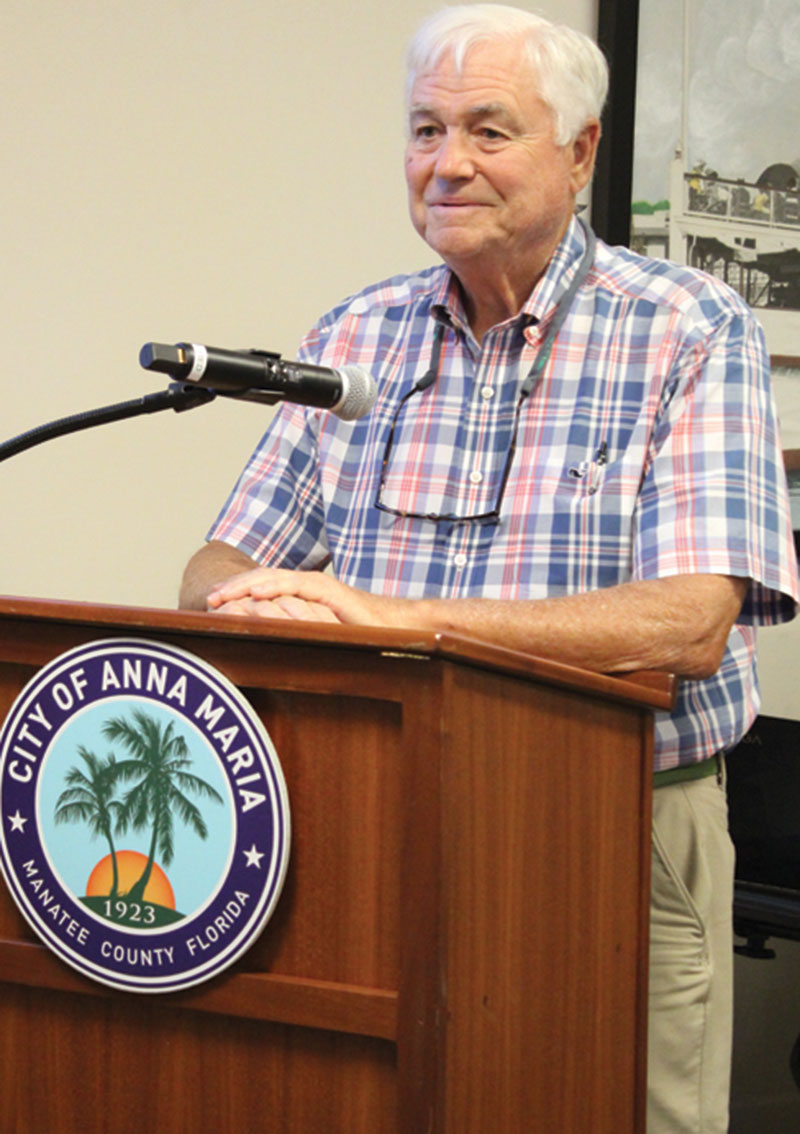
During public comment at the April 25 meeting, resident Wayne Patterson supported the city’s efforts to better preserve mangroves on the island. He asked if the municipality had any remedies in response to what happened at 111 Gull Drive.
Mayor Dan Murphy said the city had no remedies for that case since the mangrove removal work was done with permitting from the DEP, but was trying to preclude such a thing from happening again.
He added that if the island cities could not agree to cooperate, Anna Maria would move forward in pursuing action on its own.
“We need to get something done,” Murphy said.
Holmes Beach officials also discussed mangroves at the city commission’s April 23 work session.
Minor said he contacted the DEP to ask a representative to visit the city to provide guidance and training on mangrove enforcement and regulations, but nothing was in the books yet.
“They are understaffed, overworked … they just don’t have a lot of resources to provide a lot of help,” he said.
Despite that, Minor said he was unsure how much governments with delegated authority over mangroves could do over the state’s regulatory floor.
Commissioner Dan Diggins said the island municipalities’ potential coordinated efforts to protect mangroves could be one of the first examples of consolidated services the state has been calling for on Anna Maria Island.
Commission Chair Terry Schaefer said local governments could better oversee mangroves than the state and encouraged the city to move forward coordinating with the other island governments to tackle the issue.
“We’re local. We’re watching,” Schaefer said. “We’ve seen too many egregious acts.”