




With water temps dropping into the mid to upper 70s, Anna Maria Island anglers are anticipating getting out on the water to target the migratory species — Spanish mackerel, kingfish and bonita.
As the water temps reach the 75-degree mark, we should start seeing an appearances from these species as they head south following the baits schools. Targeting these fish will require additions to your normal terminal tackle of fluorocarbon leaders and hooks, as all of these species have plenty of razor-sharp teeth.
Start carrying some light copper wire and some long shank hooks if you want to have success targeting these fish, especially the macks and kingfish.
And, yes, water clarity can play a role in this, so try bringing some light wire for the clearer conditions as well as some heavier wire when the water clarity is cloudy.
And don’t forget these migratory fish attract large predators. Blacktip, spinner and hammerhead sharks will be in close vicinity to the macks, bonito, and kingfish, so be prepared to have a few of your catches chomped in half as you reel them to the boat.
A great way to be prepared is to have a heavy spinning rod rigged and ready with some thick copper wire and a 8/0 circle hook so you can put out a chunk bait to hook up with the shark.
The black tips and spinners may be 4-5 feet, which is quite manageable on heavy gear but, if you encounter a hammerhead, they can be considerably large, so pack some stamina and give yourself plenty of time as the battle may ensue for quite a while.
Don’t forget to release sharks with care as they are an integral part of the food chain, acting as stewards to thin out the wounded or weaker examples of other fish in the water.
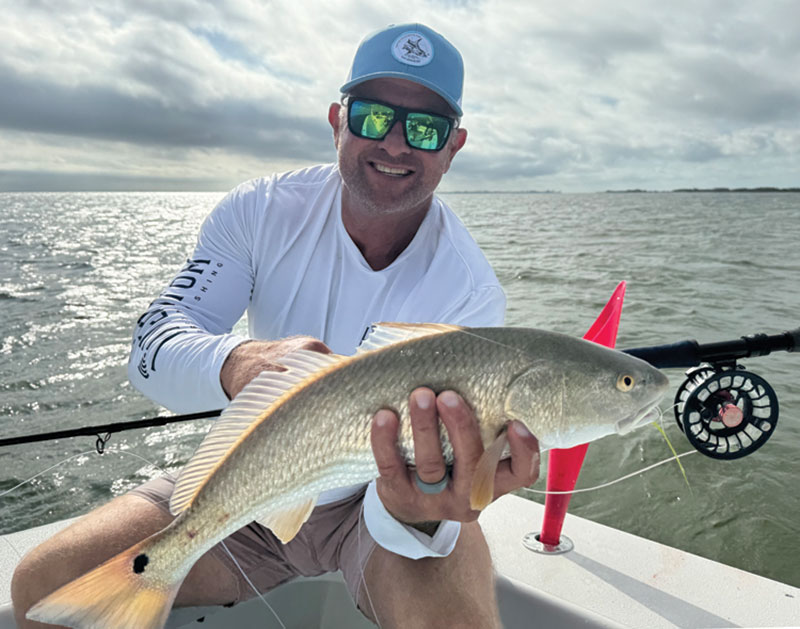
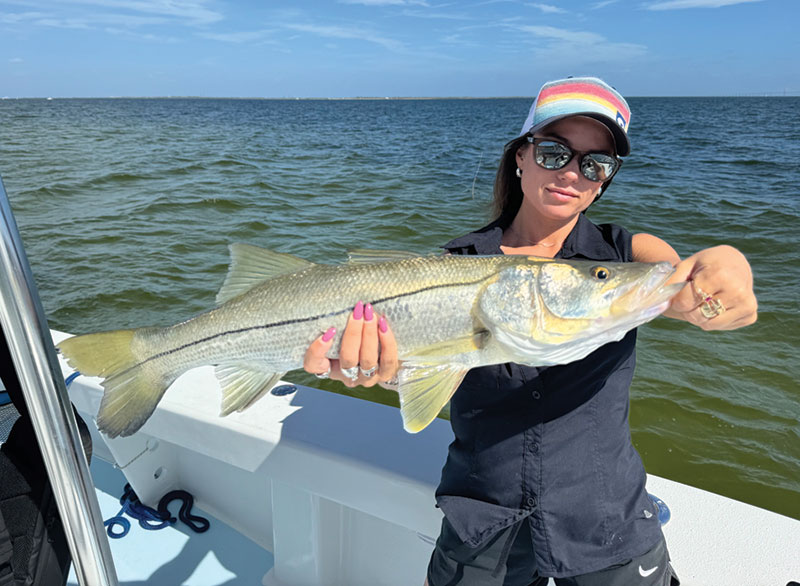
Capt. David White is working inshore, where he’s finding good action on redfish and snook. Casting live shiners along mangrove shorelines is resulting in hookups on either species, especially in areas where oyster bars are present.
Tides are playing a factor and White claims morning incoming tides seem to be the best. Once the tides have peaked, he’s moving to deeper grass flats where his clients are finding action on spotted seatrout with jack crevalle and Spanish mackerel mixed in. The macks are the most prevalent when bait schools are present.
Capt. Scott Moore of Moore Fishing charters says fishing inshore in Sarasota Bay is quite good when targeting snook, redfish and spotted seatrout.
With water temperatures hovering in the upper 70s, Moore says his clients are enjoying good action while casting along mangrove shorelines and oyster bars. In these areas, both snook and redfish are being caught frequently. Also, while in the shallower waters close to shore, Moore is finding large spotted seatrout exceeding 20 inches. These larger trout tend to be in small groups or even solitary, as they rest in sandy potholes waiting to ambush shrimp and unsuspecting bait as it passes by.
For a consistent bite on the trout Moore, is working deeper grass flats where schools of slot-size trout between 15-19 inches are gathering. Casting bait in these areas is resulting in bites on almost every bait when the schools of trout are present.
Moore also suggests seizing the opportunity to employ some artificials, especially those such as the MirrorOlure 84 MR — a top water plug. According to him, there’s nothing more exciting than watching a trout explode on the surface of the water to eat a lure.
Finally, Moore adds that as more fish move into the shallows, anglers who like wading the flats should start venturing to their favorite areas to fish. He also mentions that there is still residual bacteria in the water as remnants from the storms, so it might be best to wear waders if you have any exposed cuts to avoid a possibile infection.
Send high-resolution photos and fishing reports to fish@islander.org.