



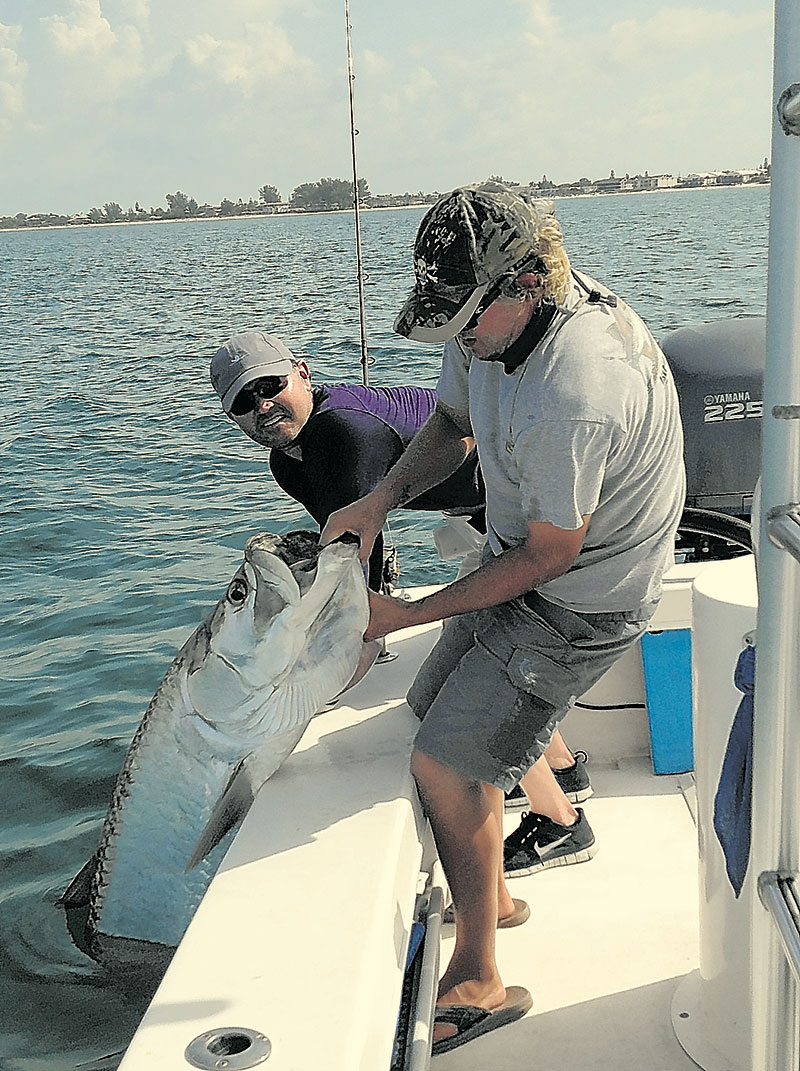
With winter finally settling in, Anna Maria Island anglers are finding that shrimp — live or frozen — is producing the best action while trying to get a bite.
With water temperatures dropping to the mid- to upper-50s, most species targeted are not as motivated to bite as they are concerned with conserving energy to keep warm.
This being said, it’s important to get a slow moving bait in front of them that doesn’t require much exertion to chase it down. In most instances live shrimp fits the bill. And, in many instances the addition of a weight or even a jig head to secure the shrimp in its location is ideal. It helps keep the shrimp vulnerable for any predator that stumbles across it.
In the back country, you should encounter species such as redfish, black drum, sheepshead and flounder which will readily take a shrimp if placed in front of their noses. The same applies for fishing along the beaches. Casting live shrimp in the surf on a jig head can yield good results even when water temperatures are low. Species such as pompano, redfish, sheepshead, black drum and even trout will respond to this presentation which can lead to a good day of fishing when expectations were low at best.
Finally, using live shrimp around structure in the inland waters and in the Gulf of Mexico can lead to good action. Sheepshead, Key West grunts, snappers and hogfish are receptive to shrimp offerings in these areas, too.
Capt. David White says before the cold front, he was finding good action on spotted seatrout and redfish in the backcountry of Tampa Bay southward to Sarasota Bay. For the trout, deeper flats or deep canals were great areas to cast live shrimp for a bite. As for the reds, casting around structure, such as rocks and docks, was producing the best action. Also while in these areas, White was finding some sheepshead and black drum.
Capt. Wes Wildman is finding action while working docks and canals in Sarasota Bay. In these sheltered areas out of the wind, Wildman is finding a variety of fish, including sheepshead, black drum and redfish. Casting live shrimp is attracting the best action from these three species. On colder days, some patience is required with this bite, although Wildman says on the warmer days the bite is more consistent. And, on the warmer days, Wildman is finding spotted seatrout along edges of channels and in deep canals. To catch the trout, Wildman likes tipping a jig with fresh-cut shrimp and slowly bumping the bottom.
Capt. Johnny Mattay says fishing offshore for red grouper is proving to be quite good on days when the seas are calm.
Fishing in depths of 100 feet or more is yielding limits of red grouper with some in the 15-pound range. Mixed in with the bite are numerous catch-and-release American red snapper which, although out of season, still make an enjoyable catch. For bait, Mattay is using an assortment of frozen baits — squid, sardines and threadfin herring. On some days, he’s carrying live pinfish for bait which also is working well.
Moving in closer in depths of 45-60 feet, Mattay is finding plenty of action around hard bottom and ledges. Hogfish are the highlight in these areas with a mix of other species — mangrove snapper, Key West grunts and large gag grouper.
Finally, for the inshore bite, Mattay is targeting pompano, black drum, sheepshead and redfish along the beaches. All are being caught on jigs tipped with shrimp.
Send high-resolution photos and fishing reports to fish@islander.org.