
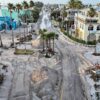





Bradenton Beach is entering the 2025 storm season at the ready.
Police Chief John Cosby, who serves as the city’s emergency operations manager, spoke to The Islander May 21 about the city’s state of readiness following last year’s impacts from hurricanes Helene and Milton.
With 2024 storm debris cleared, demolitions nearing completion and most of the city’s critical infrastructure restored or upgraded, Cosby said the city is well positioned to head into a new storm season.
“All of our equipment is up and running,” Cosby said, referring to public works and police equipment destroyed or damaged during the storms. “Everything’s been replaced. Everything’s done.”
The storm surge from Hurricane Helene pushed more than 6 feet of water across Bradenton Beach.
One of the hardest-hit city facilities was the public works building, which lost vehicles and tools to floodwaters. In response, the department is taking steps to better protect city assets.
“We’re going to try and limit what equipment lays around,” Cosby said. “We’ve already built things to put it up higher. We’re looking at getting some flood barricades for the garage and the doors downstairs.”
Much of the city’s post-storm effort focused on demolishing damaged structures. Cosby said the city worked directly with property owners to remove buildings that could pose a threat to surrounding structures.
“If we would have gone through FEMA, it would have cost us money to have a law firm go and fight to get them,” Cosby said. “By just waiting a little bit … basically we got a response from everybody who had been waiting for insurance.”
Cosby said once insurance money started flowing, demolition permits poured in. “It was almost every day they were coming in with demo,” he said. “They started getting their insurance money, so the demos started moving forward.”
“We still have a couple down at the south end and then, after that, we’re good,” Cosby said of the remaining demolition sites.
He estimated that five structures remain to be demolished.
With debris and structural hazards largely addressed, the city has turned its attention to longer-term infrastructure projects such as road paving, drainage maintenance and electrical repairs.
Crews are working to revitalize stormwater systems at street ends and to reinforce roadways impacted by washouts.
Cosby credited the city’s quick recovery to coordinated efforts across multiple levels of government and the private sector.
“I’m proud of the city staff, proud of the elected officials for staying out of the way, the citizens, the business owners, all our contract and employees, the state, the county,” he said. “This wasn’t just us. This was coordinating with a lot of other people to get what we got done as fast as we did.”
A change in policy
Currently, cities like Bradenton Beach report disaster-related damages directly to the Federal Emergency Management Agency through detailed assessments and documentation. The process enables local governments to apply for federal assistance for cleanup and recovery.
However, under a proposed shift by the Trump administration — along with FEMA staffing cuts recommended by the federal Department of Government Efficiency advisory body — the reporting structure could change.
Instead of applying directly to FEMA, municipalities would coordinate with the state, which would act as a conduit for disaster assistance requests.
While intended to streamline support and reduce redundancy, the change could add a layer of bureaucracy for smaller cities.
However, Cosby expressed confidence in the city’s ability to adapt. He said Bradenton Beach already integrated its operations with state systems and maintains regular communication with Tallahassee.