




With fall settling in around Anna Maria Island, migratory species are on top of the agenda for anglers.
During the fall months in our region, mass amounts of bait fish school in our inshore waters.
Threadfin herring, scaled sardines or shiners and Spanish sardines are the most prominent species — and the favorite sources of food for many of the predatory fish we see here.
Migratory species like Spanish mackerel, kingfish, cobia, jack crevalle, ladyfish, bonita and blue runners thrive on these infinite bait schools as they migrate down the coast, creating a feeding frenzy of great proportions and leaving an oily slick in their wake.
To be a witness to this cycle of the food chain is awe-inspiring, and this is where fishers enter the equation. And, yes, although we are anglers, we are not exclusive beneficiaries of this feeding cycle as we see shorebirds and birds of prey also cashing in on this wonder of nature.
We owe thanks to the birds as we use them as indicators to find the bait, which leads to the fish. It’s common to hear, “Look for the birds” and it rings true for anglers. If you want to get in on this action, the time to act is now.
This bite has but a small window of opportunity before the season changes and we shift gears to wintertime fishing.
And this fishing is not restricted to boaters. It is accessible to all, as many of the fish can be caught right in the surf or around the passes and bridges. And what’s even better is that most of the species are not very picky when it comes to feeding time.
Artificials like jigs and spoons are most deadly when targeting migratory fish as they enable the angler to work bait quickly, which is what these high activity fish enjoy most — the chase. This doesn’t mean we rule out live baits, but if catching bait is not your forte, then this option of using lures to attract fish is perfect.
Remember to carry an ample amount of ammunition because all of the fish being targeted have sharp teeth and are well versed at cutting your leader and swimming away with your lure.
As far as table fare, most of the species are considered catch-and-release, although the sheer excitement and thrill of targeting these predators is worth the effort even if it’s just for the sake of bending a rod.
On my Just Reel charters, I’m finding good action while working along the Gulf beaches. With an abundance of bait pressed against the shoreline and pushing into the Gulf, migratory fish like Spanish mackerel, jack crevalle, blue runners and ladyfish are prevalent. Free-lining a live shiner on a long shank hook is leading to hookups on nearly every cast in some areas.
Blacktip sharks are moving in on the action in areas heavily concentrated with mackerel. Fresh-cut pieces of mackerel on a wire rig are being charged shortly after being cast out behind the boat. Most blacktips are 4-5 feet.
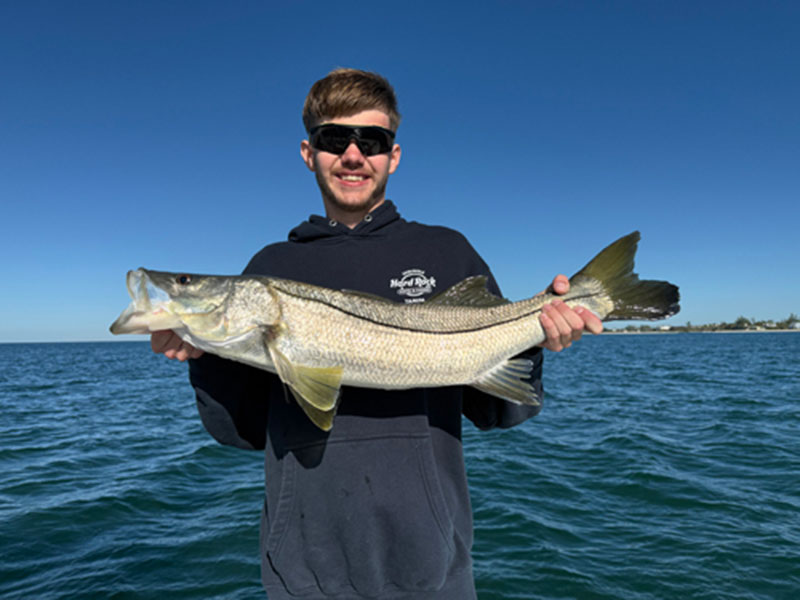
Moving inshore, targeting snook during the higher stage of the tides is working well. Casting baits around mangrove shorelines and channel edges can yield fish in all sizes. Although a majority of snook catches are 18-24 inches, lucky anglers are catching some in the “keeper” slot of 28-33 inches.
Redfish are being found in many instances in the same areas as the snook. Most of the red catches are in the slot of 18-27 inches.
Lastly, spotted seatrout are being found on the deeper flats, although many catches are on the smaller size. Limits are attainable, but may require hooking a dozen or more before you get three keepers.
Capt. Johnny Mattay of Anna Maria Charters is getting in on the “beach bite” while patrolling the nearshore Gulf waters along the shores of AMI.
Cobia are a highlight of Mattay’s charters with many fish being caught around reefs and wrecks, as well as a few just cruising the surface in open water. Casting live baits like pinfish or sardines works well to get a cobia’s attention, as does the use of artificials like large jigs, according to Mattay.
Macks and a few kingfish are being caught along the beaches, as well as the usual suspects — jack crevalle, ladyfish and blue runners.
Inshore on the grass flats of Sarasota Bay, Mattay is finding action on snook and redfish while working around mangroves and oyster bars during the higher stages of the tide.
Mattay says spotted seatrout are included in the inshore bite, especially when fishing deep grass flats.
Capt. David White is patrolling the beaches of Anna Maria Island to kick off the fall season. He says migratory fish like jack crevalle and mackerel are abundant, and clients are reeling in good numbers on live shiners as bait.
Kingfish are being caught around reefs and wrecks, with some fish exceeding 20 pounds.
Blacktip and hammerhead sharks are lurking in these areas due to the activity that is occurring, which is leading to some lengthy battles and a test of stamina for White’s clients.
Moving inshore, snook and redfish are the most frequent catches while working the mangroves.
And, White says, even tarpon are being found inshore along the beaches with several catches in the 100-pound range.
Fall fishing is living up to its reputation for great fishing around AMI.
Send high-resolution photos and fishing reports to fish@islander.org.