





With fall cooling the air and waters, Anna Maria Island anglers are eager to get out and enjoy what this brings to our fishing opportunities.
Fishing the Gulf beaches is going strong for another week as migratory species are on the prowl, corralling bait schools over areas like reefs and hard bottom.
Spanish mackerel are dominating most areas along with kingfish, jack crevalle, ladyfish and blue runners. Other migratory species, cobia and sharks, are in on the action. So don’t go out there under-gunned. The light, sporty gear you use for mackerel is no match if a kingfish or cobia comes into range. So bring a heavy setup just in case.
Moving inshore, water temperatures are causing snook to be scattered as they migrate from the beaches to the flats. As they are in transit, finding concentrations of fish may be difficult. So a little persistence might be required.
Redfish are lurking along mangrove shorelines and oyster bars and even the beaches. Both live and chunk baits work well.
Finally, spotted seatrout are following a pattern like the snook — scattered throughout the flats. Drift fishing is a good bet if you’re on the hunt for larger trout.
On my Just Reel charters, I had the pleasure of having the Romano family from Long Island on the boat. Frank, 81 joined by wife Amelia, daughter Stacey and granddaughter Alex, 10, got to experience some great fishing. We got started by targeting some migratory species in the Gulf of Mexico. Spanish mackerel were the most prevalent, with a mix of blue runners and ladyfish to add variety.
The bite was good and Alex and Frank were catching fish on just about every bait.
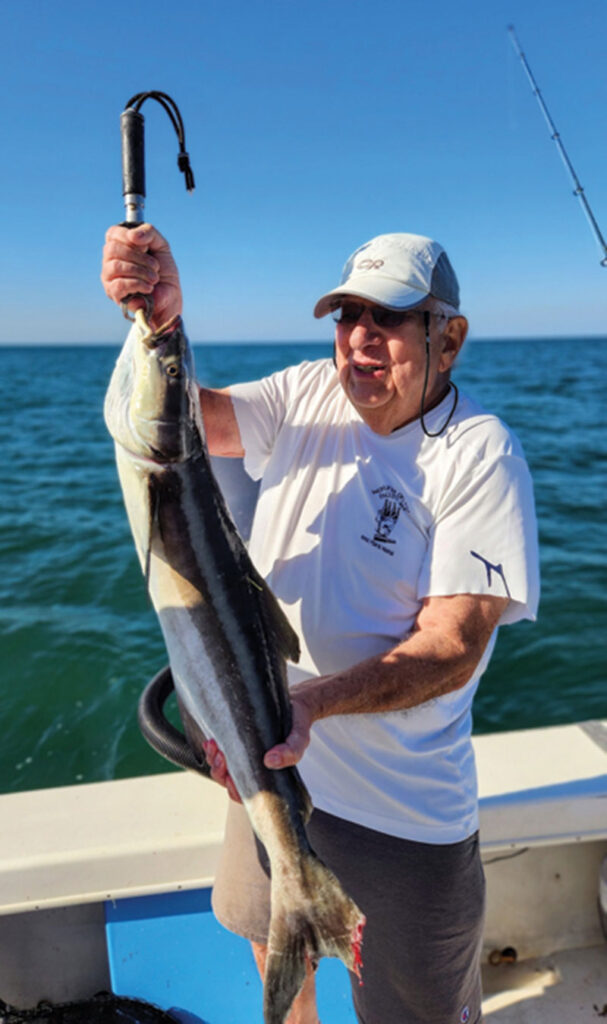
We switched things up a little and gave Frank a larger rod baited with a big threadfin herring to see what else we could muster up and, to everyone’s surprise, within a couple of minutes, Frank’s rod was bent over double as the drag began screaming from the reel.
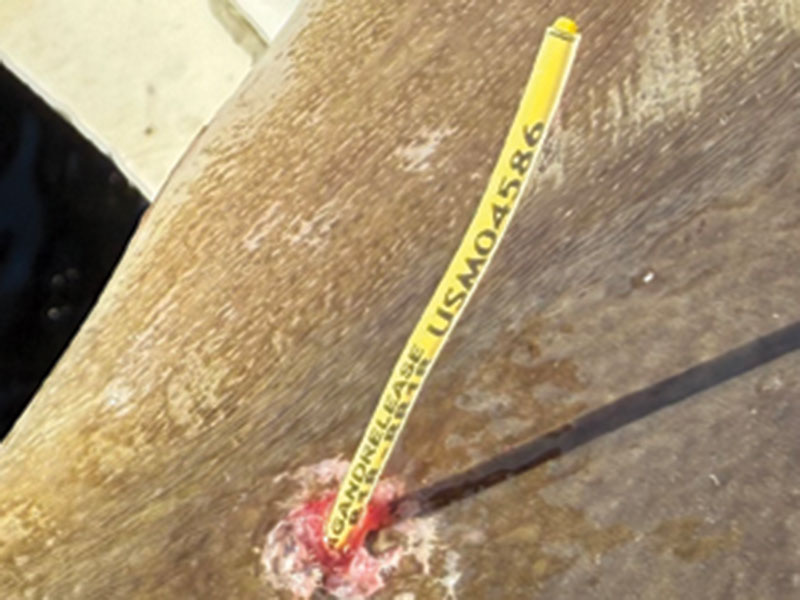
Several minutes into the battle, Frank got the fish to the surface. We all gasped as a large cobia came into sight before diving into the depths for another drag-screaming run. This action took place several more times before the fish gave in and was netted boatside. As we measured the fish, 33 inches to the fork, we noticed it had been tagged. I took several close-up photos of the tag and we released the fish.
We moved from the Gulf to the bay to do some snook fishing, which turned out to be good, as again, Frank and Alex hooked into numerous snook and some redfish, too.
Good fishing, good company and a tagged cobia to add to the story. We completed our day of fishing and I went to work tracking down that tag.
Tracking the tag to the tagger
I called Capt. Scott Moore, as I was sure he’d probably know what direction to send me, and he did.
In fact, he knew who tagged the fish and after a couple of texts and phone calls I was speaking to the tagger — Savannah Spedding, who works in the Historic Bridge Street Pier bait shop in Bradenton Beach when she’s not studying marine biology at University of South Florida with her hope to work with the Florida Fish and Wildlife Conservation Commission once she gets her degree.
Savannah is an avid angler and hunter and recently began tagging fish in the Gulf for a study by the Center for Fisheries Research and Development in cooperation with the University of Southern Mississippi.
The study is specific to the migratory habits of cobia and tripletail. Volunteer anglers throughout the south are helping with the goal to inform fishery resource assessments, management and conservation.
Savannah and other anglers tag and release the species and, if another angler catches one, they are asked to report it to aid in the research. Anglers who do report catches might be rewarded with merchandise.
So if you happen to catch a cobia or tripletail locally, don’t hesitate to reach out to Savannah at the pier.
Reporting in
Capt. David White says fishing the beach bite is “where it’s at.” He says mackerel are prevalent around areas with structure such as reefs, wrecks or hard bottom and chumming with live shiners is attracting the macks to the boat and helping to keep them there.
And chumming is luring other species to the boat — kingfish and bonita, as well as a few sharks.
Moving to the flats, White is putting his anglers on respectable numbers of snook while casting baits along mangrove shorelines. He said there are still a few fish remaining along the beaches and passes. In these areas, black drum also are present.
Lastly, spotted seatrout are taking the bait for White’s clients over deep grass flats in the bays.
Capt. Johnny Mattay of Anna Maria Charters is finding kingfish and mackerel for clients while working in the Gulf of Mexico. Mangrove snapper also are being caught in the Gulf, especially on the reefs and wrecks.
Moving inshore, Mattay says redfish are a good bet as long as you’re working the right tides. Higher stages of the incoming tide are yielding good action on the reds and the same applies for snook, which the captain says seem to be turned on by the incoming tides.
Send high-resolution photos and fishing reports to fish@islander.org.