





Anna Maria Island anglers are excited to see water temps on the rise as springtime fishing is on the verge of reality.
That’s provided we stay in a warmer pattern, with no more sneak attacks from cold fronts.
But don’t hold your breath this week, as we expect a quick chill with the arrival spring on March 20.
Aside from brief interruptions, springtime fishing is shaping up, as snook, trout and redfish are on the flats and hunting for a meal.
The snook have been slightly elusive, but they are starting to show in increasing numbers with spring’s arrival. Spotted seatrout, on the other hand, have really made a showing, with all sizes being found on deeper flats and shallow ones, too. Larger examples of trout seem to be on the shallows, enjoying the sun and the warming waters and awaiting a meal.
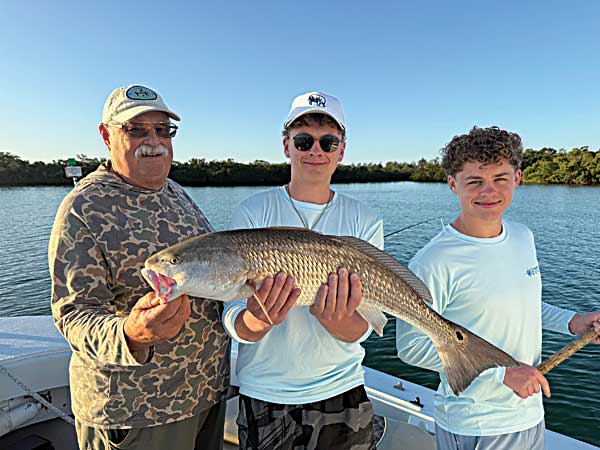
As for redfish, there are some schools on the shallow flats, which are seeing quite a bit of traffic, especially during the higher stages of the tide, when they are accessible by most boats. Reds are being found along mangrove shorelines and oyster bars and even under docks and seawalls.
Moving into the Gulf, Spanish mackerel are attainable, especially around reefs and hard-bottom areas, where Cobia can be found lurking, too, so keep a heavy spinning rod handy. A medium-sized pinfish free-lined in front of a cobia will generally do the job. Some sheepshead and grunts are available if you’re using shrimp as bait. Of course, you’ll want to cash in on this bite while you still can, as the sheepies are toward the end of their spawn and will soon be dispersing.
Fishing the surf in the Gulf along the island beaches is yielding some pompano, as well as quite a few whiting. Shrimp-tipped jigs are a good option to target the fish, as well as ladyfish, jacks and trout as they roam the beach.
Lastly, fishing offshore in the Gulf of Mexico is yielding limits of red grouper in depths of 100 feet or more, with vermilion, lane and mangrove snappers being the most prevalent.
Amberjack are on the prowl around offshore wrecks, so keep a rod ready to free-line larger baits like pinfish to get in on the action.
On a final note, sign up now for the annual Reel for Rotary fishing tournament set for Saturday, May 9. They’re still on the hunt for contestants and sponsors. So get involved if you can. It’s for a good cause. You can register at http://ami-reelforrotary.square.site.
On my Just Reel charters, I’m seeing great action on spotted seatrout while fishing shallow grass flats in Sarasota Bay. Most catches are in the slot of 15-19 inches, with some larger examples mixed in.
After trout fishing, I’m moving my charters to the shallow flats along mangrove shorelines to target snook. Most are 20-26 inches with a slot-sized fish here and there. Redfish are being caught in the same areas, which adds a nice mix to the snook bite.
Fishing along the beaches is yielding Spanish mackerel, as well as some more trout and flounder for my anglers.
Capt. David White says snook fishing is getting good for his charters as water temperatures continue to rise. Casting live shiners as bait around mangrove shorelines and channel edges is leading to snook of all sizes — including some big ones — for his clients.
Going after spotted seatrout with live shiners as bait also is working well for White’s charter clients. Numerous slot-size trout are being caught over deeper grass and shallow grass flats with limits attainable on most mornings.
Moving into the Gulf of Mexico, White is starting to hook up with some Spanish mackerel over wrecks and reefs. Mangrove snapper are present in these areas and are responding to baits fished on the bottom.
Lastly, White notes sharks are roaming the shallows, which makes them targetable for anglers who want to get a workout for their arms.
Send high-resolution photos and fishing reports to fish@islander.org.