






Mother Nature is not always kind.
High tides and heavy rain July 23 washed over some sea turtle nests that were near the waterline, and seven clutches were lost.
However, according to Anna Maria Island Turtle Watch and Shorebird Monitoring executive director Suzi Fox, this is just a part of a natural cycle, and most nests that were washed over will still hatch.
With 4 nests on Anna Maria Island as of July 29, nesting numbers are approaching 2017’s record-breaking total of 488 nests.
With 485 nests on Anna Maria Island as of July 29, nesting numbers are approaching 2017’s record-breaking total of 488 nests.
Additionally, AMITW reported 100 nests on Coquina Beach — an all-time high for one section.
Some unmarked nests — stakes lost in the surf — are more reasons not to dig on the beach or stab canopy posts and volleyball poles into the sand.
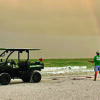
High tide on Anna Maria Island was 2 feet higher than normal early July 23 and overnight storms dropped about an inch of rain.
People on the beach reported seeing waves lapping over sea turtle nests close to the waterline and were concerned for the safety of the incubating hatchlings in the clutches.
When a storm causes increased rainfall and higher tides, some sea turtle nests lining the beach can be “wash-outs” and eggs and hatchlings inside may not survive, according to Fox.
Sea turtle eggs absorb water and the hatchlings can drown before they emerge.
“Washed over nests drop the hatch rate,” Fox said July 24. “But this is just part of nature.”
She said in the past, turtle watch relocated nests that were found close to the waterline to higher ground if it appeared they could be washed out.
Now, AMITW lets nature take its course.
Fox said it may seem like a sad event when nests are washed over, but it was the sea turtle’s choice to nest where it did, and it is not up to humans to mess that decision.
“Laying the nest low was her choice and science has shown it is not up to us to change that,” Fox said. She added, “We don’t know what we might be harming by moving a nest.”
The temperature of the sand where the nest is laid determines whether the hatchlings will be males or females, and relocating nests could be harming the natural order, Fox said.
Additionally, she said even eggs that don’t hatch serve a purpose, as food for other creatures, like ghost crabs and birds.
“Every egg, whether it hatches or not, is important to the ecosystem of Anna Maria Island and keeping things in balance on our beaches,” Fox said.
For more information about sea turtles, contact Fox at suzilfox@gmail.com or 941-778-5638.
‘Hands off’ hatchlings
The Florida Fish and Wildlife Conservation Commission advises “hands off” for beachgoers who come into contact with hatchling sea turtles.
Sea turtles should be viewed from a distance. Even well-intended attempts to rescue a hatchling could result in harm to the sea turtle, according to the FWC.
Tampering with a sea turtle nest or picking up a hatchling for a photo opportunity or “selfie” also are against federal, state and municipal laws.
People are asked to call the FWC’s Wildlife hotline, 1-888-404-3922 or *FWC or #FWC from a cellphone, to report hatchlings that are stranded, wandering in a parking lot or road, wandering away from the water, or are dead.