





A.P. Bell Fish Co. dropped its suit against the Florida Department of Environmental Protection.
The dispute over ownership of submerged lands had been scheduled for a bench trial in January.
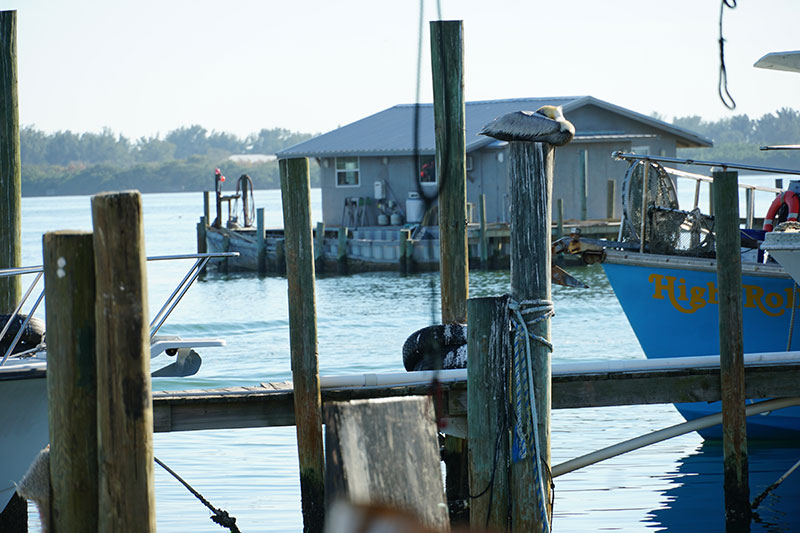
The core issue in the case involved a 2017 demand from the DEP that Cortezian Raymond Guthrie Jr. remove a stilt house he built in Sarasota Bay near A.P. Bell Fish Co. or pay fines for ignoring the order.
Guthrie built the 1,200-square-foot structure, including a metal roof, air conditioning and other amenities, between February 2017 and May 2017 without state permits.
In June 2017, the DEP determined the submerged land was owned by the state.
Guthrie was sued Feb. 6, 2018, by the DEP.
On April 27, 2018, Guthrie responded, denying the agency’s claims and maintaining he owned the land based on the Butler Act.
The Butler Act, according to the Florida Bar Association, “was created to stimulate commerce and to encourage upland riparian owners to improve their waterfront property. In order to accomplish this purpose, waterfront owners were permitted under the act to obtain title to submerged lands adjacent to their uplands by bulkheading, filling, or permanently improving the submerged lands.”
The act was repealed in the 1950s, but may be used in certain situations to grandfather bulkhead structures in submerged lands when an owner made an improvement before its repeal.
At a hearing Feb. 5, 2019, Cape Coral attorney Joe Beasley argued that Guthrie “rebuilt” the structure within the footprint of prior net camps.
Ruling in February 2019, 12th Circuit Judge Edward Nicholas entered summary judgment in favor of the DEP and against Guthrie. Nicholas said his decision was based on a proper November 2017 DEP final order, as well as Guthrie’s failure to respond or request a hearing.
But the judge stayed the execution of his order pending the resolution of Bell’s case against the DEP.
In May 2018, A.P. Bell had filed a motion to intervene in the dispute, claiming the commercial fish company owned the land under the stilt house.
In defense to Bell’s complaint, the state contended the Guthrie structure was built in May 2017 and “occupies a footprint that is at least three times larger than any structure that may have previously existed at the site.”
Before issuing the final DEP order against Guthrie, the environmental agency sent investigators to the property, researched the site’s history and, in June 2017, determined the submerged lands were owned by the state.
The DEP sent several warnings to Guthrie seeking compliance and offered a consent order to resolve the matter, but he did not agree to its terms.
“I dropped the intervening (case),” fish house owner Karen Bell said Jan. 17. “I was trying to help Junior (Guthrie).”
Bell said she withdrew her motion after her attorney said she lacked sufficient evidence to prevail.
“I’m really upset about all this,” she said. “My lawyer said that we didn’t have enough proof — even with the historical photos.”
Bell’s suit claimed, in part, that Guthrie’s stilt house had historical significance. Net camps were widely used by fishermen to tie up their boats and mend and dry cotton fishing nets in the 1920s-40s.
Bell said the battle to keep the illegal structure isn’t over.
“We are going to try something else,” she said, although she did not elaborate.
And it was not clear at press time for The Islander what impact Bell’s dropped lawsuit meant for enforcement of the final order against Guthrie — who was ordered in February 2019 to remove the structure and pay $6,500 in fines and penalties — pending the Bell lawsuit outcome.