








The crab grab is on.
Stone crab season opens Oct. 15 and crabbers are permitted to drop traps 10 days in advance.
Cortez fisher Brian Lacey and his crew wasted no time Oct. 5 — the first day traps were allowed in the water — putting their first load out in the Gulf of Mexico at midnight.
“The longer the soak period, the better the catch, typically, for stone crabs,” Lacey said Oct. 5.
In 400-trap increments, the 7-year commercial fisher aimed to drop 2,700 traps within a 40-mile area in a four-day span.
Traps weigh about 50 pounds. Between the traps, ropes and bait — mullet and pigs’ feet — Lacey and his crew of three handled approximately 25,000 pounds of gear every time they loaded the boat.
“You load the boat, you unload the boat … by the end of the day, they’ve moved 150,000 to 200,000 pounds,” Lacey said.
Time is money for crabbers, and Lacey was not alone in hustling to get traps in position.
“This is one of the hardest working villages and industries,” Lacey said around noon Oct. 5. “I’ve talked to all my friends, from Fort Myers up, and everybody’s already made a trip.”
The 2021-22 season will be the second harvest under new regulations from the Florida Fish and Wildlife Conservation Commission that include a harvest window shortened by two weeks and an increase in the minimum claw size.
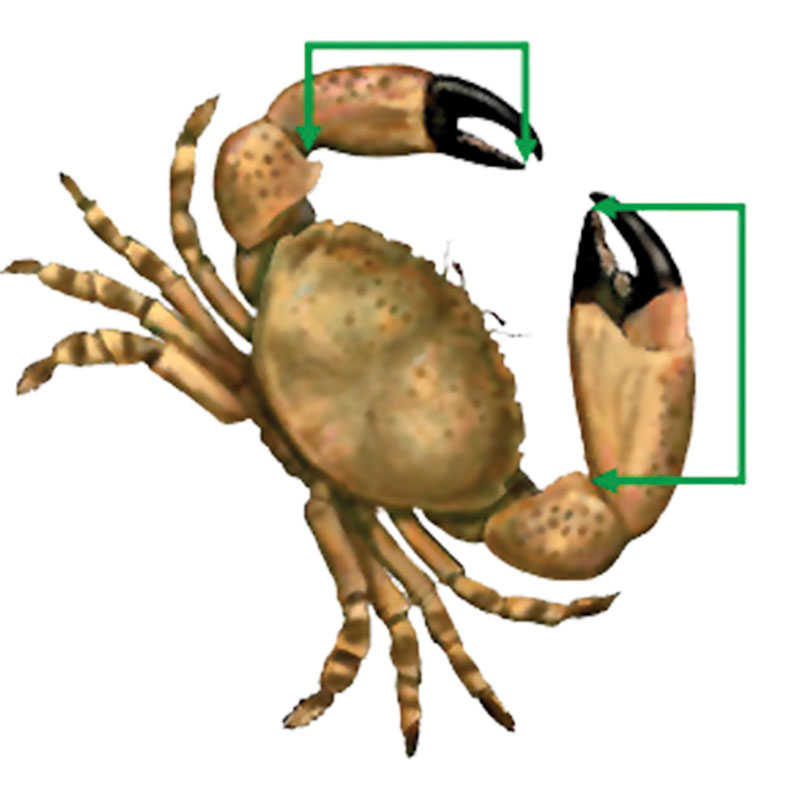
Only the claw — which can be regrown by the stone crab — is harvested.
Lacey said the new rules have impacted his livelihood.
“Can you imagine closing down your business for two weeks and saying, ‘Sorry?’” Lacey said.
He said there were days they threw back more than 300 pounds of crabs they would’ve kept the prior year.
Another regulation will take effect before the 2023-24 season — all traps must include 2.375-inch escape rings.
Lacey said material costs to install the rings are more than $1 per trap.
“And then there’s the time. It takes a long time to go through a couple thousand,” he said.
According to FWC data, Florida has seen a decline in the number of stone crab commercial catches over the past 20 years.
The FWC points to overfishing and instituted the new regulations to improve the crab population and build resiliency in the fishery for the long term.
Aside from landings data, the FWC uses metrics from a trap-based monitoring system to assess the health of the crab population.
Lacey and other crabbers have said both data sets are flawed.
“A lot of times, when scientists look at things, they don’t run an operation of scale and base things on data that may not be the same thing we’re seeing,” Lacey said.
Landings are self-reported and the trap-based monitoring system relies on 200 static traps spread across 10 locations.
During the season, Lacey moves traps frequently to keep up with migrating herds of crabs.
“Some years, there’s millions of pounds of crab in the keys; some years there’s millions of pounds in Homosassa; some years they’re in between,” Lacey said.
“Every year I could take people out there and show them crabs and show them numbers that would be impressive,” he said.
Lacey maintains the stone crab population is in good shape and poor water quality, as opposed to overfishing, is to blame for lean harvest years.
“The FWC and our state lawmakers seem to want to be more restrictive on a population that seems healthy to me. Now, was it during red tide in 2018? No. We couldn’t find crabs here; we traveled to crab. But there were tons of crabs where we went, even in that year,” he said.
As of April, the FWC was not using water quality as a variable in its stone crab population analyses.
Lacey said fishers shouldn’t be punished for red tide events that kill crabs in confined areas, especially when the blooms appear to be caused by pollution.
“My No. 1 gripe is raw sewage getting dumped in the bays, phosphate plants getting drained in the bays and then (they) regulate us because of it,” he said.
When the harvest begins Oct. 15, Lacey and his crew will pull the traps for the first time, determine the most productive locations for crabbing and concentrate more traps in those areas.
Lacey’s prediction for the season — which ends May 2 — is no prediction.
“In terms of expectations, I don’t know. We had a red tide; it could be good; it could be bad,” Lacey said. “We’ll know on the 15th.”