






With millions of gallons of freshwater flowing out of the Manatee River and into Anna Maria Sound, local anglers can’t help but notice the rancid color of the water.
The closer you get to the river, the darker the water seems to get. You could compare it to the likes of strong iced tea.
This is an annual occurrence during the rainy season as Lake Manatee begins to fill and exceeds maintainable levels, which results in opening the dam and vast amounts of freshwater released to the head of the river. The river water eventually makes its way to the Gulf of Mexico via Tampa Bay and Anna Maria Sound.
The large push of freshwater lowers salinity levels which forces out several species of fish, including redfish, snook, tarpon, flounder and even the dreaded catfish.
At times, the scenario can produce some excellent fishing opportunities, as new batches of fish arrive to inhabit the waters.
On the other hand, too much freshwater can push the fish farther out, making it difficult to find them, resulting in some challenging fishing.
The darker waters also might alter how anglers fish. Live bait fishing remains king, although anglers using artificials may find themselves using the brightest colors they can find in the tackle box.
Another challenge with darker water is seeing the fish you’re trying to catch. Sight-casting might be on hold until the rain stops and things clear up. Not much sense in going up in the tower. So you’ll have to use your “know-how” and hope the fish are there.
But the mystery makes it more enjoyable, right?
Capt. David White says he’s catching plenty of redfish in Tampa Bay. Casting live shiners against mangrove shorelines is leading to catches that are running mostly 18-22 inches, with some larger fish mixed in. Oyster bars are especially fishy for White, as he reports small schools of reds are meandering in those areas.
Larger reds are being caught by White’s anglers along the Gulf beaches where they are feeding during outgoing tides. For these fish, White is casting live or fresh-cut pinfish.
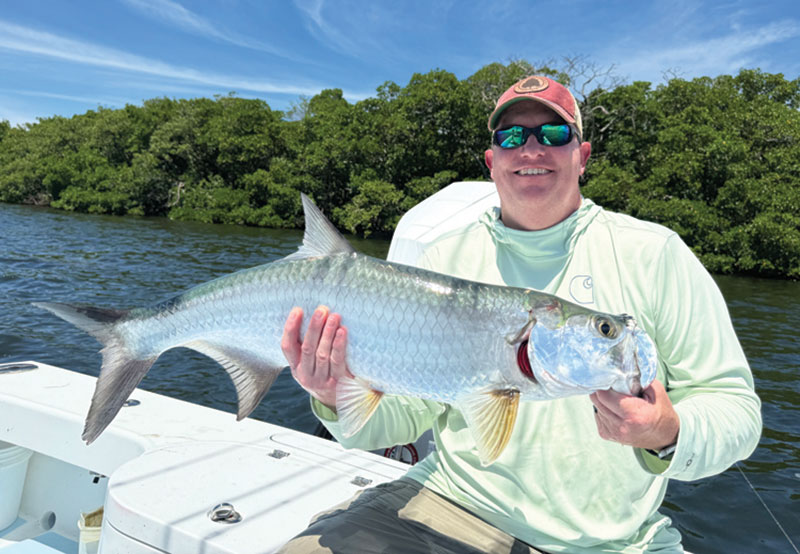
Fishing deeper grass flats for juvenile tarpon is something White likes to do for his charters to pass the time. Live shiners or pinfish as bait are attracting tarpon measuring 10-30 pounds.
Lastly, White is putting his clients on gag grouper while using live pinfish as bait around reefs and wrecks in the bay.
Capt. Johnny Mattay is concentrating his time on his charter fishing trips by trolling for grouper in Tampa Bay. Dragging lipped plugs around, near and over wrecks, reefs and ledges is leading to some keeper-size gags. Mattay reports the brighter the paint job on the lure, the better the results, as most inshore waters are stained due to the vast amounts of freshwater from the river and the frequency of thunderstorms.
After trolling, Mattay is moving to the shallows to anchor and target redfish along the mangroves. Casting shiners along the edges of the bushes is leading to action, although Mattay says pulling anchor and moving frequently down the shoreline will ensure a steady bite.
On days when the winds are down, Mattay is venturing offshore with his charters, and finding yellowtail snapper. It’s the most frequent bite with limits being caught. Other offshore species on the charter menu include mangrove snapper and gag grouper.
Send high-resolution photos and fishing reports to fish@islander.org.