





After days of intermittent rain combined with heavy thunderstorms, Anna Maria Island anglers are anxious to get back on the water without looking over their shoulder to watch the horizon for storms.
With a more stable weather pattern in our near future, you can bet there will be some homework to be done before heading out on the water because fishing patterns will have changed due to vast amount of freshwater released into our backcountry waters, especially around the Manatee River.
Snook and redfish should be lingering along mangrove shorelines in the mouth of the river as they move within the tolerable amounts of salinity needed to forage.
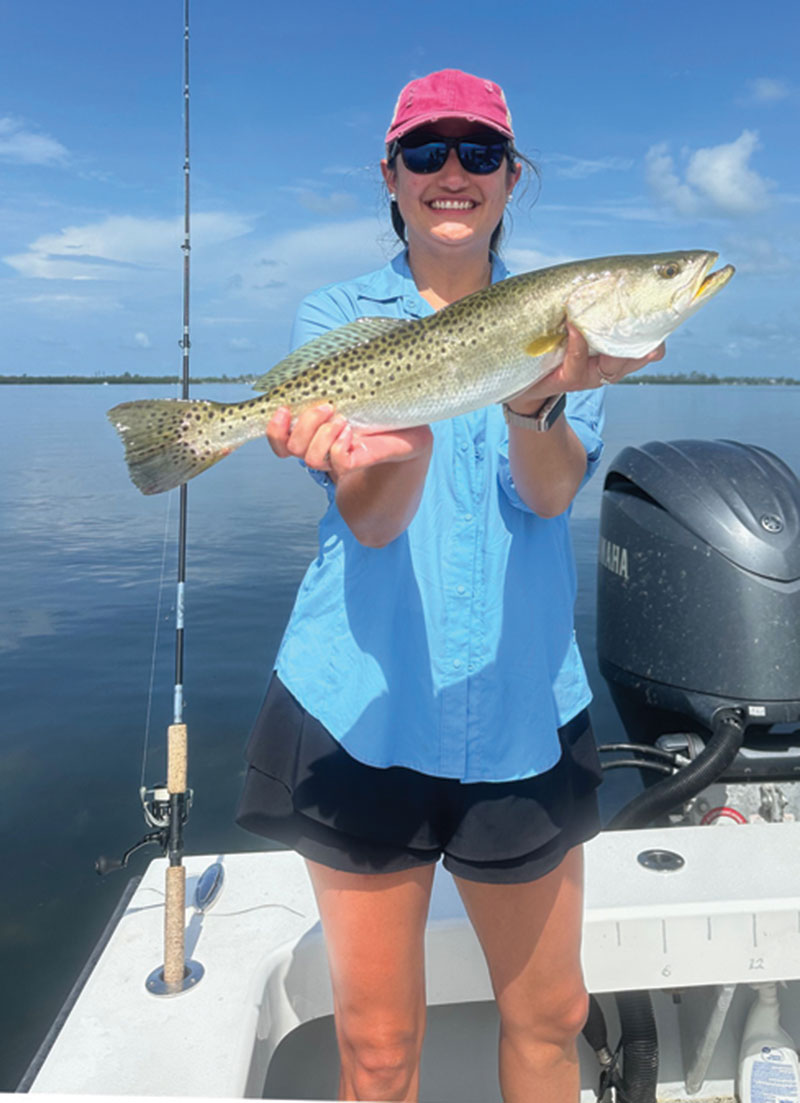
Spotted seatrout will follow suit and should be found close to the beaches, where deep grass flats and clean Gulf waters create a refuge for them and the food they crave, including shiners, pinfish and other small fish and invertebrates.
Other species, including ladyfish, mackerel and jack crevalle, should be found in these areas, especially if bait schools are present.
This being said, plan accordingly and be ready to adjust your pattern to find the bite you desire.
Moving into the Gulf of Mexico, waters with an acceptable degree of clarity should be welcoming anglers fishing reefs, wrecks and hard bottom areas.
Mangrove snapper are beginning to gather in these areas and numbers should increase as we approach the July 10 full moon and the weeks leading up to the next full moon on Aug. 9.
The arrival of hatch bait is also a factor in this bite, which hopefully we will see sooner than later.
For those venturing to depths of 100 feet or more, American red snapper season is in effect and producing daily limits for anglers willing to go deep. Red grouper are providing limits of fish in these depths, as well as yellowtail and mangrove snapper. Finally, migrating species such as blackfin tuna are being found around the deeper wrecks.
On my Just Reel charters, catch-and-release snook fishing is proving to be good in a variety of areas. As we settle into summer, many snook are migrating to the Gulf beaches to spawn, which can provide excellent catch-and-release action for anglers who wish to sight cast to fish. Large numbers are staging in the passes to feed prior to venturing out front to the beaches to spawn, which makes them quite targetable.
Spotted seatrout are being found on most deeper grass flats, although they’re slightly smaller than normal. I’m putting anglers on the larger trout, although plenty of smaller ones are mixed in along with mackerel and jack crevalle for variety.
Finally, I’m seeing small schools of mangrove snapper gathering on the flats and around docks in the back water which is a promising site that mangrove snapper season is getting near.
Capt. David White is working inshore, where he can keep an eye on the sky for pop-up thunderstorms.
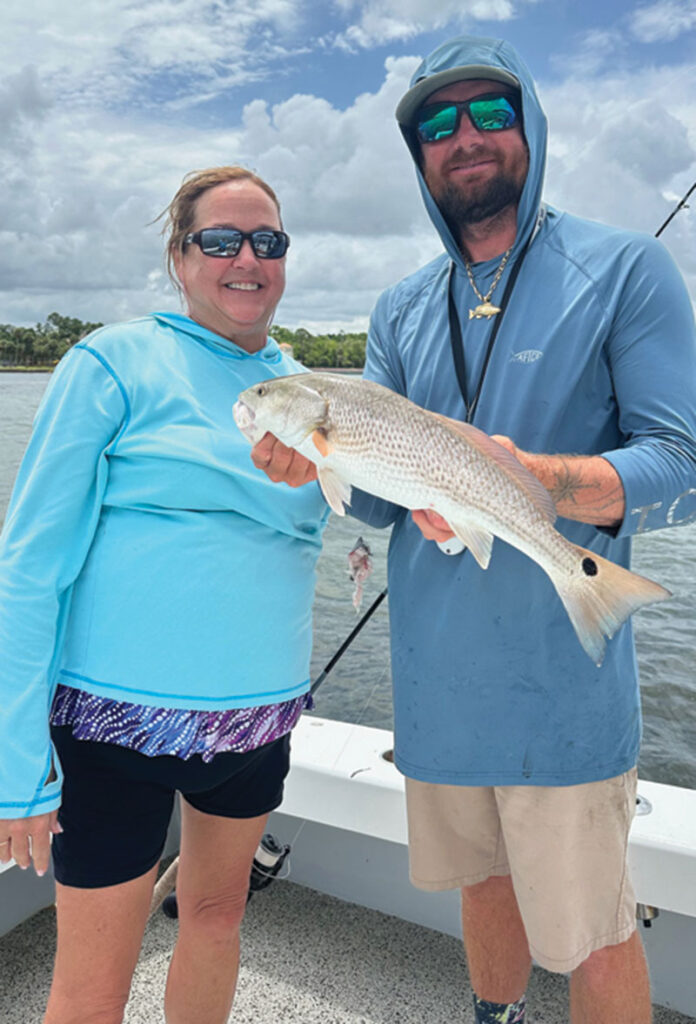
While inshore, White is catching redfish with regularity. Targeting reds along the Gulf beaches results in large examples, with many being over maximum slot of 27-inches. Mangrove shoreline are also yielding redfish. In these areas the size is 20-24 inches.
Fishing deeper grass flats is producing action for White. Spotted seatrout and mackerel are frequently being caught with a mix of ladyfish and jack crevalle.
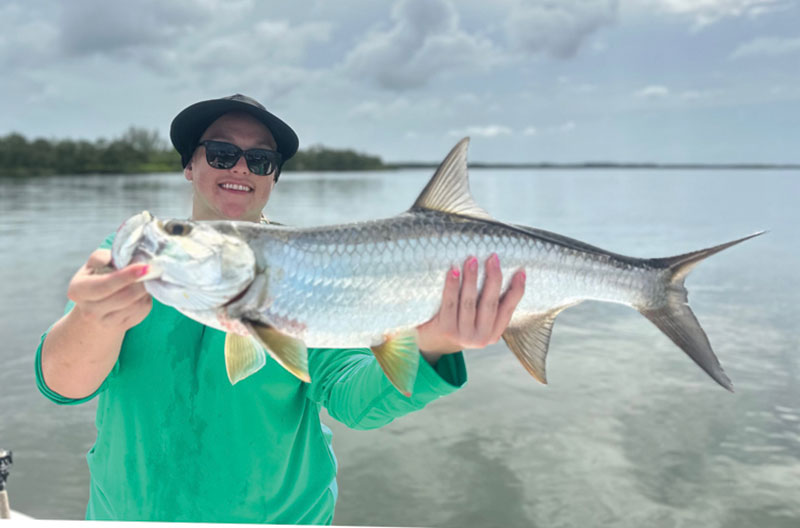
Finally, White is finding tarpon along the Gulf beaches and in the passes. Live crabs and threaded herring as bait are resulting in fish 80-120 pounds with one whopper this week estimated at 200 pounds.
Send high-resolution photos and fishing reports to fish@islander.org.